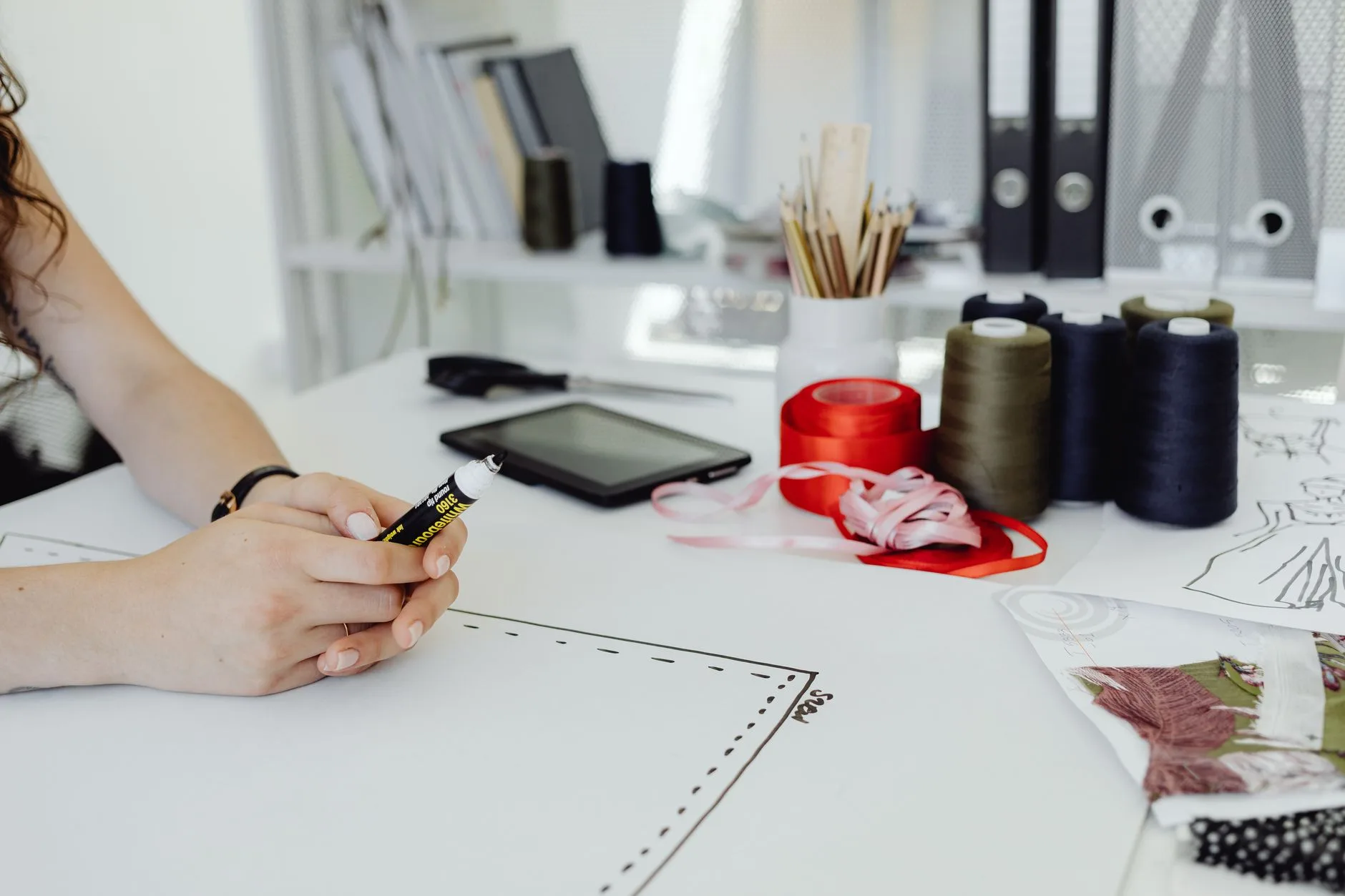
Fabric marking pens look like a minor sewing supply until you use the wrong one on the wrong project. Then they become a very big deal. Buyers usually start searching for the best fabric marking pens when chalk feels too dusty, pencil lines are too faint, or temporary marks are not disappearing the way they should. On quilting cotton, linen, denim, and embroidery fabric, a good pen can make layout work cleaner and faster. A bad one can bleed, vanish too early, or linger longer than you expected.
The most common mistake is choosing by convenience alone. Many shoppers see “erasable” or “washable” and assume all pens behave the same. They do not. Some erase with heat, some with water, and some are designed to disappear on their own after a short window. That difference matters because ironing a water-soluble mark can set it, while leaving a heat-erasable line in place too long can sometimes make it slightly thicker before removal. Tip size, refill value, color variety, and fabric compatibility all matter too. Different sewists also have different priorities. A beginner may want a forgiving all-around set, while a quilter doing repetitive pattern work may care more about line precision and refill count.
Among the options here, the strongest all-around pick is Lange & König Heat Erasable Fabric Marking Pens for Sewing. It combines practical color variety, refill value, broad everyday usability, and easy iron-away removal in a way that makes sense for a wide range of sewing tables. Still, it is not the right answer for every fabric or workflow, which is why the rest of this guide focuses on tradeoffs rather than hype.
If you want the shortlist first, the quick answer and comparison table below make it easy to scan the top options before digging into the full reviews.
Quick Answer
The best fabric marking pens for most sewists are Lange & König Heat Erasable Fabric Marking Pens for Sewing, thanks to their useful four-pen setup, included refills, clear marks, and simple heat removal. If you prefer water-soluble ink for washable fabrics, Mr. Pen Washable Fabric Markers for Sewing is a strong low-cost choice. For shoppers who want the broadest refill supply, JANYUN 4 Pieces Heat Erasable Pens for Fabric with 28 Refills stands out for long-term value.
Best Fabric Marking Pens Comparison Table
| Product | Best For | Main Strength | Ink Type |
|---|---|---|---|
| Lange & König Heat Erasable Fabric Marking Pens for Sewing | Most sewists overall | Balanced set with refills and clean heat removal | Heat erasable |
| Mr. Pen Washable Fabric Markers for Sewing | Washable fabrics and budget shoppers | Simple water-soluble marking for everyday sewing | Water soluble |
| Madam Sew Heat Erasable Fabric Marking Pens | Frequent quilters and embroidery work | Trusted multi-color heat-erasable set | Heat erasable |
| Dritz Dual Purpose Disappearing Ink & Mark-B-Gone | Short-term marking jobs | Two ink behaviors in one pen | Air/water soluble plus water soluble |
| OZXTYO Heat Erasable Fabric Marking Pens | Value-focused heat-erasable shoppers | Solid refill count at entry-level cost | Heat erasable |
| JANYUN 4 Pieces Heat Erasable Pens with 28 Refills | Heavy users | Exceptionally large refill supply | Heat erasable |
| Hpmjz 8pcs Heat Erasable Pens for Fabric | Shared sewing rooms and backups | Eight-pen quantity and fine 0.5 mm lines | Heat erasable |
| Washable Fabric Markers for Sewing, 5 Pack, Blue | Basic pattern transfer on washable fabric | Clear water-removable blue lines | Water soluble |
| Lange & König 4x Tailors Chalk + Heat Erasable Fabric Marking Pens | Mixed fabric types | Pens plus chalk for delicate and heat-sensitive fabrics | Heat erasable plus chalk |
If you want more context than a quick scan can provide, the detailed reviews below explain where each option fits, and where it does not.
1. Best Overall: Lange & König Heat Erasable Fabric Marking Pens for Sewing

One reason this option rises to the top is that it covers the needs of a very broad sewing audience without overcomplicating the category. You get four pens, eight refills, and a straightforward heat-erasable setup that makes sense for quilting, basic garment sewing, embroidery transfer work, and general pattern marking. The appeal here is not novelty. It is usability. Clear lines, visible markings, and easy removal by iron are exactly what most buyers are after when they stop relying on chalk alone.
It also helps that the set seems built around practical volume rather than a one-and-done purchase. The included refills extend the life of the kit, which matters if you mark seam allowances, quilting lines, or embroidery placement often. This is the kind of set that makes sense for a home sewing station where multiple projects may be in rotation. The stated no-ghost-line positioning is especially relevant for buyers who have been burned by temporary markers that did not disappear cleanly.
Pros
- Balanced kit with four pens and eight refills
- Heat removal is convenient for many common sewing workflows
- Designed to work across a wide range of everyday fabrics
- Clear visible lines are useful for cutting and placement
- Good all-around choice for beginners and experienced sewists alike
Cons
- Heat-erasable pens are not ideal for every delicate or heat-sensitive fabric
- Requires access to an iron or heat source for removal
- As with many temporary markers, testing on a fabric scrap is still wise
This is the best choice for shoppers who want one dependable set instead of managing several niche markers right away. It suits quilters, casual sewists, and anyone building a useful sewing toolkit from scratch. Buyers working heavily with silk, some synthetics, or fabrics they do not want to press at all may want a water-soluble pen or chalk-based backup instead. Even so, compared with similar heat-erasable kits, this one lands in the sweet spot between convenience, refill value, and everyday versatility.
To buy this product, click here.
2. Best Budget: Mr. Pen Washable Fabric Markers for Sewing

For buyers who prioritize simplicity and low cost, Mr. Pen’s washable fabric markers make a strong case. The formula here is water-soluble rather than heat-erasable, which immediately changes who it is best for. If you are marking washable cottons, muslins, or everyday craft fabrics and you would rather rinse marks away than press them out, this style can be more intuitive. It is especially practical for beginners who want temporary guidelines but are still learning which marking method pairs best with which material.
The fine lines are a real selling point. Cutting and stitching accuracy often comes down to how confidently you can see the mark without making the mark itself too thick. A five-pack is also useful because these are the sorts of tools that migrate around a sewing room. The caution is important, though. Water-soluble ink and ironing do not mix well. If you tend to press as you go, you need to remove marks before introducing heat, or you risk setting them more permanently than intended.
Pros
- Affordable five-pack for everyday sewing tasks
- Water removal is straightforward on washable fabrics
- Fine lines support accurate cutting and seam marking
- Good fit for beginners who want easy temporary marking
- Useful for tailoring, sewing, and general fabric crafts
Cons
- Not a good choice if you press fabric before removing marks
- Less suitable for non-washable or dry-clean-only materials
- Single-color approach is less flexible than multi-color sets
This is the right buy for shoppers who mainly sew washable fabrics and want the lowest-friction path to temporary marks. It is also sensible for people who do mending, quick alterations, or straightforward pattern transfer where water cleanup is easy. Those who work across many fabric types, or who rely on pressing during construction, may be better served by a heat-erasable kit. Its main advantage over similar pens is not sophistication. It is clarity, simplicity, and strong value.
To buy this product, click here.
3. Best Premium: Madam Sew Heat Erasable Fabric Marking Pens

If your goal is to buy a more established-feeling heat-erasable set for regular sewing and quilting use, Madam Sew is an easy product to shortlist. The combination of four colors, four refills, and a fine 0.7 mm tip gives it the kind of specification mix that appeals to sewists who mark frequently and want better control over visibility on different fabric shades. Color choice matters more than many new buyers expect. A blue line that shows beautifully on muslin can disappear on darker fabric, while white or red may be easier to track depending on the textile.
This set is also clearly aimed at detailed work. Embroidery placement, quilting alignment, and dressmaking adjustments benefit from a finer line that does not blur the decision about where the stitch should land. The product information does note a realistic limitation, which is that ink may bloat slightly if left on fabric for an extended time. That is not unusual in this category, but it is an important reminder that temporary marking tools work best when paired with a deliberate workflow rather than indefinite storage.
Pros
- Four-color set improves visibility across different fabrics
- 0.7 mm tip supports detail work and cleaner guidelines
- Heat removal suits quilting, embroidery, and garment sewing
- Includes refills for longer-term use
- Strong choice for frequent sewists who want a more refined set
Cons
- More expensive than several basic alternatives
- Ink may broaden if left too long before removal
- Still requires heat, which is not ideal for every fabric type
Madam Sew makes the most sense for committed hobbyists who sew often enough to appreciate finer control and multi-color flexibility. It may be more than a casual crafter needs for occasional hemming or simple fixes. Compared with budget heat-erasable kits, its advantage is not dramatic reinvention. It is a somewhat more polished package for people who will actually use that extra precision and color selection on a regular basis.
To buy this product, click here.
4. Best for Short-Term Projects: Dritz Dual Purpose Disappearing Ink & Mark-B-Gone

This model earns a place because it does something meaningfully different from the refill-heavy multi-pen kits. Dritz combines two marking functions in one pen. One side uses blue water-soluble ink, while the other uses purple disappearing ink that is intended for projects completed within about 24 hours. That gives it a niche role that can be genuinely useful if your sewing habits involve quick turnarounds, pattern transfer, or temporary design placement where you do not need long-term marks sitting on the fabric.
The strength here is convenience rather than volume. You are not buying a large, color-coded kit for a dedicated quilting station. You are buying a compact, practical tool for targeted tasks. That can make it especially attractive for occasional sewists, students, or anyone who wants one marking pen in the drawer instead of a full set. The limitation is equally clear. The disappearing-ink side is time-sensitive, so it is a poor choice for slow-moving projects or anyone who routinely marks pieces and returns to them days later.
Pros
- Dual-ended design offers two useful marking methods
- Compact and easy to keep in a basic sewing kit
- Good for embroidery transfer, seam allowances, and quick alterations
- Helpful for short projects that move from marking to sewing quickly
- Straightforward option for occasional users
Cons
- Purple disappearing side is meant for short completion windows
- Not as versatile as larger multi-pen sets
- Less appealing for heavy users who need lots of refill capacity
Choose this if you value compactness and do not need a whole marking system. It is particularly sensible for smaller sewing jobs, alterations, and crafters who want both water-removable and time-fade marking in one tool. Skip it if you work slowly, batch projects, or need strong long-duration visibility. Its advantage over larger sets is portability and convenience, not long-term economy.
To buy this product, click here.
5. Best Value: OZXTYO Heat Erasable Fabric Marking Pens

If your main goal is to get the core heat-erasable experience without spending much, OZXTYO is one of the more straightforward value picks in this group. The set includes four pens and eight refills, which mirrors the structure many buyers actually want. The 0.7 mm tip is narrow enough for pattern work and quilting lines without being so fine that it feels scratchy or hard to see on fabric. For entry-level or intermediate sewists, that balance is usually more useful than chasing the thinnest possible line.
There is also a practical appeal in its familiarity. This is not a specialized pen for a narrow niche. It is a multi-use heat-erasable set intended for sewing, quilting, embroidery, and dressmaking. The no-ghost-lines claim and quick iron removal are exactly the benefits that push many buyers away from traditional chalk. As with similar products, the product details sensibly note that ink can bloat if left too long. That is not a reason to rule it out, but it does reinforce that these pens are best used in an active project flow.
Pros
- Good value with four pens and eight refills
- 0.7 mm tip balances visibility and precision well
- Multi-color setup is helpful on varied fabric shades
- Works for quilting, embroidery, and dressmaking
- Easy heat removal for everyday sewing use
Cons
- Long delays before removal may affect line neatness
- Not the best fit for fabrics that should not be ironed
- Brand recognition may matter to shoppers who prefer more established names
This is a sensible pick for cost-conscious buyers who still want a complete heat-erasable setup rather than a stripped-down single pen. It suits hobbyists, students, and home sewists who want useful refill support at a modest cost. Those seeking a more established premium feel may lean toward Madam Sew, but for plain practical value, this one competes well.
To buy this product, click here.
6. Best for Heavy Use: JANYUN 4 Pieces Heat Erasable Pens with 28 Refills
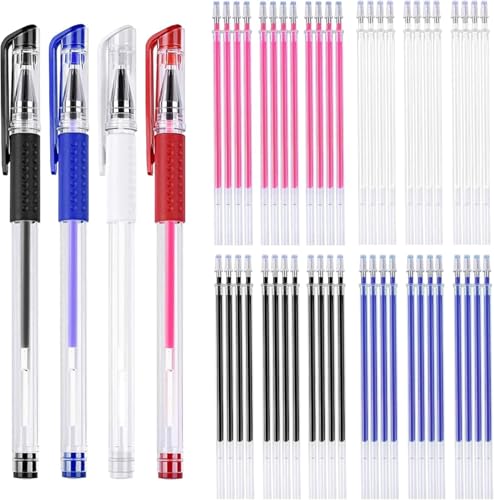
For buyers who go through marking supplies quickly, refill count can matter more than almost any other feature. That is where this JANYUN set stands apart. Four pens paired with 28 refills is a substantial supply, and it changes the value equation for quilters, pattern drafters, and busy crafters who mark constantly. Instead of thinking about when to reorder after a few projects, you are setting up a more durable supply that should last through a long stretch of regular use.
The 0.5 mm writing width also makes it more appealing for detail-oriented work. Finer lines are especially useful when accuracy matters, such as tracing embroidery guides, marking seam allowances on smaller pieces, or adding controlled stitching references to garments. The tradeoff is that ultra-fine marks can be slightly less visible on some fabrics, depending on weave and color. Still, for many users, the precision plus the unusually large refill reserve is the core reason to buy this set.
Pros
- Outstanding refill quantity for long-term use
- 0.5 mm line width is helpful for detailed marking
- Four refill colors support better fabric visibility
- Heat removal is convenient and residue-conscious
- Strong value for quilters and frequent sewists
Cons
- May be more supply than occasional users actually need
- Fine lines can be less bold on some fabrics
- Heat-based removal limits use on some delicate materials
This is the right option for people who know they will use it often. Quilters with ongoing projects, sewists teaching classes, or anyone who marks fabric weekly will appreciate the refill depth. Casual users may be better off with a smaller set to avoid overbuying. Compared with similar heat-erasable products, this one wins on volume and long-term practicality.
To buy this product, click here.
7. Best for Shared Sewing Spaces: Hpmjz 8pcs Heat Erasable Pens for Fabric

If your sewing tools tend to spread across multiple bins, tables, and project bags, quantity itself becomes a feature. That is what makes this Hpmjz set worth considering. With eight pens in one package, it is well suited to shared craft rooms, sewing clubs, classrooms, or simply households where supplies disappear into active projects. The 0.5 mm tip also gives it a precision angle, so the extra quantity does not come at the expense of control.
Another practical detail is the storage presentation. The included box and capped pens should make them easier to organize than loose refills floating around a notions drawer. For some buyers, a pen-only quantity-focused set is more useful than a smaller pack with many refills, because it means fewer interruptions and more ready-to-use tools. The downside is that if what you really want is long replacement capacity rather than several active pens, another kit may serve you better.
Pros
- Eight pens are useful for shared or busy sewing environments
- 0.5 mm tip supports neat, fine marking
- Heat removal is simple for common sewing fabrics
- Storage box improves organization
- Good fit for embroidery, quilting, and DIY dressmaking
Cons
- More pens does not necessarily mean more refill longevity
- May be excessive for a solo occasional user
- Still limited by the usual cautions around heat-sensitive fabrics
This set makes the most sense if you want multiple ready pens on hand rather than one primary tool with a big refill reserve. It is especially practical for group settings or sewists who keep separate kits for machine sewing, handwork, and travel. Buyers focused on refill economy may prefer the larger JANYUN refill pack instead. The reason to choose this one is convenience through quantity.
To buy this product, click here.
8. Best for Simple Water-Soluble Marking: Washable Fabric Markers for Sewing, 5 Pack, Blue
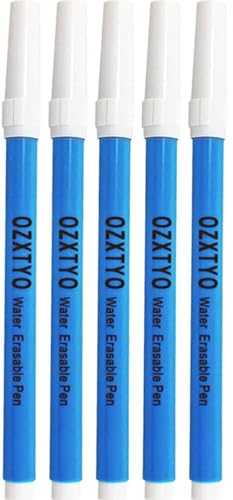
This five-pack is a basic, focused tool for shoppers who know exactly what they want: blue water-soluble marks on washable fabric. There is value in that simplicity. Not every buyer needs multi-color pens, chalk combinations, or large refill systems. For tracing, quilting guides, dressmaking adjustments, and embroidery transfer on fabrics that can be rinsed cleanly, a straightforward water-soluble marker can be the least complicated option.
The product details also make the limitations very clear, which is useful. These pens are not recommended for dry-clean-only fabrics, and the marks should not be ironed before removal. That honesty actually makes the product easier to place. It is not trying to be universal. It is trying to be a dependable marker for a narrower range of normal washable sewing projects. For many crafters, especially those working with cotton and common practice fabrics, that can be enough.
Pros
- Simple water-soluble design for washable fabrics
- Five-pack offers solid everyday utility
- Fine blue lines are easy to see on light fabrics
- Works for sewing, quilting, dressmaking, and embroidery
- Good no-frills option for basic marking needs
Cons
- Not suitable for dry-clean-only materials
- Heat can make marks difficult or impossible to remove
- Single blue color is limiting on darker fabrics
Buy this if your projects are washable, your workflow is simple, and you want a low-drama marking tool. Avoid it if you need color versatility or tend to press while assembling garments. Its appeal lies in clarity and focus, not flexibility. For the right user, that can actually be an advantage.
To buy this product, click here.
9. Best for Mixed Fabrics: Lange & König 4x Tailors Chalk + Heat Erasable Fabric Marking Pens
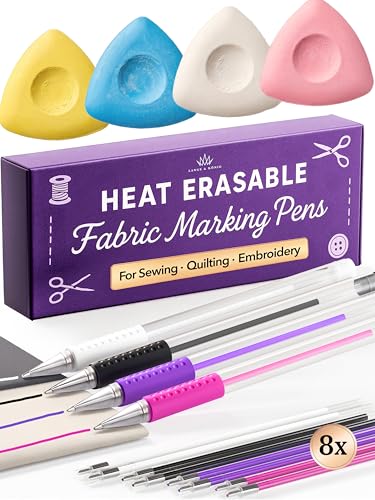
One of the more practical combinations in this roundup is this Lange & König set that pairs heat-erasable pens with tailor’s chalk. That matters because a single marking method rarely handles every fabric equally well. Cotton, denim, and many everyday sewing textiles can work nicely with heat-erasable pens, while silk, polyester blends, or delicate synthetics may be better approached with chalk. Instead of forcing one solution onto every project, this kit acknowledges the reality that sewists often switch tools depending on the cloth.
The package is also appealing for new sewists building a kit from scratch. You are not just buying marks that disappear with heat. You are buying flexibility. If you start a garment on denim and move to a lighter, more heat-sensitive lining, having both chalk and pens in the same system is genuinely convenient. The tradeoff is that it is a broader kit rather than a specialist tool. If you know you only ever want water-soluble ink or only need one specific kind of fine pen, this may feel more general-purpose than necessary.
Pros
- Includes both heat-erasable pens and tailor’s chalk
- More versatile across mixed fabric types
- Useful for beginners assembling a sewing toolkit
- Refills add longer-term value to the pen side
- Practical choice for garment sewing with varied materials
Cons
- Less specialized than single-method marking tools
- Chalk may still be less precise than fine-tip pens for some tasks
- Not the best fit if you already own good tailor’s chalk
This is a smart pick for sewists who move between different materials and want one marking kit that adapts reasonably well. It is especially useful for garment makers who do not stay in one fabric category. Those who already have a strong chalk setup may be happier with the standard Lange & König pen kit instead. The reason to choose this version is flexibility and fewer compromises across fabric types.
To buy this product, click here.
How We Chose
To evaluate the best fabric marking pens in this guide, the focus was on practical buying criteria rather than marketing claims. The first consideration was ink removal method, because this is the single biggest point of difference in the category. Heat-erasable, water-soluble, and disappearing inks solve different problems. A pen that works well for quilting cotton may be the wrong tool for heat-sensitive fabric or for a project that will sit unfinished for several days.
Next came line precision and visibility. Fabric marking pens need to make clear guides without becoming thick or messy enough to undermine accuracy. Fine tips, color variety, and usefulness across light and dark fabrics all matter here. We also looked at kit value, including how many pens or refills are included, because many buyers are comparing single-pen convenience against long-term supply.
Finally, the guide prioritized realistic use cases. Some products are better for occasional mending, some for high-volume quilting, and some for mixed sewing rooms where several tools are needed. Recommendations were based on publicly available product information, feature sets, and category logic. The goal was not to crown one universal winner for every possible project, but to identify which option makes the most sense for different kinds of shoppers.
Buying Guide
Choose the Right Ink Type First
If you only remember one thing from this guide, make it this: buy the ink type before you buy the brand. Heat-erasable pens are ideal for many quilting and sewing tasks where you can remove lines with an iron. They are convenient and often cleaner than chalk, but they are not perfect for fabrics that should not be heated. Water-soluble pens are better if your fabric is washable and you do not mind rinsing marks out. They can be a mistake for shoppers who habitually iron first and clean later. Air-disappearing or dual-purpose pens are useful for quick projects, but are less reliable for slow, multi-day sewing.
Think About Your Sewing Habits
Beginners often benefit from general-purpose kits that include multiple colors and a few refills. Heavy users may care more about refill quantity than the initial pen count. If you mark many pieces at once and sew them over several sessions, you should be cautious with disappearing ink and with any pen that warns about lines broadening over time. If you press after every seam, a water-soluble pen may create headaches unless you remove marks before ironing.
Color Variety Can Be More Important Than You Expect
Dark fabric and light fabric do not behave the same. A pen that works beautifully on pale cotton may be nearly useless on navy linen. Multi-color sets are helpful if your fabric stash is varied. If you sew mostly muslins, mockups, and light quilting cottons, a blue water-soluble marker may be enough. If you move between light and dark materials often, color choice is worth paying for.
Refills vs More Pens
Some sets lean on replacement refills, others on a larger number of complete pens. Refills are typically the better buy for a dedicated sewing station where you keep tools organized. More pens can be better for shared spaces, classrooms, or sewists who maintain separate project kits. Neither approach is inherently better. It depends on whether your problem is running out of ink or misplacing tools.
Always Test on Scrap Fabric
Even the best fabric marking pens should be tested on an offcut before you trust them on expensive material. Fiber content, finish, color, and how long the mark remains on the fabric can all affect results. This matters especially with silks, synthetics, and any specialty fabric where removal behavior can be less predictable.
Best Fabric Marking Pens FAQ
What is the best type of fabric marking pen for quilting?
For many quilters, heat-erasable pens are the most convenient because lines stay visible while you work and can be removed quickly with heat afterward. They are especially useful for quilting lines, pattern placement, and repetitive marking on cotton fabrics. If you press heavily during the process, though, make sure that fits your workflow.
Are heat-erasable fabric pens better than water-soluble pens?
Not universally. Heat-erasable pens are better for sewists who want quick iron-away cleanup and who work on fabrics that tolerate pressing. Water-soluble pens are better for washable fabrics and for people who prefer rinsing marks out. The better option depends more on fabric type and sewing habits than on brand.
Can fabric marking pens stain fabric permanently?
They can, which is why testing matters. Some inks may become difficult to remove if left too long, exposed to heat at the wrong time, or used on unsuitable fabric. Water-soluble pens can set if ironed before removal, and temporary inks can behave differently on specialty textiles. Always test on a scrap first.
Do disappearing ink pens really vanish on their own?
Some do, but the timing can vary, and they are usually best for short projects. A disappearing ink pen can be very useful if you mark and sew quickly, but it is less dependable for projects you may leave unfinished for a few days. For longer work, heat-erasable or water-soluble options are often more predictable.
What should beginners buy first?
Most beginners are best served by a versatile heat-erasable multi-pen set or a simple washable pen set, depending on fabric type. If you mainly sew cotton and want easy cleanup with an iron, a balanced heat-erasable kit like the top Lange & König set is a practical starting point. If you work only on washable fabric and prefer water removal, a washable marker pack is simpler.
Are multi-color fabric marking pen sets worth it?
Usually, yes. Different colors show up better on different fabrics, and that flexibility becomes useful quickly once you stop sewing only one type of material. Multi-color sets are especially helpful for quilters, garment makers, and anyone who switches between light and dark fabrics.
How long do fabric marking pen marks last?
It depends on the pen type, fabric, and conditions. Some marks remain until removed with heat or water, while others are designed to fade within a short period. Product notes about blooming, fading, or project time windows should be taken seriously, especially if you work slowly or batch your sewing.
Final Verdict
The best fabric marking pens for most readers are the Lange & König Heat Erasable Fabric Marking Pens for Sewing. It offers the most convincing mix of usability, refill value, and all-around practicality for everyday sewing, quilting, and embroidery tasks. It is the kind of set that makes sense for both newer sewists and experienced hobbyists because it solves the core problem cleanly: making visible marks that are easy to remove when the work is done.
If budget is the priority, Mr. Pen Washable Fabric Markers for Sewing is a sensible buy for washable fabrics and simple water-based cleanup. If long-term supply matters more than anything else, JANYUN 4 Pieces Heat Erasable Pens with 28 Refills gives heavy users a strong value argument. The right choice comes down to how you sew, what fabrics you use, and whether your workflow favors heat removal, water removal, or a more mixed toolkit. Buy the pen that matches your actual habits, not just the one with the longest feature list, and you are much more likely to end up with a tool that quietly improves every project.
Leave a Reply