Finding the best tote bags for sewing supplies usually comes down to one very practical problem: most sewists are tired of chasing bobbins, seam rippers, clips, tape measures, and thread spools across multiple drawers, baskets, and half-finished project bins. A good tote can turn a scattered setup into something portable, organized, and easier to live with, whether you sew at the kitchen table, attend classes, quilt with a guild, or simply want one bag dedicated to your current project.
The mistake many buyers make is assuming any craft tote will do. In reality, sewing gear has its own demands. Sharp tools need stable pockets, thread and notions benefit from visible storage, and larger items like patterns, fabric cuts, hoops, or cutting tools need a bag that holds its shape instead of collapsing into a pile. Some shoppers need maximum capacity, while others want a lighter project bag that can move from room to room without becoming cumbersome. Among the options here, the JJRING Craft Organizer Tote Bag, Large Art Storage Caddy stands out as the best overall balance of capacity, structure, and everyday usability.
If you want the shortlist first, the quick sections below make it easy to compare the main options before diving into the full reviews.
Quick Answer
The best tote bag for sewing supplies for most people is the JJRING Craft Organizer Tote Bag, Large Art Storage Caddy. It offers generous interior space, plenty of pockets, a reinforced base, and a fold-flat design that makes sense for both home organization and travel to classes.
For smaller setups, the JJRING Craft Organizer Tote Bag for Art Storage is a strong compact pick. If visibility and compartmentalized storage matter most, the FINPAC Sewing and Craft Supplies Storage Tote is one of the most practical choices.
Best Tote Bags for Sewing Supplies Comparison Table
| Product | Best For | Main Strength | Size / Storage Style |
|---|---|---|---|
| JJRING Craft Organizer Tote Bag, Large Art Storage Caddy | Most buyers | Large capacity with 16 pockets | 15.75 x 6.67 x 12.2 in., open tote with reinforced base |
| FINPAC Sewing and Craft Supplies Storage Tote, Emerald Illusions | Notions and visible organization | Clear page-style compartments | 13 x 4.5 x 10.5 in., compartment-focused tote |
| JJRING Craft Organizer Tote Bag for Art Storage | Small kits and beginners | Compact, lightweight form | 12.4 x 6.5 x 7.7 in., smaller open caddy |
| Madam Sew Project Bag | Single active projects | Simple flat storage with mesh visibility | 16 x 16 in., hanging-style project tote |
| JJRING Craft and Art Tote | Budget shoppers | Low-cost structured caddy | 11.8 x 6.67 x 7.4 in., compact nylon tote |
| Telawsfun Sewing Supply Storage Bag | Customizable storage | Removable PVC binders and shoulder strap | 12.9 x 10.2 x 3.1 in., binder-style organizer tote |
| Nicpro Craft Organizer Art Bag | Large tools and mixed supplies | 20-pocket layout and shoulder carry | 15.7 x 6.7 x 12.2 in., large utility tote |
| Hautton Sewing Craft Supplies Storage Tote | Travel and quick access | Clear flip pockets with dual carry options | 13.58 x 5.71 x 11.02 in., portable organizer tote |
| YARWO Sewing and Craft Supplies Storage Tote | Premium organization | Lay-flat access with padded build | 11.4 x 4.3 x 9.4 in., structured organizer tote |
If you want more context on how these bags differ in everyday use, the detailed reviews below will help narrow the field.
1. Best Overall: JJRING Craft Organizer Tote Bag, Large Art Storage Caddy

One reason this option rises to the top is that it gets the fundamentals right without overcomplicating the format. The open-tote design is easy to load, the 16-pocket layout provides real sorting space, and the large dimensions make it practical for sewists who want to carry more than a handful of notions. It looks especially well suited to people who keep scissors, rulers, clips, marking tools, thread, and folded fabric together in one portable setup rather than in separate boxes.
Its reinforced base matters more than it may seem on paper. Bags for sewing supplies often fail when they start sagging under the weight of metal scissors, rotary cutters, or dense bundles of thread. Here, the removable bottom support helps the tote keep its shape, which makes pockets more usable and the whole bag easier to set down beside a machine or cutting table. The fold-flat design is also useful if you rotate bags seasonally or only bring your sewing kit out for classes and travel.
Pros
- Large interior works well for full sewing kits, not just a few notions
- Sixteen pockets give helpful separation for tools and smaller accessories
- Reinforced bottom support should improve shape retention
- Lightweight polyester build is easier to carry than heavier hard-sided organizers
- Folds flat when not in use
Cons
- Open-top style offers less containment than zippered organizer bags
- Best for home, class, or car transport, not ideal for rough travel
- Some users may want more internal dividers for tiny notions
This is the best choice for most readers who want a versatile tote bag for sewing supplies rather than a specialty project case. It makes the most sense for sewists with a moderate to fairly large kit and for anyone who values quick grab-and-go access over total enclosure. If you mainly carry loose needles, beads, or very tiny pieces, a clear compartment system may suit you better. For general sewing organization, though, this JJRING tote offers the best balance of size, structure, and usability in the group. To buy this product, click here.
2. Best for Notions Organization: FINPAC Sewing and Craft Supplies Storage Tote, Emerald Illusions

For buyers who prioritize visibility, this FINPAC design is one of the most category-specific options here. Instead of acting like a general-purpose open caddy, it leans into page-style organization with clear PVC pockets and multiple compartment types. That makes it especially useful for people whose sewing supplies are dominated by small items, such as machine needles, hand needles, clips, buttons, marking tools, bobbins, and trims.
The structure suggests a tote that behaves almost like a portable notions file. You are not just tossing supplies into one cavity. You are sorting them by type and seeing them at a glance, which can save real time during sewing sessions. The 800D polyester shell also hints at a slightly tougher, more protective build than many light craft totes. For classes, retreats, or anyone who dislikes rummaging, that storage logic is a genuine strength.
Pros
- Clear compartments make small supplies easier to locate quickly
- Good fit for organized sewists with lots of notions
- Durable 800D polyester should hold up well to regular transport
- Shoulder-friendly handles add convenience for travel
- Multiple pocket types offer more sorting flexibility than a plain tote
Cons
- Less ideal for bulky fabric bundles or oversized tools
- Clear PVC pages may not appeal to buyers who prefer a simple open tote
- Patterned exterior is more distinctive than neutral
This bag is best for sewists who think in categories and want every small tool to have a place. It is an especially smart pick for embroidery, quilting accessories, repair kits, or travel sewing setups where keeping tiny items visible matters more than carrying larger project materials. If your main need is a roomy bag for fabric, rulers, and mixed supplies, the top JJRING tote remains more flexible. If organization is your number one priority, this FINPAC is one of the strongest options in the lineup. To buy this product, click here.
3. Best for Small Kits: JJRING Craft Organizer Tote Bag for Art Storage

If your goal is to keep a compact sewing setup tidy without committing to a large tote, this smaller JJRING bag makes a lot of sense. It keeps the same general philosophy as the larger version, including multiple pockets and a reinforced bottom support, but trims the footprint down to something better suited to quick repairs, hand-sewing supplies, or a beginner kit.
That smaller size is an advantage for many households. Not every sewist needs to carry full-size rulers, large fabric cuts, or a week’s worth of project materials. Some just want one neat, portable place for thread, snips, a pincushion, tape measure, seam ripper, and a few essentials. In that role, a compact tote can feel easier to manage than a large organizer that stays half empty. It also travels well from shelf to table to class because it is less bulky from the start.
Pros
- Compact design is easy to store and carry
- Sixteen pockets still provide useful organization in a smaller footprint
- Reinforced base helps prevent sagging
- Good fit for beginners, mending kits, or hand-sewing supplies
- Folds flat when not needed
Cons
- Too small for large quilting or multi-project setups
- Open design is less secure than zippered alternatives
- Limited room for bulky fabric and larger tools
Choose this one if you want the feel of a real sewing organizer without the size of a full utility tote. It is especially appealing for apartment living, occasional sewing, and anyone who values lightness over maximum capacity. You may want to skip it if you regularly carry large shears, cutting mats, or substantial fabric stacks. For a small but thoughtfully structured bag, though, it is one of the most practical options available. To buy this product, click here.
4. Best for Single Active Projects: Madam Sew Project Bag

This model takes a different approach from most of the totes here. Rather than functioning as a broad all-purpose sewing caddy, it is built more like a project bag. That makes it particularly appealing for quilters, embroiderers, stitchers, and anyone who likes to keep one work-in-progress together with its fabric pieces, pattern, tools, and notes.
The see-through mesh is a practical feature because project bags tend to disappear into closets or stack up in corners. Being able to identify contents without unzipping or unpacking everything can make a real difference if you juggle multiple works in progress. The card slot is another thoughtful touch, especially for detailed craft projects where labeling matters. This is less about total organization of an entire sewing room and more about containing one project cleanly and visibly.
Pros
- Excellent format for keeping one project together
- See-through material helps identify contents fast
- Large pockets suit fabric pieces, patterns, and flat tools well
- Card slot is useful for labeling project details
- Simple, lightweight shape is easy to move around
Cons
- Not the best choice for highly segmented notions storage
- Less structure than reinforced boxier totes
- Better for flat project materials than bulky tool collections
This is the right bag for sewists who work project by project and want visible, low-fuss storage. It is less compelling if you need a central tote for all your tools and supplies. In that case, one of the more structured caddies will serve you better. But if your goal is to grab a quilt block set, embroidery project, or stitching kit and head to the couch, class, or retreat, this is a thoughtful and efficient option. To buy this product, click here.
5. Best Budget Pick: JJRING Craft and Art Tote
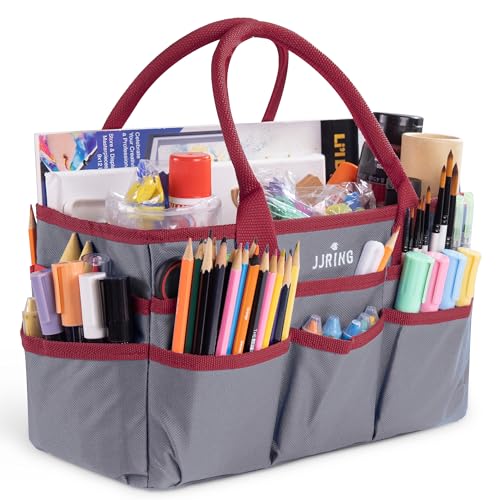
This JJRING tote earns its place because it covers the basics well while keeping the design simple and accessible. It offers 16 external compartments, a compact footprint, and a shape-keeping structure that should prevent the bag from collapsing under ordinary sewing gear. For readers who want a low-commitment solution for organizing tools, it looks like one of the smarter entry-level buys in the category.
The nylon build and waterproof coating are notable at this level because light sewing totes often feel like they are meant only for dry indoor use. A bit more material resilience can be helpful if the bag moves between rooms, cars, classrooms, or shared workspaces. The compact size also makes it a practical second tote, such as one bag for machine notions and another for hand-sewing or mending supplies.
Pros
- Affordable way to add structure to a small sewing kit
- Sixteen outer compartments provide easy access
- 600D nylon and waterproof coating add practical durability
- Reinforced panels help the tote keep its shape
- Compact size suits smaller spaces and casual users
Cons
- Smaller interior limits bulky storage
- External-pocket-heavy design may not suit loose tiny items
- Not ideal for carrying a full advanced sewing setup
This tote is best for shoppers who want a sensible budget option without dropping down to a flimsy generic bag. It suits students, beginners, casual crafters, and anyone creating a dedicated mending station. If you know you need larger capacity or more protected internal organization, it will feel limiting. For basic day-to-day sewing storage at a lower cost, however, it is easy to recommend. To buy this product, click here.
6. Best Customizable Organizer: Telawsfun Sewing Supply Storage Bag
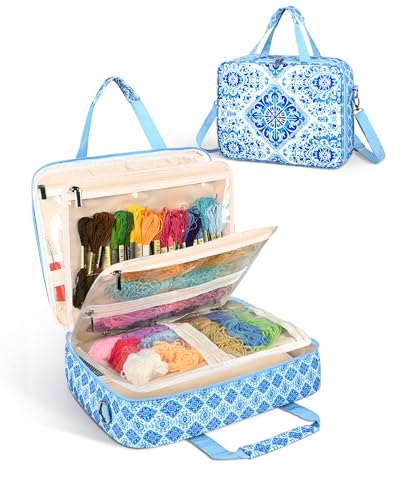
This model stands out because its storage system is more adaptable than a standard tote. The removable clear PVC binders create a format that can be rearranged, separated, or repurposed depending on the project. That is a meaningful advantage for sewists whose supply mix changes often, such as those who alternate between garment sewing, embroidery, crochet, and travel repair kits.
The shoulder strap also helps distinguish it from simpler caddies. A detachable strap can matter if the bag gets heavier with thread, tools, and accessories, or if you carry it to classes where hand-only handles become tiring. The design is flatter than some open totes, but the combination of visible compartments and customization makes it a smart fit for organized users who want more control over layout than a fixed-pocket bag provides.
Pros
- Removable binder pockets add flexibility
- Clear storage helps locate supplies quickly
- Shoulder strap improves portability
- Water-repellent, scratch-resistant materials are practical for travel
- Can adapt to uses beyond sewing
Cons
- Flatter profile may not suit bulky fabric storage
- More organization features can mean a steeper learning curve
- Style may appeal more to some buyers than others
Buy this if you like customizable organization and want your tote to function almost like a modular sewing file. It makes particular sense for mobile crafters, class use, and detail-oriented users who prefer designated spaces for different categories of tools. If you just want one open bin to toss supplies into, a simpler JJRING or Nicpro bag may be less fussy. For tailored organization, this one is among the better thought-out choices. To buy this product, click here.
7. Best for Large Mixed Supplies: Nicpro Craft Organizer Art Bag
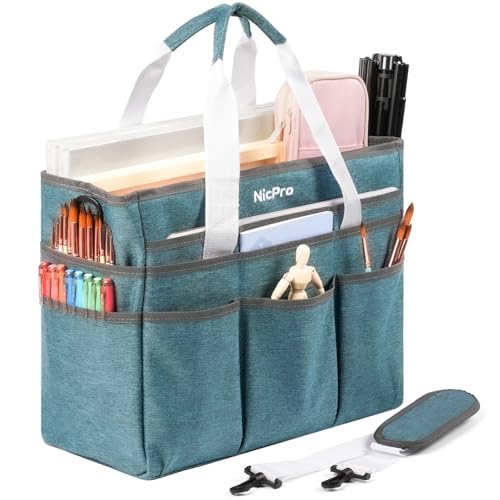
If your sewing setup spills beyond basic notions into sketchbooks, patterns, boards, rulers, or larger mixed craft tools, the Nicpro bag is one of the more capable options. Its 20-pocket layout and A3-friendly capacity suggest a tote meant for carrying substantial, varied supplies rather than only a sewing basket’s worth of essentials.
The removable shoulder strap is another practical inclusion for a bag of this size. Larger totes are only useful if they remain comfortable enough to move when full, and this one appears better prepared for that than lighter two-handle caddies. The internal zipper pocket also adds a bit more secure storage for smaller valuables or easy-to-lose notions. For readers who want a larger utility tote with sewing as part of a broader creative workflow, this is a strong contender.
Pros
- Large capacity suits bigger tools and mixed creative supplies
- Twenty pockets offer substantial organization potential
- Shoulder strap improves comfort when the bag is full
- Reinforced base panel should help with stability
- Useful for sewing plus journaling, art, or classroom use
Cons
- May feel oversized for simple sewing kits
- Open utility design is less specialized than clear-pocket sewing organizers
- Large format can become heavy when fully loaded
This is a good choice for advanced hobbyists, multi-craft users, and anyone who wants a bag that can carry more than a standard sewing tote. If your setup is minimal, the extra size may go unused. But if you routinely juggle fabric, patterns, tools, and additional creative supplies, the Nicpro offers flexibility that smaller and more rigidly focused bags do not. To buy this product, click here.
8. Best for Travel-Friendly Access: Hautton Sewing Craft Supplies Storage Tote
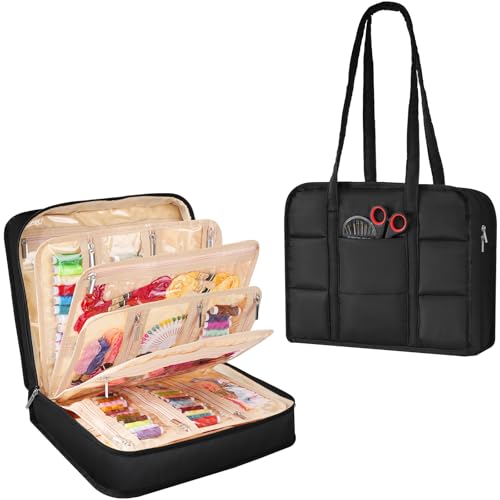
This Hautton tote looks especially appealing for readers who want a middle ground between an open caddy and a fully flat project organizer. The clear flip pockets should make it easier to identify and retrieve tools quickly, while the overall dimensions remain manageable for transport. That combination is useful for sewing classes, repair kits, and compact craft travel where convenience matters as much as raw capacity.
The material description also points toward a soft but sturdy build with water resistance, which is sensible for a bag that may be carried out of the house often. The fact that it offers two carrying modes broadens its usefulness. Bags in this category often become annoying when they are only comfortable for one carry style. Here, there is at least a bit more flexibility in how it fits into everyday use.
Pros
- Clear flip pockets support quick organization and access
- Portable dimensions are well suited to classes and travel
- Water-resistant fabric is practical for regular handling
- Two carrying options add convenience
- Useful balance between structure and portability
Cons
- Less spacious than the largest utility totes
- May not fit oversized project materials comfortably
- More specialized interior may be unnecessary for simple storage needs
This bag is worth considering if you want a sewing tote that feels organized without being too large or too rigid. It should work well for frequent commuters, class attendees, and sewists who carry mostly tools and notions rather than bulky fabric stacks. If you need maximum capacity, look elsewhere. If you want a portable organizer with straightforward access, the Hautton makes a solid case. To buy this product, click here.
9. Best Premium Pick: YARWO Sewing and Craft Supplies Storage Tote
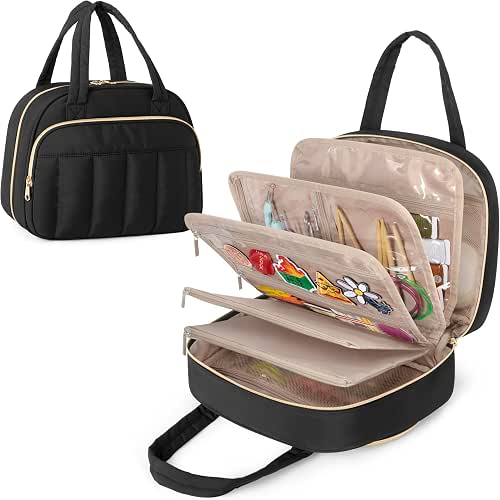
This YARWO bag earns the premium slot because it combines several thoughtful features that directly address sewing organization: multiple internal pockets, page-style clear storage, water-resistant material, padding, and a lay-flat design. That last detail is particularly useful. A bag that opens fully can make setup and cleanup simpler, especially when working with many small tools that would otherwise disappear into layers.
The padded build also suggests a more protective orientation than simple open totes. That can be valuable if your sewing kit includes specialty scissors, marking tools, delicate accessories, or small electronic items. While it is not the largest bag on this list, it appears designed to make a moderate kit easier to see, sort, and protect. For buyers who care more about refinement and organization quality than raw volume, that can be a worthwhile tradeoff.
Pros
- Lay-flat access is genuinely practical for sewing supplies
- Padded construction offers better protection than basic totes
- Clear internal pages help with visibility
- Water-resistant material should be easy to maintain
- Well suited to organized, frequently used kits
Cons
- Smaller than large open utility totes
- Non-removable page-style pockets reduce flexibility
- Better for organized tool sets than bulky fabric hauling
This is the bag to choose if you want a more polished organizer and are willing to prioritize access, protection, and layout over sheer size. It fits experienced hobbyists, needlepoint and embroidery users, and anyone tired of loose notions shifting around in an open bin. If your main need is carrying large project materials, one of the larger caddies will be more practical. For a more premium organization experience, YARWO stands out. To buy this product, click here.
How We Chose
To narrow this list to nine options, the focus stayed on products from the supplied Amazon results that clearly fit the job of storing and carrying sewing supplies. That meant looking beyond generic craft language and evaluating which bags actually make sense for thread, scissors, measuring tools, notions, fabric pieces, and portable project storage.
Several factors mattered most. First was organization. Bags with multiple usable pockets, clear compartments, or page-style systems scored well because sewing supplies often include many small pieces that disappear in a plain tote. Second was capacity. Some buyers need a compact project bag, while others need a larger caddy that can carry tools, patterns, and fabric together. Third was structure and durability, especially reinforced bases, heavier fabrics, water resistance, or padding. Finally, portability mattered, including handle design, fold-flat storage, and shoulder strap options.
Where several models were very similar, the differences came down to intended use. Some are clearly better for tiny notions, some for single projects, and some for large mixed kits. The rankings reflect that practical fit rather than novelty or marketing claims.
Buying Guide
Choosing the best tote bag for sewing supplies starts with an honest look at how you actually sew. Many people buy too large a bag because it looks versatile, then discover it becomes heavy and cluttered. Others buy a compact project bag and quickly outgrow it once rulers, clips, spare feet, and fabric cuts enter the picture.
Choose the Right Storage Style
There are three main styles in this roundup. Open caddies are best if you want quick access and use medium to larger tools regularly. Clear compartment organizers are better for notions-heavy kits where visibility matters. Project bags work well if you want to keep one active sewing or embroidery project together at a time.
Think About What You Carry Most
- If you carry mostly scissors, thread, clips, rulers, and marking tools, a structured tote with many side pockets is usually the easiest option.
- If you carry lots of tiny notions, clear page pockets or divided storage can save time.
- If you carry fabric pieces, patterns, or hoops, look for broader, flatter storage areas.
- If you travel to classes, shoulder straps and manageable dimensions become more important.
Do Not Ignore Structure
A sewing tote has to handle some awkward weight. Good fabric scissors, metal clips, seam gauges, and thread collections add up fast. Reinforced bottoms and shape-keeping panels help prevent sagging, which in turn makes pockets more useful and protects supplies from bunching together at the bottom.
Consider Portability Versus Capacity
The largest bag is not always the best choice. If you only move between a shelf and your sewing table, large capacity is easier to live with. If you regularly attend classes or stitch in different rooms, a smaller or shoulder-carry design may be the smarter pick. There is a real difference between a bag that stores well and a bag that carries well.
Match the Bag to Your Experience Level
Beginners often do best with a simple compact tote because they are carrying fewer supplies and benefit from an easy layout. Intermediate and advanced sewists usually appreciate either larger caddies or more segmented organizers because their kits grow more specialized over time. If you sew in multiple disciplines, such as quilting plus garment sewing, a modular or large-capacity tote will be more forgiving.
Best Tote Bags for Sewing Supplies FAQ
What size tote bag is best for sewing supplies?
The best size depends on whether you want a full sewing kit bag or a project bag. Compact totes are usually enough for thread, scissors, clips, measuring tape, and small notions. Larger totes are better if you also carry fabric, rulers, patterns, or multiple tools at once.
Is an open tote or a zippered organizer better for sewing supplies?
An open tote is better for quick access at home or in class, especially if you want to reach tools fast while sewing. A zippered or enclosed organizer is better for travel, small loose items, and situations where you want more protection and less shifting during transport.
Are clear pockets useful for sewing bags?
Yes, especially for notions. Clear pockets make it much easier to find needles, clips, seam rippers, bobbins, and marking tools without digging through the entire bag. They are less important if you mainly store larger items.
What should I keep in a sewing tote bag?
Most people keep the essentials: fabric scissors, small snips, seam ripper, measuring tape, pins or clips, hand needles, thread, marking tools, spare bobbins, and a current pattern or project notes. If the bag is large enough, you may also add fabric cuts, hoops, or specialty feet.
Are craft totes good enough for sewing, or should I buy a sewing-specific bag?
Many craft totes work well for sewing if they provide enough structure and practical pockets. Sewing-specific bags tend to be better when you need visible compartments, lay-flat access, or more secure storage for many small accessories.
How many pockets should a sewing tote have?
There is no perfect number, but more pockets generally help if you carry many small items. For a simple beginner kit, a handful of useful pockets may be enough. For larger kits, 12 or more compartments can make a noticeable difference in staying organized.
What is the best tote bag here for beginners?
The smaller JJRING Craft Organizer Tote Bag for Art Storage is a very good beginner choice because it is compact, structured, and not overly complicated. It gives new sewists enough organization without overwhelming them with too much capacity.
What is the best tote bag here for quilting or classes?
For quilting classes or portable sewing sessions, the best choice depends on what you carry. The large JJRING tote is strong for broader mixed supplies, while the FINPAC organizer is better if your kit includes many small notions that need to stay visible and sorted.
Final Verdict
If most readers are looking for one dependable answer, the JJRING Craft Organizer Tote Bag, Large Art Storage Caddy is the best tote bag for sewing supplies in this roundup. It balances size, structure, portability, and useful pocket count better than most of the field. It is large enough for a real sewing setup, but still simple enough to use every day without feeling overly specialized. That broad usefulness is what makes it the strongest overall pick.
If you want to spend less, the JJRING Craft and Art Tote is the best budget option. If you want a more refined organizer with clearer compartment-based storage, the YARWO Sewing and Craft Supplies Storage Tote is the premium pick. The right choice ultimately depends on how you sew. Buy for the supplies you actually carry, not the ones you imagine carrying later. A tote that matches your workflow will always be more useful than the biggest or most feature-heavy bag on the page.
Leave a Reply