Demolition work asks a lot from a reciprocating saw. You want enough power to cut through studs, nails, pipe, and old framing without the tool bogging down, but you also want something balanced enough to control in cramped remodel spaces. Buyers searching for the best reciprocating saws for demolition often make the same mistake, focusing only on raw speed when comfort, blade changes, and handling in awkward positions matter just as much once the dust starts flying.
The right saw depends on the job in front of you. A contractor working in tight wall cavities will care about compact size and a pivoting shoe. A homeowner tearing out a deck may prefer a corded model that can run all afternoon without battery worries. Others just want a light, easy one-handed saw for occasional cleanup and pruning. In that mix, the best overall choice in this roundup is the DEWALT ATOMIC DCS369B, mainly because it blends compact size, low weight, and enough control to make demolition work less punishing.
Take a quick look at the comparison table below if you want the fastest way to narrow the field before reading the full reviews.
Quick Answer
If you want the short version, the DEWALT ATOMIC 20V MAX Reciprocating Saw (DCS369B) is the best all-around pick for most demolition buyers because it is compact, easy to control, and light enough for overhead and one-handed cutting. If you want more aggressive runtime and a sturdier pro-grade feel, the DEWALT 20V MAX XR (DCS367B) is the premium cordless choice. For the tightest budgets, the corded EZUVITA 7 Amp and Extbtfor 7 Amp models offer a lot of cutting capability for less money, though they are less refined than the DEWALT tools.
If you are short on time, the comparison table below gives a fast snapshot of the main options. Click any product name to jump straight to its review.
Best Reciprocating Saws For Demolition Comparison Table
| Product | Best For | Main Strength | Key Specs |
|---|---|---|---|
| DEWALT ATOMIC 20V MAX DCS369B | Compact one-handed demolition | Light, maneuverable, and easy to control | 12.5-inch length, brushless motor, LED light |
| DEWALT 20V MAX DCS387B | Tight spaces and flush cuts | Versatile 4-position blade clamp | 14-inch length, 1-1/8-inch stroke, LED light |
| SEESII Cordless Reciprocating Saw | Budget cordless convenience | Battery bundle and included blades | 2 x 4.0Ah batteries, 3500 RPM, LED light |
| DEWALT 20V MAX XR DCS367B | Frequent demolition and pro use | Runtime and refined handling | 14.5-inch length, brushless motor, 2,900 SPM |
| BLACK+DECKER BDCR20C | Casual DIY demolition | Straightforward, easy to live with | 20V cordless, tool-free blade change, pivoting shoe |
| EZUVITA 7 Amp Corded Saw | Continuous corded cutting | Good power for the price | 7 amp motor, 1-1/8-inch stroke, 180° handle |
| SOARFLY 21V Brushless Saw | Feature-rich cordless value | High-speed cutting with two batteries | 3500 SPM, 2 x 4.0Ah batteries, 8 blades |
| Extbtfor 7 Amp Reciprocating Saw | Low-cost corded utility work | Affordable and easy to handle | 7 amp motor, 0-2800 RPM, rotating handle |
| Reciprocating Saw For Dw 20V Battery | Owners of compatible DEWALT batteries | Bare tool value with blade bundle | 0-3000 SPM, 8 blades, battery not included |
Each of these saws fills a slightly different role, and the reviews below show where that matters in real demolition and remodel work.
1. Best Overall: DEWALT ATOMIC 20V MAX Reciprocating Saw, One-Handed, Cordless, Tool Only (DCS369B)

The DEWALT ATOMIC DCS369B earns the top spot because it is the kind of saw that makes demolition work feel more manageable instead of merely more powerful. Its compact 12.5-inch front-to-back length is a real advantage when you are cutting between studs, reaching into cabinets, or working overhead after a wall or ceiling has already been opened up. The lighter weight matters too. In demolition, fatigue builds quickly, and a saw that is easier to hold steady often ends up being more useful than one that looks impressive on paper.
The brushless motor and variable-speed trigger give it the kind of control most buyers actually need. It is not trying to be a brute-force full-size demolition monster, but that is part of its appeal. The pivoting shoe improves contact and stability, while the tool-free blade release keeps the workflow moving when you need to switch from wood to metal or from rough cutting to flush trimming. For remodelers, electricians, plumbers, and serious DIYers, this is the sweet spot of size, control, and versatility.
Pros
- Very compact for working in tight demolition spaces.
- Lightweight enough for one-handed or overhead use.
- Brushless motor adds efficiency and better long-term feel.
- Tool-free blade release speeds up jobsite changes.
- Pivoting shoe helps improve contact and control on rough cuts.
Cons
- Tool only, so battery and charger add to the real cost.
- Not the best fit for buyers who want maximum raw power.
- Compact size is great for control, but it can feel less planted on larger cuts.
If your demolition work often happens in tight framing, crawl spaces, or overhead positions, this model is easy to recommend. It is the most balanced option in the group, especially for buyers who value handling as much as cutting speed. Those who need a heavier-duty saw for all-day site abuse may prefer the XR model below, but for most people the ATOMIC is the one that feels easiest to trust in unpredictable conditions.
To buy this product, click here.
2. Best For Tight Spaces: DEWALT 20V MAX Cordless Reciprocating Saw, Compact, Variable Speed, LED Light, Bare Tool Only (DCS387B)
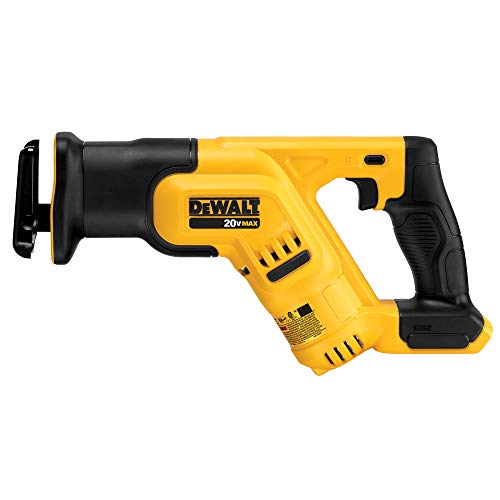
The DCS387B is the DEWALT option that feels most purpose-built for confined demolition work. Its 14-inch body is short enough to fit between studs, and that matters more than many shoppers realize until they are inside an actual remodel. Once plaster, drywall, or cabinetry starts coming apart, the saw that can stay flat and reach where your arms cannot is often the one that saves the most time.
What sets this model apart is the 4-position blade clamp. That is not just a convenience feature, it changes how useful the saw becomes for flush cuts and awkward angles. The 1-1/8-inch stroke length is also a strong point, since it helps the saw move through material quickly once the blade is engaged. Add the LED light and variable-speed trigger, and you get a saw that is clearly aimed at practical demolition rather than polished finish work. It is still a bare tool, so battery cost needs to be part of the equation, but for buyers already in the DEWALT 20V ecosystem, it is a very sensible choice.
Pros
- Compact body fits neatly into stud bays and cramped spaces.
- 4-position blade clamp adds useful cutting flexibility.
- Strong stroke length helps with faster demolition cuts.
- Variable speed improves control on different materials.
- LED light helps in dark renovation areas.
Cons
- Tool only, so it is not a complete starter kit.
- Less refined than the XR model for frequent heavy-duty use.
- Not as light or small as the ATOMIC DCS369B.
Choose this saw if your work regularly involves flush cuts, remodel tear-outs, or demolition inside framing where space is limited. It is especially appealing for people who want a more traditional compact DEWALT feel than the ATOMIC offers. If you already own compatible batteries, the value becomes much better. If not, the total setup cost can climb quickly, which is the main reason some buyers will be better served by a kit-style alternative.
To buy this product, click here.
3. Best Budget Cordless Kit: SEESII Reciprocating Saw Cordless, Variable Speed 3500 RPM Brushless Motor with 6 Saw Blades, 2 X 4.0Ah Batteries, LED Light, Tool-Free Blade Change, Portable For Wood PVC Cutting

For shoppers who want a cordless saw without paying DEWALT-level prices, the SEESII package is hard to ignore. The biggest reason is straightforward: it arrives with two 4.0Ah batteries, a charger, blades, and safety accessories, so you are not immediately shopping for add-ons. For many DIY buyers, that complete bundle is what turns a budget tool from a good idea into an actually usable one.
The saw itself has several features that make it practical for light to moderate demolition. The brushless motor, variable speed up to 3500 RPM, and LED light are all useful in real-world work. At 2.0 pounds, it should be easier to handle than many full-size saws, especially for overhead trimming or awkward one-handed cuts. That said, the shorter 15mm stroke length tells you this is more of a versatile home-use saw than a hard-charging demolition specialist. It can handle wood, PVC, and lighter metal work, but buyers expecting pro-grade tear-out performance should temper expectations.
Pros
- Includes two batteries, charger, blades, and accessories.
- Lightweight design is easier for beginners and casual users.
- Brushless motor and variable speed improve flexibility.
- LED light helps in low-visibility work areas.
- Good entry point for homeowners who want a cordless all-in-one kit.
Cons
- Shorter stroke length limits its demolition bite.
- Not as durable-looking as the DEWALT options.
- Best suited to lighter jobs, not constant jobsite abuse.
This is the right pick for buyers who care more about overall package value than premium finish. It makes sense for occasional remodel work, pruning, furniture teardown, and light construction cleanup. Professionals who cut all day or need a saw that feels especially solid in hand will likely prefer the DEWALT models above, but for budget-minded users the SEESII gives a lot of usable capability out of the box.
To buy this product, click here.
4. Best Premium Cordless: DEWALT 20V MAX XR Reciprocating Saw Cordless, Brushless, Compact, Variable Speed, Pivoting Head, LED Light, Tool Only (DCS367B)

The DCS367B is the premium cordless pick in this roundup because it combines serious runtime claims, compact size, and a more refined overall build profile than the cheaper options. In demolition, that combination is valuable. A saw that runs longer and stays controllable in awkward spaces tends to save time in ways that are not obvious until you are midway through a tear-out and trying to finish a cut cleanly without fighting the tool.
Its 14.5-inch compact length and 5-pound weight make it practical for many of the same jobs as the DCS387B, but the XR positioning suggests a more robust day-to-day workhorse. The 1-1/8-inch stroke length and up to 2,900 SPM give it the kind of cutting authority buyers expect for demanding applications. The keyless 4-position blade clamp also matters because demolition is full of quick changes, and a saw that adapts easily to flush cuts or blade orientation shifts is simply easier to live with. The tradeoff is cost. This is a tool-only premium option, so it is best for buyers who already have a battery platform and want to step up in performance.
Pros
- Strong runtime and pro-oriented build feel.
- Compact size still works well in tight framing.
- Keyless 4-position blade clamp adds versatility.
- Good cutting speed for more demanding demolition tasks.
- LED light and variable speed improve usability on mixed materials.
Cons
- Higher cost than the other cordless DEWALT tools here.
- Tool only, so battery and charger may be extra expenses.
- Not the best value for occasional users.
If you want a cordless saw that feels ready for repeated renovation work, this is the one to look at first. It is especially appropriate for professionals or serious DIYers who already own compatible batteries and want to avoid stepping down in quality. Casual users can absolutely use it, but many of them will not need to spend this much to get the kind of performance they actually require.
To buy this product, click here.
5. Best Budget From A Major Brand: BLACK+DECKER 20V MAX Cordless Reciprocating Saw Kit (BDCR20C)

The BLACK+DECKER BDCR20C is the most approachable mainstream budget cordless option in the group. It does not try to impress with specs overload. Instead, it focuses on the basics: tool-free blade changes, a pivoting shoe, and a variable-speed trigger. For many homeowners, that is enough. If the goal is to cut up old lumber, trim pipe, or remove damaged sections during light renovation, a simple and familiar tool can be more valuable than a more ambitious one.
Its appeal comes from ease of use more than brute force. This is the sort of saw that makes sense for occasional DIY demolition where convenience matters and the workload is not punishing. The downside is that it lacks the more advanced refinement of the DEWALT lineup, and the product note about international versions is worth keeping in mind if consistency of packaging and instructions matters to you. Still, as a modestly priced kit from a recognizable brand, it offers a straightforward path into cordless reciprocating saw ownership.
Pros
- Simple design is easy for casual DIYers to understand.
- Comes as a kit rather than a bare tool.
- Tool-free blade changes save time on basic jobs.
- Pivoting shoe improves control over fixed-shoe designs.
- Good option for light home demolition and cleanup work.
Cons
- Less powerful and refined than the DEWALT models.
- Not ideal for sustained heavy demolition.
- International product note may matter to some buyers.
This saw is best for homeowners who need a practical cordless tool without moving up to a higher-end platform. It is not the most aggressive option, but it is easy to understand and simple to keep in the garage for occasional use. Buyers who expect pro-level performance or a very robust feel should spend more. Those who just want a reasonable starter saw for basic teardown tasks will probably find this one sufficient.
To buy this product, click here.
6. Best Corded Value: EZUVITA 7 Amp Corded Reciprocating Saw For Wood, Metal, PVC & Tree Pruning, 1-1/8″ Stroke Length & 2800 SPM, 6-Speed Dial, 180° Rotating Handle, Adjustable Pivoting Front Shoe, 6 Blades & Bag Included

The EZUVITA corded saw is attractive because it gives you a very demolition-friendly feature set without pushing into premium pricing. A 7 amp motor, 1-1/8-inch stroke, and up to 2800 SPM are respectable numbers for tearing through renovation debris, lumber, and general cut-and-remove tasks. Because it is corded, you also avoid the common cordless compromise of watching battery levels during the middle of a job.
The standout feature here is the 180-degree rotating handle. That makes this model more versatile than many budget saws when you need to cut overhead, work at odd angles, or keep your wrist from twisting too far in a cramped space. The adjustable pivoting shoe is another thoughtful inclusion because it can help extend blade life and improve cutting depth control. The kit also comes with several blades, a carry bag, and replacement carbon brushes, which makes the package feel more complete than the price suggests. The tradeoff is that corded convenience comes with cord management, and the overall fit and finish are not in the same league as DEWALT.
Pros
- Strong value for a corded demolition-capable saw.
- Rotating handle improves ergonomics in tight or awkward positions.
- 1-1/8-inch stroke length is useful for faster cutting.
- Includes blades, bag, and spare brushes.
- No battery to charge or replace.
Cons
- Cord limits mobility compared with cordless models.
- Build quality is less refined than the DEWALT tools.
- Best for value, not for a premium in-hand feel.
This is a strong choice for buyers who mostly work near outlets or in a garage, basement, or workshop. It makes particular sense for homeowners doing a single renovation project or anyone who wants a dependable corded backup. If portability matters most, a cordless model is more flexible. If steady power and lower cost matter more, the EZUVITA deserves serious consideration.
To buy this product, click here.
7. Best Feature-Packed Budget Cordless: Cordless Reciprocating Saw 21V Brushless Motor With 2X4.0Ah Batteries, 3500 SPM High-Speed Cutting, 8 Premium Blades For Wood, Metal, PVC Pipe, Lightweight & Professional Power Tool

The SOARFLY cordless saw tries to win on bundle value and feature count, and in that respect it makes a decent case for itself. Two 4.0Ah batteries, a brushless motor, eight blades, and a carrying case are the kinds of inclusions that immediately help a buyer avoid accessory shopping. For anyone building out a tool kit on a budget, that is a real advantage.
On paper, the saw is aggressive enough for demolition-adjacent work, with up to 3500 SPM and a set of blades suited to wood, metal, PVC, and general renovation cutting. The lightweight design and noise reduction claims suggest it is trying to be more comfortable than some bargain saws. Still, buyers should be realistic. This is a feature-rich value tool, not a premium jobsite workhorse. Its appeal lies in making occasional cutting tasks easier and less expensive, especially when cordless convenience is more important than top-tier brand reputation or refinement.
Pros
- Includes two batteries, charger, blades, and a case.
- Brushless motor and high SPM add practical cutting capability.
- Good for light demolition, pruning, and home projects.
- Compact design should be easier to handle in smaller spaces.
- Strong accessory bundle improves overall value.
Cons
- Less proven than the major-brand saws in this roundup.
- May not feel as durable under heavy daily use.
- Feature-heavy marketing does not always equal best cutting experience.
Buyers who want a cordless kit for infrequent demolition and assorted household cutting tasks may find this a smart compromise. It is also useful for someone who wants batteries included and does not want to spend extra on a platform right away. If you are judging tools by long-term jobsite durability, though, the DEWALT models remain safer bets. This one is better seen as a well-equipped budget option with decent flexibility.
To buy this product, click here.
8. Best Cheap Corded Option: Extbtfor 7Amp Reciprocating Saw, 360° Rotating Handle Power Reciprocating Saw With Variable Speed, 1-1/10″ Stroke Length Equipped With 5 Saw Blades For Wood, Metal Sheets And PVC Cutting

The Extbtfor saw is one of the least expensive ways into this category, which immediately makes it appealing to buyers who need a basic cutting tool more than a polished demolition machine. Its 7 amp motor and 0-2800 RPM range give it enough substance for common home jobs, and the rotating handle is a practical touch at this price level. For light teardown, shelf removal, fence repair, and mixed-material cutting, it has the right general shape of a useful budget corded saw.
What keeps it from ranking higher is not a single glaring flaw, but rather a collection of modest compromises. The 1-1/10-inch stroke length is fine for general use, but not especially forceful. The included blade assortment helps, though this is still a saw meant for occasional work rather than the kind of heavy demolition that punishes tools repeatedly. In short, it is a fair value if your expectations are measured. It is not the one to buy if you want a tool that feels particularly robust, but it can be the right answer if low price is the main driver.
Pros
- Very affordable entry point for corded cutting.
- Rotating handle adds useful comfort and control.
- Includes several blades for different materials.
- Variable speed helps with basic task matching.
- Good for occasional home repairs and light demolition.
Cons
- Less refined than the stronger brand-name options.
- Stroke length and overall feel are more modest.
- Not ideal for frequent, heavy-duty teardown work.
This model makes sense for the buyer who wants a cheap, usable corded saw for a garage or tool drawer. If you only need a reciprocating saw a few times a year, it may be enough. If you plan to use one throughout a major remodel, the extra money spent on a better-built DEWALT or even the EZUVITA will likely be worthwhile.
To buy this product, click here.
9. Best For DEWALT Battery Owners: Reciprocating Saw For Dw 20V Battery, Cordless Reciprocating Saws With 8 Blades, 0-3000SPM Variable Speed, Cordless Sawzall For Wood/Metal/PVC Cutting(Battery Not Included)
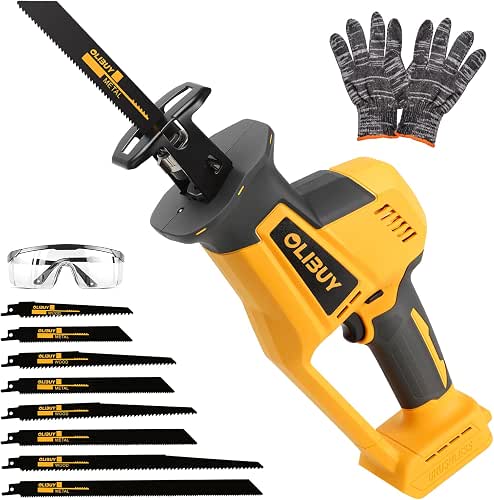
This bare-tool model is best understood as a compatibility play. If you already own DEWALT 20V batteries, it can be a low-cost way to add a reciprocating saw without buying into a new battery platform. That alone makes it relevant for many DIYers who have accumulated batteries from drills, drivers, or other tools and want a simple way to expand their kit.
It offers a variable-speed range up to 3000 SPM, eight blades, a tool-free blade change, and a safety button, all of which are useful features for light demolition and general cutting. The one-handed design and rubberized grip should help with comfort, especially for users who value easy handling more than raw brute force. The big caution is obvious but important. Battery not included means this is only a bargain if you already have compatible DEWALT packs. If you do, it can be an efficient add-on. If you do not, the value drops fast because you still need to source batteries separately.
Pros
- Good bare-tool value for users already in the DEWALT 20V ecosystem.
- Includes eight blades, which adds immediate utility.
- One-handed grip design should be comfortable for light work.
- Tool-free blade changes are convenient.
- Safety button is a helpful touch for storage and handling.
Cons
- Battery is not included, which changes the total cost significantly.
- Less compelling if you do not already own compatible batteries.
- Not as polished as DEWALT’s own full-price tools.
Pick this if you already have DEWALT 20V batteries and want a low-friction way to fill a gap in your tool lineup. It is practical for occasional remodeling, pruning, and general material removal. If you are starting from zero, the bundled cordless alternatives in this roundup will usually make more sense because they deliver a more complete package right away.
To buy this product, click here.
How We Chose
To build this roundup, the focus was on how each saw would actually perform in demolition and remodel settings, not just on headline specs. That means looking closely at compactness, blade-clamp design, stroke length, variable-speed control, and whether the tool looked manageable in cramped, awkward work areas. For demolition, those practical details often matter more than a flashy maximum speed number.
Product value also played a major role. Some buyers need a bare tool because they already own batteries. Others need a kit with batteries and blades because they are just getting started. Corded and cordless models were both included because demolition buyers do not all work the same way. A basement tear-out, garage overhaul, or outdoor cleanup can favor very different tools. The list was also kept to real products from the supplied Amazon results only, with no substitutions and no invented alternatives.
Buying Guide
Choosing the right reciprocating saw for demolition starts with the kind of cutting you do most often. If you spend a lot of time in studs, joists, cabinets, or other confined areas, a compact saw is usually the smartest choice. A shorter body and lighter weight make it easier to control, and in demolition control matters because you are often working around nails, pipes, hidden fasteners, and unpredictable material transitions. A saw that feels nimble can save both effort and mistakes.
The next question is whether cordless or corded makes more sense. Cordless saws are easier to move around, especially on ladders, outside, or in spots without easy outlet access. Corded saws tend to be better for long sessions because you never worry about battery life. They can also be a better value if you already own a compatible battery platform. For many homeowners and part-time remodelers, the choice comes down to whether convenience or uninterrupted runtime matters more.
Blade changes and shoe design are worth closer attention than many shoppers realize. Demolition often requires moving from wood to metal to plastic in the same project, and a tool-free blade system helps keep momentum. A pivoting or multi-position shoe also improves contact and lets you adapt to flush cuts. If a saw feels awkward at the front end, it will be more tiring than it should be, no matter how powerful the motor sounds on paper.
Finally, think about who will use the tool and how often. A weekend DIYer tearing out a few damaged boards does not need the same level of refinement as a contractor who cuts daily. Budget saws can work well for occasional use, especially when they include batteries or blades. Premium models are worth it when comfort, durability, and repeat use become priorities. The best reciprocating saw for demolition is not always the strongest one. It is the one that matches your space, your pace, and your workload.
Frequently Asked Questions
What Makes A Reciprocating Saw Good For Demolition?
A good demolition saw combines cutting speed, control, and durability. Compact size helps in tight framing, a strong stroke length helps move material faster, and a comfortable grip reduces fatigue when you are making repeated cuts. Features like a tool-free blade clamp and a pivoting shoe are especially useful because demolition work often changes direction and material type quickly.
Is Cordless Or Corded Better For Demolition?
It depends on the job. Cordless is better when mobility matters, such as working on ladders, outdoors, or in rooms without easy outlet access. Corded is often better for long demolition sessions because it never runs out of power. If you already own compatible batteries, cordless can be very convenient. If not, a corded model may offer stronger value.
How Important Is Stroke Length?
Stroke length matters because it affects how much material the blade clears with each movement. A longer stroke generally helps a saw cut more aggressively, which is useful in demolition. That said, it is not the only thing that matters. A saw with a slightly shorter stroke can still be a better choice if it is lighter, easier to control, or more comfortable in tight spaces.
Do I Need A Brushless Motor?
Brushless motors are worth considering if you want better efficiency, longer runtime, and usually a more refined tool feel. They are not mandatory for occasional use, but they often make sense in demolition saws because the work can be demanding. If you plan to use the saw frequently or for extended periods, brushless is usually the safer bet.
What Should Beginners Look For?
Beginners should look for a saw that is easy to handle, not just powerful. A light body, variable speed, and tool-free blade changes make a big difference. Battery kits can also be easier for first-time buyers because they include what is needed to get started right away. For home users, comfort and simplicity are often more valuable than top-end specs.
Are Cheap Reciprocating Saws Worth It?
They can be, as long as your expectations are realistic. A lower-cost saw may be perfectly fine for occasional remodeling, pruning, or light tear-out. The tradeoff is usually less refinement, lower durability, or weaker long-term value. For a one-time project, a budget model can be smart. For repeated heavy demolition, spending more often pays off.
Do I Need Special Blades For Demolition?
Yes, the blade matters a lot. Wood, metal, pruning, and demolition blades are designed for different materials and cutting behavior. A general-purpose blade can work in a pinch, but demolition usually goes better with blades matched to the material. It is also smart to keep extras on hand, because dull or bent blades slow the job and make the tool feel underpowered.
Final Verdict
The best all-around choice in this roundup is the DEWALT ATOMIC DCS369B. It has the right mix of compact size, light weight, and practical cutting control to handle demolition work without becoming a burden. For a lot of buyers, that matters more than having the biggest motor or the longest spec sheet. If you work in tight framing or need a saw that is easier to maneuver overhead and one-handed, it is the most balanced recommendation here.
That said, the rest of the field has clear strengths. The DEWALT DCS367B is the premium cordless pick for buyers who want more runtime and a tougher pro feel. The EZUVITA 7 Amp and Extbtfor 7 Amp models make sense when corded power and lower cost are the priority. The SEESII and SOARFLY kits are better for budget buyers who want batteries included. The best approach is to match the saw to the kind of demolition you actually do, not the kind you imagine doing. Tight spaces, repeated overhead cuts, and all-day tear-outs each reward different strengths, and the right choice will make the work safer, faster, and less tiring.
Leave a Reply