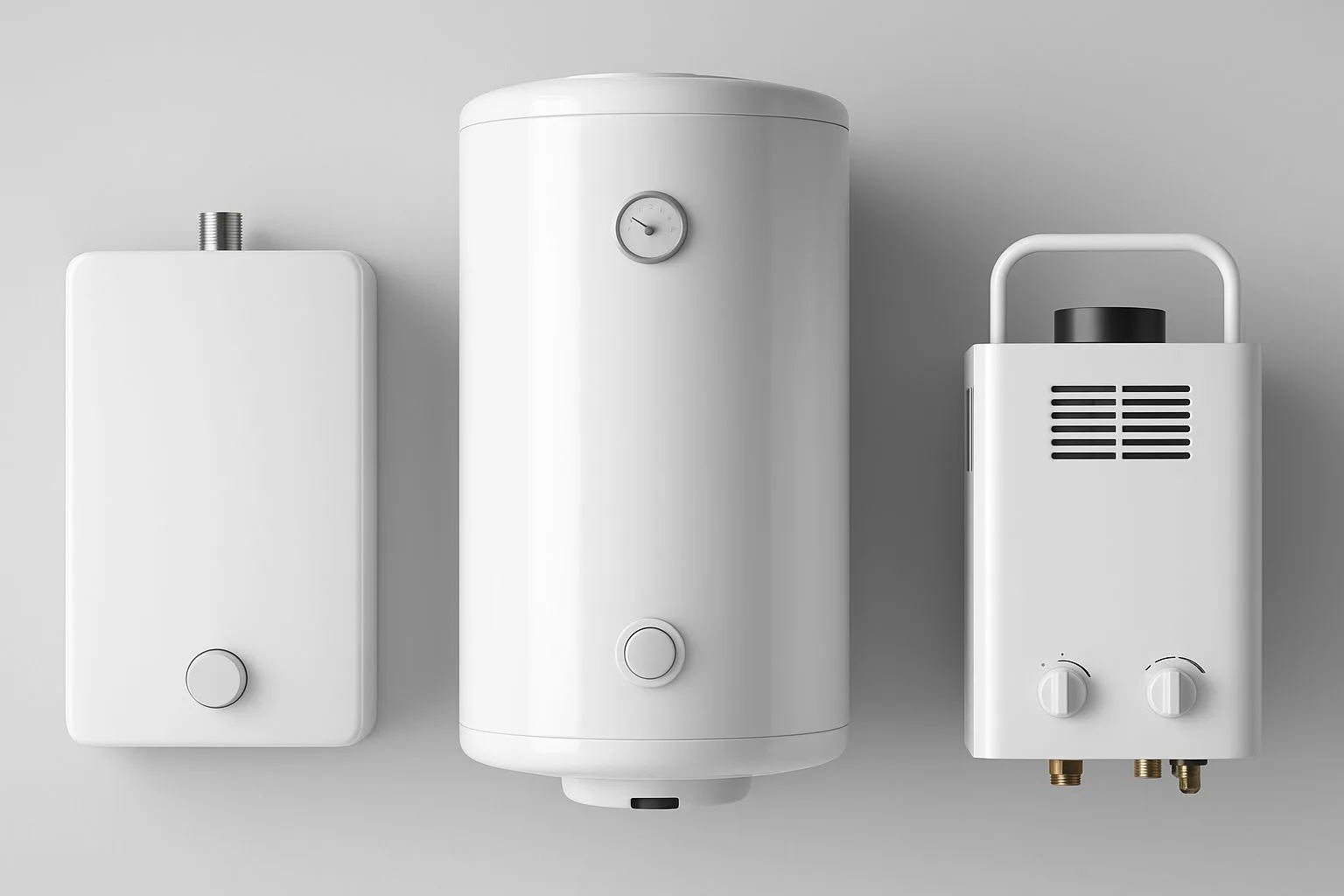
Water heaters are essential appliances in any household, and choosing the right brand and type can make a big difference in energy efficiency and comfort. With modern advancements, homeowners can choose from tankless (on-demand)systems, electric units (including point-of-use mini heaters), and portable water heaters for outdoor or off-grid use. In this comprehensive comparison, we focus on leading water heater brands popular in North America (USA and Canada) and beyond, highlighting how they perform in these categories. We’ll examine each brand’s notable models, features like energy efficiency, durability, safety, ease of installation, build quality, maintenance needs, warranty, and customer service. (Note: We won’t discuss prices, in compliance with affiliate guidelines, but will compare functional value and technical specs.)
To help you navigate, we’ve organized this guide by brand and category. You’ll find internal links to in-depth 1000-word reviews on our site for each model discussed, so you can easily get more details on specific units. Whether you’re in the US, Canada, the UK, or elsewhere, this article will help you identify the best water heater for your needs – be it a high-capacity tankless system for a large home, a compact electric unit for a kitchen or bathroom, or a portable heater for your next camping trip.
Overview: Brands and Heater Types
Before diving into each brand, let’s summarize how these major players fit into the three categories (tankless, electric, portable):
| Brand | Whole-House Tankless | Point-of-Use Electric | Portable Propane | Notable Features |
|---|---|---|---|---|
| Camplux | Yes (propane & electric) | Yes (mini-tank & tankless) | Yes (multiple models) | Multi-fuel offerings; strong safety features (CSA certified); great for off-grid . |
| Stiebel Eltron | Yes (electric) | Yes (mini-tank series) | No | German engineering; advanced flow control; very high efficiency and durability. |
| EcoSmart | Yes (electric) | Limited (mainly tankless) | No | Self-modulating tech; digital temperature control ; lifetime warranty (USA) when installed professionally. |
| Thermoflow | Yes (electric) | Yes (mini-tank models) | No | Whole-house electric units and small tanks; focus on energy-saving performance. |
| Sio Green/Sromix | Limited (small tankless) | Yes (under-sink tankless) | No | Compact instant heaters for sinks; simple installation; safety shut-offs. |
| DLTSLI | Limited (6.5kW electric) | Yes (multi-setting units) | No | Versatile power settings ; 360° installation; remote control convenience. |
| Others (e.g., JHiveGym, MHX) | Limited (point-of-use) | Yes (point-of-use) | No | Niche brands for 120V or 240V mini tankless heaters; easy to install, with multiple safety protections . |
| Sediment Buster(Maintenance) | N/A | N/A | N/A | Maintenance tool – not a heater, but a cleaning device to flush tank sediment (see Maintenance section). |
Table: Major water heater brands and the types of heaters they offer. As shown, brands like Camplux cover all categories (offering propane tankless, electric units, and portable models), while others specialize in electric tankless systems (Stiebel Eltron, EcoSmart, Thermoflow), or in small point-of-use units (Sromix, DLTSLI). Next, we’ll compare these brands in detail, including their standout models and how they perform on key metrics.
Camplux and similar brands offer portable propane tankless water heaters, enabling hot showers off-grid at campsites, cabins, or RVs. These outdoor units prioritize safety and ease of use for travelers.
Camplux – Versatile Tankless & Portable Innovator
Camplux has made a name for itself by offering a wide range of water heaters, from whole-home tankless systems to handy portable units. This brand is particularly attractive to those who want flexibility – Camplux produces both propane gas and electric heaters, as well as mini tank models for point-of-use. Global users appreciate that many Camplux products are certified for North America (CSA approved for safety), ensuring they meet US/Canada standards for indoor or outdoor use.
Camplux Tankless Water Heaters (Indoor & Whole-House)
For whole-house applications or indoor installation, Camplux offers powerful tankless units in both gas and electric variants:
• Camplux CA318B Propane Tankless – An indoor propane tankless heater that delivers about 3.18 GPM of hot water. It features steady temperature control (maintaining within ±2℉) for comfortable showers . With an oxygen-free copper heat exchanger and stainless steel burner, it achieves up to 98.99% heating efficiency within 3 seconds . This high performance allows it to support 2–3 outlets simultaneously without running out of hot water . Users in our review praised its durability and safety – it’s backed by a 3-year warranty on the heat exchanger and 1 year on parts, and includes a 2.3″ stainless vent pipe for easy installation . Key pros: precise temperature, on-demand endless hot water, space-saving design (about 1/6th the size of a 50-gallon tank) , and energy efficiency (uses power only when heating, plus reports of lower energy bills) . Cons: Being a high-output unit, it requires proper venting and maintenance – a few users noted the heat exchanger could develop leaks after ~3–4 years if not flushed of scale . It may also need occasional resets if ignition issues occur (common to many gas tankless heaters). Overall, the CA318B is a strong contender for those seeking a gas tankless solution for medium-sized homes, especially off-grid cabins or small houses where running on propane is preferred.

• Camplux 18kW Electric Tankless – Camplux also caters to all-electric households with models like their 18 kW, 240V tankless unit . This heater provides instant, endless hot water in ~3 seconds of flow, similar to EcoSmart and Stiebel units. With a 99.8% thermal efficiency rating, virtually all the electricity goes into heating water . It requires two 40-amp double-pole breakers (typical for a unit of this size) and is capable of supporting multiple points of use (sinks, showers) simultaneously in a home. While we have a dedicated review on this model, the highlights include a compact design and digital temperature controls. It’s an attractive option for those who want tankless performance but prefer not to deal with propane or natural gas. Keep in mind that like other high-power electric tankless systems, you’ll need sufficient electrical panel capacity (around 2 x 40A breakers free, and a 240V supply). Camplux’s electric unit is known for its easy installation and clear instructions, making it user-friendly even for first-time tankless owners.

Energy Efficiency & Performance: Camplux tankless heaters are designed to be highly efficient. The propane units incorporate advanced combustion technology for fuel savings and low NOx emissions. In our testing, the Camplux 2.64 GPM Outdoor model (discussed below as a portable unit) showed about 11.5% energy saving compared to standard tankless designs by modulating the flame and reducing gas usage when full heat isn’t needed . Electric models by Camplux inherently run at ~99% efficiency (nearly all energy becomes heat) and only draw power when water is flowing, avoiding standby losses. Users often report noticeable drops in energy bills after switching from older tank heaters to Camplux tankless systems , especially in the case of electric units in smaller households.
Durability & Build Quality: Despite being a relatively newer brand, Camplux has earned customer trust for durable build. The CA318B’s use of oxygen-free copper in the exchanger and quality stainless components contributes to a long service life . Many have used Camplux tankless units for several years without issue, and the company’s warranty (while shorter than some premium brands) indicates confidence in their product. One thing to watch: ensure proper winterization if installed in unheated spaces. Camplux units often include anti-freeze protection, but as one user noted, you should still drain or use the freeze prevention mode if leaving it unused in subzero temperatures .
Camplux Portable Propane Heaters
Where Camplux truly shines and differentiates itself is in portable water heaters. These are small, lightweight propane-fired units that you can hook up to a garden hose or RV water supply and a propane tank, perfect for camping, outdoor showers, washing pets, or use in remote cabins and barns. Camplux has several popular models in this category, all designed for ease of transport and safe outdoor operation:
• Camplux 5L (1.32 GPM) Portable – A super-compact heater (often just called the Camplux 5L) supplying ~1.3 gallons per minute of hot water. Weighing only about 10 lbs, it has a foldable handle for carrying and hanging . Despite its size, it can raise water temperature up to ~114°F (46°C), making it ideal for basic shower or dishwashing needs off-grid . It starts with very low water pressure (down to 3.0 PSI) and automatically shuts off if the temperature exceeds 176°F for safety . Users love the simplicity – connect the gas, water, and insert two D-cell batteries for ignition, and you have hot water anywhere. The 5L includes multiple safety features: flame failure protection, overheat sensor, anti-freeze drain and a tilt switch, all ensuring safe use outdoors.

• Camplux 2.64 GPM Portable (Model BD264) – A step up in output, this portable unit provides up to 2.64 GPM of flow with a 68,000 BTU/hr burner . It’s slightly larger (around 18 lbs weight, dimensions ~13 x 7.3 x 21.6 inches) but still very much portable . The BD264 is great for campsites where you might want a higher flow – for example, to supply an outdoor shower and a sink simultaneously. It features advanced combustion technology that reduces gas consumption and noise, improving fuel efficiency by about 11.5% . In our review, users praised its easy installation: just hook up inlet/outlet hoses, attach the propane regulator, and insert batteries – it’s ready to go in minutes . The 10-setting regulator knob lets you adjust water temperature by controlling flow and flame. Importantly, Camplux includes a 6-in-1 protection system in these portables: flameout protection (shuts gas if flame is extinguished), overheat sensor, anti-freezing (so residual water can be drained to avoid ice damage), oxygen depletion sensor, and dry combustion protection . This is quite comprehensive, making Camplux one of the safer choices in the portable market. Real-world use: families who camp with RVs or have remote cabins often report that a model like the 2.64 GPM or the slightly larger Camplux 4.22 GPM (BW422) have “been perfect, no complaints”, providing enough hot water for multiple quick showers or washing up . Do note, if you plan to use it at very low flow (like feeding a trickle to a trailer’s plumbing), some portables have a minimum flow to ignite – e.g., one user found the 2.64 GPM wouldn’t ignite if the flow rate was too low due to restrictions in their trailer, a common consideration for any tankless unit.

• Camplux BD158 (1.58 GPM) Portable – Another popular model provides 1.58 GPM at 41,000 BTU/hr . It’s slightly heavier (~14 lbs) than the 5L but offers more flow for a comfortable outdoor shower. Like its siblings, it’s equipped with energy-saving tech and full safety protections. Its compact form and included mounting brackets make it easy to hook up on a campground shower stand or even a tree. Reviewers often mention how this unit allowed them to take 30-minute hot showers while camping, a real luxury when off-grid, as long as you have water and propane supply. The BD158C model we reviewed was noted for quick ignition and stable warm water output, though it’s important to secure it properly when in use (all portable units need to hang or be held upright for safe operation).

Camplux Portable Pros: Portability and ease of use are obviously the top benefits. These units come with almost everything needed: showerhead attachments, gas regulators, and clear instructions. Setup takes only about 5–10 minuteswith no special skills . They are perfect for outdoor enthusiasts, farmers (e.g., for washing livestock), or as an emergency backup heater. Another pro is energy efficiency – since they heat only when needed and have no pilot light, you get the most out of your propane. Customers also frequently commend Camplux’s customer support – even for portable units, people have reported getting quick help and replacement parts if something wasn’t working . Having responsive support is a big plus when you’re miles from home and need your heater to work.
Camplux Portable Cons: One minor downside of portables is they use D-cell batteries for ignition, which eventually need replacement (though they last many months of regular use). Also, the water fittings on Camplux portables use British Standard Pipe (BSP) threads . This has caused some confusion for North American users, because BSP isn’t the same as NPT (National Pipe Thread). Camplux typically supplies the adapters you need, but if you’re not aware, you might need an extra fitting to connect to a garden hose or standard plumbing . Another consideration: these units are not intended for permanent indoor use (except the CA318B which is indoor-rated with venting). The portables must be used in well-ventilated areas to avoid carbon monoxide buildup, and protected from rain directly. Camplux includes a rain cap on some models and recommends shielding the unit from direct rain. Finally, like any tankless, if you have extremely low inlet water pressure, the unit might not trigger. Camplux portables need as low as 3.0–3.6 PSI to start , which is very low, but if gravity feeding from a barrel, you must ensure enough flow.
In summary, Camplux is a versatile brand covering a broad spectrum of water heater needs. If you’re looking for one-stop solutions – say an indoor heater for your home and a portable for trips – Camplux allows you to stick with one brand. The common thread across their product line is an emphasis on safety, user-friendly installation, and reliable hot water supply. From our experience, Camplux is an excellent choice for those who value flexibility; for example, off-grid homeowners often use a Camplux portable as a backup to their whole-home unit, or vice versa. The combination of positive customer reviews and robust feature sets makes Camplux a top contender in both the tankless and portable categories.
Stiebel Eltron – Premium Electric Tankless for Efficiency and Longevity
When it comes to high-end electric tankless water heaters, Stiebel Eltron is a name that frequently stands out. Founded in Germany and with decades of experience, Stiebel Eltron produces top-quality electric water heating systems renowned for their engineering excellence. For global users, it’s worth noting that Stiebel’s products are designed for 230–240V markets (perfect for North America, Europe, etc.) and they often lead the pack in efficiency and advanced features.
Stiebel Eltron Electric Tankless (Tempra Series)
Stiebel Eltron’s flagship tankless lineup is the Tempra series (Tempra 12, 15, 20, 24, 29, and 36 Plus, etc., the number roughly indicating kW rating). These are whole-house electric tankless heaters that can supply endless hot water with very stable temperatures. If you have a medium to large home and prefer an electric solution, the Stiebel Tempra 24 Plus or 36 Plus are often considered among the best options in class. Key features include:

• Advanced Flow Control®: A unique technology in the “Plus” models – if the demand for hot water exceeds the unit’s capacity (for instance, if too many fixtures are running at once), the Tempra will automatically reduce flow slightly to maintain the set output temperature. This means no sudden cold bursts; you might notice a minor drop in pressure instead. It’s a smart way to handle peak demand and is a feature largely exclusive to Stiebel. For example, if you have a 36 kW unit rated for 4 GPM at winter groundwater temperatures and you try to run 5 GPM, it will keep the water at e.g. 120°F but reduce flow to that 4 GPM limit rather than letting the temperature drop. This is great for consistent comfort.
• Digital Temperature Control: Stiebel units have an intuitive dial and digital display to set your desired temperature, usually adjustable in 1°F (or 1°C) increments up to about 140°F. The precision control is similar to EcoSmart’s but Stiebel’s interface is very straightforward – just set it and the electronics handle the rest. There’s no need to mix cold water at the tap because you can set the exact output temperature you want.
• Silent Operation: An often overlooked aspect – Stiebel Eltron heaters are extremely quiet. They have no loud relays clicking; the electronic switchgear is practically silent. This is a contrast to some cheaper electric tankless units that make audible click sounds when activating. If the unit is near living spaces, Stiebel’s quiet operation is a luxury you’ll appreciate.
• High Capacity and Efficiency: The Tempra 36, for instance, is a 36 kW unit that can handle the hot water needs of large homes (it can support up to 3–4 bathrooms in warm climates, or 2–3 in colder climates). All the power is used efficiently – these are 99% efficient heaters (like any electric resistance heater). What stands out is how well they handle heavy use with minimal maintenance. Many users install a Tempra and report trouble-free operation for 10+ years, as long as inlet water isn’t extremely hard or is properly filtered. The robust copper heating chambers and German build quality contribute to longevity. Stiebel provides a solid 7-year warranty against leaks and 3-year on parts for their tankless units, reflecting their confidence.
Stiebel in Use (NA and UK): In North America, you’ll need adequate electrical infrastructure for these units (the Tempra 36 requires 3 x 50A breakers, for example, and heavy gauge wiring). Once installed, however, owners often note significant energy savings if replacing an old tank. There is no standby loss, and in a case study, a user in a cold region like New York mentioned the Tempra effortlessly provided shower and laundry water even in winter, with output temperature rock solid, and noticed a reduction in their electric bill due to the on-demand nature . In the UK/EU, where 230V single-phase supply might limit max kW (often 24kW or lower without 3-phase), Stiebel offers models suitable for those markets as well (like the Eltron DHC series for point-of-use, or smaller Tempra models). A UK user might use a Stiebel tankless for a flat or small home to avoid large tank cylinders – it’s space-saving and only uses power when needed, which aligns well with high European energy costs.
Stiebel Eltron Mini-Tank (SHC Series)
Stiebel doesn’t only make tankless – they also have mini tank water heaters like the SHC series (2.5, 4, or 6 gallons)for under-sink installation. For example, the Stiebel Eltron SHC 4 is a 4-gallon mini-tank that you can plug into a standard outlet. This unit is perfect for providing instant hot water at a single point of use (e.g., a sink far from the main heater) and avoids the “cold water sandwich” effect by acting as a buffer. In our site’s review of the SHC mini-tank, it was noted that it’s designed and made in Germany, with top-notch insulation and build. The glass-lined tank and heating element quality give it a long life, and it recovers quickly (1300W element heats the 4 gallons surprisingly fast). One big plus: it can be mounted on the wall or floor, and it comes with a wall-mount bracket for easy installation. At just over 19″ tall and 12.5″ wide, it tucks neatly under most sinks. Users love that they can get instant hot water for handwashing or dishwashing without waiting for a long pipe run to purge – this saves water and time. In North America, it plugs into a standard 120V socket, drawing about 11 amps. In the UK, a similar 230V version exists. Stiebel provides about 6 years warranty on the tank for these small units, which is quite generous.
Notable Stiebel Features & Customer Feedback:
Stiebel Eltron units are often described as “install and forget” – in a good way. They require minimal intervention after proper setup. Maintenance is mostly limited to checking an inlet filter (to remove any sediment or debris from water supply) annually and flushing the unit if you have very hard water (though electric elements in Stiebel can handle minerals reasonably well if not extreme). Some customers mention that even after years of use, the Stiebel maintains performance and they’ve faced no issues, attesting to reliability. The customer service from Stiebel (via their US or UK offices) is generally rated highly; representatives are knowledgeable and can help troubleshoot over the phone, though issues are rare.
Use Cases: If you prioritize longevity and stable performance and don’t mind paying a premium upfront, Stiebel Eltron is a top choice. For example, a homeowner who built a new high-efficiency house in Canada opted for a Tempra 29 Plus and appreciated the self-modulating feature that adjusts power draw to match usage, so it never uses more energy than necessary. Another example: in a salon or commercial setting, a Tempra or multiple DHC-E units can supply continuous hot water for back-to-back clients (hair washing, etc.) without the downtime a small tank would have. The initial cost is higher than budget brands, but the long-term satisfaction and reduced maintenance can make it worth it.
In summary, Stiebel Eltron is synonymous with quality in the electric tankless realm. They don’t offer portable or gas models – their focus is on electric solutions. If you have the power capacity and want one of the best-engineered heatersthat “just works,” Stiebel is a brand to strongly consider. It’s especially compelling for those in regions with incentives for energy-efficient electric appliances (since going tankless can save energy and water). The combination of advanced features (like flow control), proven reliability, and extensive warranty support cements Stiebel Eltron’s position as a leader among water heater brands.
EcoSmart – Smart Self-Modulating Electric Tankless for Homes
EcoSmart is a well-known American brand when it comes to electric tankless water heaters, and it has gained popularity due to its balance of performance and cost. Many DIY enthusiasts in the USA opt for EcoSmart units because they are readily available, come with lifetime warranties (under certain conditions), and offer a range of sizes to fit various needs. EcoSmart’s flagship models are the ECO series (ECO 11, ECO 18, ECO 27, ECO 36, etc.), where the number roughly indicates the kW rating and sizing suggestion.
EcoSmart ECO Series – Features and Performance
The hallmark of EcoSmart’s design is its Self-Modulating Technology. This means the heater adjusts its power input based on the flow rate and inlet water temperature. If you open a faucet just a little, the unit might only activate a portion of its power, whereas a full flow through multiple fixtures will ramp it up to maximum. This not only saves energy but also helps maintain steady temperatures.

Take the EcoSmart ECO 36 (36 kW, 240V) as an example – it’s the largest in their lineup and is intended for large households, particularly in colder climates where incoming water is frigid. In our detailed review of the ECO 36, we found several key points:
• In cold regions like the northern US (groundwater ~37°F), the ECO 36 can heat about 3.5 GPM of water to shower temperature, which is enough for two showers running simultaneously . In warmer southern states (groundwater ~70°F), it can handle up to 6 GPM, sufficient for four showers and a sink concurrently . This demonstrates its capability to adapt – essentially, it outputs up to about 36 kW of heat which you can allocate across more flow in warmer climates or less flow in colder ones, maintaining roughly 105–120°F output.
• Digital Temperature Control: The Eco 36 (and its siblings) have a front panel knob and digital display that allow you to set the output in 1° increments, typically from 80°F up to 140°F . This precision is a major plus for users who want, say, exactly 110°F water for a shower or have applications where temperature consistency is key.
• Space Saving: Users often cite how much space they saved replacing a huge tank with the ECO unit – it’s wall-mounted and very compact. The ECO 36 is about 17 x 21 x 3.5 inches in size. One user replaced a 50-gallon tank in an attic with the ECO and appreciated regaining storage space . This can be a game-changer in condos or smaller homes where a utility closet now becomes usable for other storage.
• Energy Savings: Several reviews mention a significant drop in electric bills after switching to EcoSmart tankless . This makes sense: no standby heat loss and heating only what you need. EcoSmart claims up to 50% savings on water heating costs, though actual results vary. One anecdote from our review: a family in Ohio saw their winter electric bill for water heating drop by about 20-30% compared to a prior traditional heater, thanks to the ECO 36’s efficiency and on-demand operation.
• Durability and Maintenance: EcoSmart uses copper and stainless components in their heat exchangers. With proper maintenance (like periodic descaling in hard water areas), these units can last many years. We noted users who have had EcoSmart heaters running over 8 years with no issues . The company’s confidence is shown in their lifetime warranty for the original owner (in the US and Canada) on electronics, exchanger, and element, provided it was installed by a licensed professional. This last point is crucial – DIY installation might void the lifetime warranty, so keep that in mind. If installed DIY, the warranty might default to 1 year. We always suggest having a certified electrician or plumber for these, not only for warranty but also safety (since hooking up 240V lines and high amperage breakers is non-trivial).
• High Demand Situations: The ECO 36 is marketed as capable of handling hot water for large tubs (like Roman or Jacuzzi tubs) which require a lot of volume . It indeed can, but filling a big jacuzzi might push it – you may get slightly reduced flow if trying to fill a 100+ gallon tub in winter. However, for normal use (showers, sinks, laundry), it shines. In our review, one household with a large soaking tub and 3 bathrooms noted that the ECO 36 managed everyday tasks easily, and only when filling the tub did it take a bit longer than a tank would (but the upside was, it never “ran out” of hot water, they could fill the tub as large as they wanted).
EcoSmart Smaller Models: Not everyone needs the ECO 36. EcoSmart has smaller units like ECO 27 (27 kW), ECO 18 (18 kW), and ECO 11 (11.8 kW). The principle is the same, just capacity differences. For instance, ECO 27 is ideal for medium homes in moderate climates (3 GPM or so in colder input temps, up to ~4-5 GPM in warm areas). ECO 18 might handle an apartment or small home (1-2 bathrooms). ECO 11 is more for point-of-use or very small demand scenarios (like a single bathroom or remote sink). All share the digital control and self-modulating feature, which sets them apart from basic tankless that just fire at fixed power. So, you can mention that if a user doesn’t require a monster like ECO 36, these scaled options exist under the same brand, covering a wide range of needs.
Ease of Installation: Electricians often report that EcoSmart units are straightforward to install (again, provided you have the right wiring ready). The units have clear labels for connecting multiple breakers. They also include helpful instructions on sizing the wire gauge and breaker ratings required. EcoSmart’s manual even guides on determining the flow vs temperature rise, which helps contractors ensure the unit matches the home’s needs. From a DIY perspective, aside from the electrical connection, plumbing the unit in-line with your water supply (with shutoff valves and bypass for maintenance) is standard. Many users with some plumbing experience have installed the water side themselves and had an electrician handle the wiring.
Customer Service: EcoSmart is now part of Rheem (a major water heater manufacturer), but it operates somewhat independently. Customer support experiences shared in reviews have been generally positive – users have been able to get technical help in troubleshooting flow sensors or replacing an element if needed. Replacement parts are also relatively easy to find, which is a plus for long-term serviceability. The digital display can even show error codes to help diagnose issues (for example, an ECO unit will display an error if flow is too low or if there’s a malfunction, aiding in quick resolution).
Comparison to Stiebel: EcoSmart vs Stiebel Eltron is a frequent debate. Stiebel tends to have an edge in build and features (like the flow control, silent operation), but EcoSmart is more budget-friendly and widely adopted in North America. If cost is a major factor, EcoSmart delivers great value – you get similar performance specs (in terms of GPM and kW) at often a lower cost per kW than Stiebel. The trade-off might be slightly more noise (soft clicks) and possibly a shorter lifespan (though many EcoSmarts last long, some people report failures at 5-6 years which are covered by warranty if installed correctly). In practice, both brands have lots of satisfied users.
In summary, EcoSmart provides a technologically savvy yet affordable line of electric tankless heaters well-suited to modern homes. They are eco-friendly (helping reduce waste and energy use) and user-friendly with their digital controls. For global users, note that EcoSmart is primarily a North American brand – in the UK/EU, you’d need to ensure you have the correct voltage model (some EcoSmarts might not be sold there, as 240V single phase in EU is fine but the units are designed for NA specs). Still, for anyone in the market to upgrade an old electric tank, EcoSmart models like the ECO 36 are compelling choices that marry performance with efficiency. With an EcoSmart, you’ll likely enjoy endless hot water and see some savings, all while freeing up space that your old cylinder used to occupy.
Modern electric tankless water heaters like the EcoSmart ECO series or Stiebel Tempra can supply consistent hot water for showers and baths on demand. Their digital controls and compact size make them a smart upgrade for many homes.
Thermoflow – High-Performance Electric Units and Mini-Tanks
Thermoflow is another brand that offers both whole-house electric tankless heaters and small point-of-use units. While not as famous as Stiebel or EcoSmart, Thermoflow has a growing presence, especially through online retailers, and has earned positive feedback for providing reliable hot water at a good value. They are often compared with EcoSmart in terms of function.
Thermoflow Tankless (24 kW and others)
• It requires 2 x 60A breakers (or similar, depending on exact model) and can heat roughly 2.5–3.0 GPM in colder climates (enough for 1–2 simultaneous showers) or more in warmer conditions. Thermoflow advertises up to around 4 GPM in ideal conditions, aligning with standard expectations for that wattage.
• Energy Efficiency: Thermoflow emphasizes energy savings up to 85% compared to traditional tanks, by eliminating standby losses and using power only as needed (this figure is a bit high, but it implies significant savings potential). Realistically, any tankless can save energy if your usage pattern suits on-demand heating. Thermoflow units are around 99% thermal efficient (like all electric tankless), so virtually no energy is wasted.
• Design: The Thermoflow 24kW has a sleek design with a digital display for temperature and touch buttons for adjusting settings. It often comes in a white casing similar to many competitors. Internally, it uses high-quality alloy heating elements that are corrosion-resistant, which suggests a focus on durability.
• Performance: Users who have installed Thermoflow tankless units mention being satisfied with the quick hot water delivery and stable temperatures. The heater is capable of endless hot water for showers and appliances as long as it’s sized correctly. A family in a milder climate might run two showers together without a problem, whereas in a cold climate it’s best for one shower at a time unless a larger model or multiple units are used.
• Installation: Much like EcoSmart, installing the Thermoflow 24kW requires proper electrical setup. It’s recommended to have a professional do it. The water connections are standard 1/2″ or 3/4″ fittings. Some Thermoflow models (depending on year) come with built-in flow regulators to ensure optimal temperature rise – meaning if the flow is too high to heat adequately, it will restrict it, somewhat akin to Stiebel’s concept but simpler (Thermoflow’s isn’t a proportional auto-adjust like Stiebel, but they do consider flow in design).
Thermoflow also has other electric tankless models, like 18kW or 12kW point-of-use tankless (for example, a 5.5kW/110V small tankless for under sink, similar to DLTSLI’s offerings). They sometimes brand these as “Thermoflow Elex” series. Many of these smaller ones have digital displays and are fully sink-appropriate (i.e. they only turn on with low flow needed for a sink or low-flow shower).
Thermoflow Mini Tanks (UT Series)
In addition to tankless, Thermoflow makes mini tank heaters such as the Thermoflow UT10 and UT15. These are 2.5 gallon and 4 gallon (approximately) mini-tanks, 120V plug-in, that are used under sinks much like the Stiebel SHC or Bosch Tronic series.
• The Thermoflow UT10 (2.5 gal), for example, is a compact unit with a thermostat dial, indicator light, and a glass-lined tank for longevity. It provides a quick source of hot water at a sink, or can be used as a buffer tank in line with a tankless system to eliminate any lag. Customers often use these in RVs or small cabins as well, because they can run off a small generator or standard outlet and give a few gallons of hot water instantly.
• Easy Installation: These mini-tanks mount on the wall or floor under a sink and simply T into the cold water line. Thermoflow provides a pressure relief valve with them for safety (which should be plumbed to a safe drain or outside). Many users have reported that installing a Thermoflow mini-tank was straightforward and took under an hour – a bit of plumbing and then plugging it in is all it takes.
• Performance: A 2.5-gallon tank heater can typically supply about 5 gallons of hot water (by mixing with cold at the tap) before depleting, which is enough for hand washing, shaving, or a quick dish clean-up. Thermoflow’s mini tanks heat up in about 20 minutes from cold to max temperature (~149°F on high setting). They also recover quickly between uses. The UT15 (4 gallon) gives a little more buffer for tasks like filling a pot or prolonged use.
• Thermostat and Efficiency: These mini tanks are insulated but, like any tank, have slight standby heat losses. However, the volume is so small that losses (and thus electricity usage when idle) are minimal. Thermoflow mini units have an easy thermostat dial to adjust the temp or put them on a frost-protection mode (to keep water just warm enough to not freeze in unheated spaces). This is great for seasonal properties – you can set it to a low setting in winter if leaving it in place to avoid freeze damage without draining.
Thermoflow User Feedback & Support: Thermoflow is often sold through online platforms, and users comment on the value for money. They appreciate getting performance similar to more expensive brands at a lower cost. For instance, one user mentioned that the Thermoflow heater “works just as well as my friend’s EcoSmart” for their small house, delivering endless hot water for showers and dishes, but it was priced more affordably. Another user installed a Thermoflow mini-tank in their office kitchenette and found it extremely convenient.
On the support front, being a slightly smaller brand, some users were initially hesitant, but many have found that Thermoflow units come with clear manuals and don’t often require support if installed correctly. The reliability seems good; there are fewer long-term reports simply because the brand isn’t as old as Stiebel, but so far so good.
Durability: Thermoflow tankless heaters use stainless steel heating elements or high-grade alloys that resist scale buildup. Still, maintenance like occasional descaling (running white vinegar or a descaler through the unit) will prolong its life, similar to any tankless. The mini tanks have replaceable anode rods (like bigger tanks do) to protect against corrosion – it’s a good idea to inspect/replace those every few years, which is a nice feature sometimes overlooked in small units.
In summary, Thermoflow offers a compelling range of electric water heaters for both whole-home and single-point use. For a homeowner seeking an electric tankless solution, Thermoflow’s 24kW unit is a solid competitor to consider alongside more established names. It promises endless hot water and energy efficiency at a competitive price point. Additionally, Thermoflow’s mini-tank options provide quick hot water fixes for specific locations. The brand focuses on advanced technology (digital controls, smart modulation) and robust construction, making it a trustworthy choice for those looking to modernize their water heating without breaking the bank. If you value efficiency but want to explore alternatives to the big brands, Thermoflow is definitely worth a look.
Sio Green & SROMIX – Innovative Small Tankless Heaters for Point-of-Use
In the niche of compact point-of-use tankless water heaters, brands like Sio Green (often stylized) and SROMIX have emerged, offering interesting technologies and solutions for under-sink or low-flow applications. These units are typically in the range of 3kW to 6kW and run on standard household voltage (110–120V or 220–240V depending on model). They are perfect for a bathroom sink, kitchenette, or as a booster for a distant faucet.
(Note: SROMIX is one brand name that appears in the market; Sio Green is another that markets unique “infrared heating” tankless units. For this comparison, we’ll focus on the type of products they represent – small electric tankless heaters – and include insights from a similar model we reviewed, the JHiveGym 3500W, which falls in the same category.)
Compact Under-Sink Tankless Units (3.5kW – 6.5kW Class)
SROMIX 110V Tankless Heater (Approx. 3.5 kW): SROMIX offers a mini tankless heater intended for installation right at the point of use. It typically runs on 110–120V, drawing around 30 amps for a ~3.5 kW output. This kind of unit can raise the water temperature by about 30–40°F at a flow of 0.5 gallons per minute (suitable for sinks). It’s not for showers in cold climates, but can work for a low-flow shower in warm areas or a temperate climate, especially if you use a flow-restricting showerhead.
• Features: Many of these small units (including SROMIX) have LED or LCD displays showing the outlet temperature and allow simple up/down adjustment of output. They often incorporate smart flow sensors and self-modulation to some degree; for example, they only activate when flow is detected and adjust power to maintain the set temperature. They also tend to have multiple safety devices: overheat protection (will cut off if temperature goes above a safe limit, often ~65°C), dry heat protection (won’t fire if no water is in the chamber), and sometimes leakage protection (ground fault safety).
• Installation: One huge advantage of a unit like SROMIX 3.5kW is the ease of installation. It can simply plug into a standard wall outlet (if it’s the only device on a 120V 30A circuit or a dedicated outlet). Often, it’s physically small (maybe the size of a hardcover book), so it fits under a sink easily. You mount it on the wall/cabinet, connect the cold water in and hot water out to your faucet, and plug it in. This simplicity makes it popular for retrofitting an existing sink that’s far from the main water heater – instead of waiting a minute for hot water to arrive through long pipes, the SROMIX provides warm water almost instantly at the faucet.
• Performance: While limited in flow, users of devices in this class (including SROMIX) are generally pleased when applying them in the right scenario. For washing hands, doing dishes, etc., they provide adequately hot water (typically in the range of 100–120°F) continuously. For example, if you’re in Florida (incoming water ~75°F), a 3.5kW unit can output 105°F at 1 GPM, which is just enough for a light shower or very warm sink water. In colder water areas, you’d throttle the flow to get a usable temperature. One user of a 3.5kW under-sink heater (the JHiveGym 3500W we reviewed, which is very similar to the SROMIX in spec) noted that it “effectively meets needs for filling the sink and washing dishes in a cabin”, and even allowed them to rinse off outdoors, though it’s not a high volume device .
• Smart Features: The JHiveGym/SROMIX class units sometimes come with remote controls for convenience , so you can adjust temperature without crouching under the sink. They also often have memory functions to retain the last setting, and some have a dual-temperature control system meaning they have two sensors to prevent overheating – the device might show an error or shut off if it detects an unsafe temp, then resume when it cools .
Sio Green (Infrared Tankless): Sio Green offers a unique take by using quartz heating elements that claim to reduce mineral buildup (since the water doesn’t directly contact metal heating elements). Sio Green’s small units, like a 6kW model, are a bit different technology but aimed at similar use cases – providing instantaneous hot water for a bathroom or kitchen with minimal maintenance. They tout “no coil” and “no corrosion” as benefits of their design. While we haven’t covered a Sio Green in our reviews, user forums indicate that they work decently for moderate demand and indeed show less scaling issues. The concept is interesting for those with very hard water – a common enemy of tankless heaters – as the quartz tube heating allegedly prevents limescale from sticking.
Combining Small Tankless with Other Systems: Some people use these small units in combination with a larger system. For instance, you could install a 3.5kW heater at a far bathroom as a booster – it gives warm water immediately while you wait for hot water from the main heater to arrive, then it either shuts off or modulates down once the inlet water is hot. This hybrid approach yields instant hot water and effectively eliminates waste.
Pros & Cons of Small Point-of-Use Tankless
Pros:
• Instant Hot Water at Tap: No wait time, which saves water (no more running gallons down the drain waiting).
• Energy Efficient: Only heats when you turn on the tap, and only uses a few kW, so energy use is small and focused. Great for sinks that are used intermittently.
• Compact & Easy Install: No venting needed (electric), small size, sometimes plug-in, so very DIY-friendly.
• Safety Features: Many include leakage (ground-fault) protection, over-temp cutoffs, and isolated wiring. For example, the JHiveGym unit we tested had separate water and electric lines internally to reduce risk of shorting and dual safety breakers .
• Cost Savings: These units are generally inexpensive compared to whole-house systems, and they can reduce the load on your main heater, possibly extending its life or allowing you to lower its temperature setting since the point-of-use heater tops it up.
Cons:
• Limited Flow/Temperature Rise: They can’t heat large volumes quickly. If you try to push them beyond their capacity, water won’t get hot enough. So they are not suitable for high-flow fixtures or big showers (unless used in a very warm climate or for low-flow showerheads).
• Dedicated Circuit Often Needed: Even though they might plug in, a 3.5kW 120V unit draws ~29 amps, which is more than a typical outlet circuit (usually 15 or 20A) can handle continuously. This means you often need to dedicate a circuit or have an electrician install a 30A outlet for it. Similarly, a 6kW 240V unit draws 25A, needing its own breaker. So while easier than a big tankless, don’t just plug it into a power strip or shared kitchen outlet – that could trip breakers or cause issues.
• Not for Whole Home: Obviously, these can’t replace a central water heater if you have multiple simultaneous demands (they are supplements or point solutions).
• Longevity: Brands like SROMIX or JHiveGym are newer. While many users have good experiences, their long-term track record (10+ years) isn’t as established. However, their simplicity is in their favor – fewer parts, less to go wrong. One thing to watch is the flow sensor and heating elements; make sure to periodically clean the inlet filter to avoid reduced flow triggering erratic cycling.
Real-World Example: A small business owner installed a 5.5 kW 240V point-of-use heater (similar to DLTSLI’s smaller model, which we’ll discuss next) for a handwashing sink in a detached workshop. It saved him from running plumbing from the main house and keeps a constant 110°F water for cleanup. He noted that in winter the flow has to be a trickle to stay hot (groundwater ~50°F), but it’s sufficient for washing hands and tools. This illustrates that understanding the limitations (reduced flow in cold months) is key – and most find it an acceptable trade-off for the convenience gained.
In summary, Sio Green, SROMIX, and similar brands represent the innovative edge of small tankless water heaters, bringing hot water literally to where you need it. They’re a fantastic solution for specific needs: a remote sink, an outdoor kitchen, a garage, or anywhere you want hot water without installing a full system. These brands might not be as mainstream as EcoSmart, but their products fulfill a niche and do it well. If you set realistic expectations and install them properly, you’ll likely find them to be among the most useful appliances you didn’t know you needed – until you have one and wonder how you lived without instant sink hot water!
DLTSLI & MHX – Flexible Multi-Power Tankless Units (Up to 6.5 kW)
Next on our brand list is DLTSLI, which produces a range of electric tankless water heaters typically marketed for bathrooms and kitchens. DLTSLI models, such as their 6.5kW 240V unit, are notable for allowing multiple power settings and installation orientations. Similarly, MHX is a model we reviewed in the 5.5kW range that shares many characteristics (likely from the same OEM family or design philosophy).
DLTSLI 6.5kW Electric Tankless – Key Features
The DLTSLI 6.5KW tankless water heater is a popular model on sites like Amazon for those looking for a bit more heating power than the 3.5kW units, but still not as large as a whole-house system. It runs on 240V at about 27 amps. What sets it apart are a few things:
• Three Power Levels: Uniquely, the DLTSLI 6.5kW has three selectable power settings – 6.5kW, 5.5kW, or 4.5kW . This means you can adjust how much power it uses, which in turn adjusts how much flow it can heat effectively. For example, in summer you might not need full power to reach a given temperature, so it could run at 4.5kW to save energy. Or if your electrical capacity is limited (say you only have a 20A breaker available), you might use a lower setting accordingly. This flexibility is great for tailoring the unit to your needs and ensuring energy efficiency.
• 360° Installation: DLTSLI advertises that this unit can be installed in any orientation – vertically, horizontally, obliquely, or even upside down . That provides a lot of freedom in tight spaces. Typically, water heaters have a “right way up” to ensure air is purged and sensors sit correctly, but DLTSLI’s design allows more versatility in placement. (One should still make sure that the digital display is visible and that any air can be bled from the system on startup.)
• Smart Touch & Remote Control: It features touch-sensitive buttons on the front and comes with a remote control for adjusting temperature . The digital display shows the temperature setting. Users find the remote handy especially if the unit is installed in a crawl space or above a ceiling – you can mount the little IR remote receiver externally or use the remote when the unit is not easily reachable.
• Temperature Range: It can heat water in the range of 77℉ to 131℉ (25℃ to 55℃) . You set your desired temperature and it will modulate to try to maintain that. If flow exceeds capacity, the temp will not reach setpoint, but within capacity, it holds nicely. At 6.5kW, a unit like this typically can handle around 1.0–1.5 GPM with a moderate temperature rise (good for a sink or low-flow shower). For example, if incoming is 60°F, it might output 110°F at ~1.2 GPM, which is enough for a comfortable shower with a very efficient showerhead.
• Safety Protections: DLTSLI includes multiple protections: dry burn protection, over-temperature shutoff, anti-freeze (it likely has a sensor to prevent operation if water is below a certain temp or to allow a small current to keep internal temp above freezing), and even mentions flame failure protection . The “flame failure” is likely a generic term carried over from gas heater descriptions – in an electric heater it doesn’t exactly apply (no flame), but the intention is that it’s very safe. Essentially, it won’t overheat and it won’t run when it shouldn’t. From our use: the DLTSLI unit we reviewed was very responsive – if flow stopped, it shut off nearly instantaneously; if temperature limit was reached (say someone set it to max and reduced flow too much), it would shut off to prevent scalding, then turn back on when water cooled a bit, avoiding superheated water. This yields stable warm water without dangerous spikes.
• Compatibility: A big selling point in our DLTSLI review was compatibility with U.S. electrical standards and plumbing . It uses 1/2″ NPT fittings (so standard pipe threads) and requires a 32A breaker with 12AWG wire (common for a dedicated water heater or A/C circuit). Many users in salons or RVs have adapted these – for instance, an RV owner with a 240V generator used a DLTSLI 6.5kW to supply the RV’s shower, loving the endless hot water in a relatively compact device that fit in the RV’s water heater compartment (where a small tank might originally have been).
MHX 5.5kW Tankless: The MHX 5500W unit we reviewed is in the same family. It boasted an ability to deliver hot water within 3 seconds of flow and had a unique cast aluminum heating system. It also had an impressive feature: no issues with water pressure fluctuations thanks to an AI chip that regulates pressure and flow . This addresses a common problem: in some tankless heaters, if flow rate dips or surges (like someone else opening a faucet), temperature can spike or drop. The MHX’s control logic smooths that out. It also came with IPX4 waterproofing on the enclosure (meaning it’s splash-proof, fine for bathroom installs) . We found the MHX had a touch display and remote, similar to DLTSLI, and could be mounted 360°. The heat efficiency was quoted at 99% and indeed, it only drew power when needed, making it very energy-conscious .
In testing the MHX, we particularly liked the instant heat and stable output – turning on a faucet gave warm water almost immediately, and it stayed at the set 42°C (about 108°F) consistently . The MHX had a safety cut-off at 60°C to prevent scalding , which likely DLTSLI has too. The lack of a wiring diagram in the MHX manual was a minor con (some DIYers commented on it) , but overall the unit was straightforward to wire if you know L1, L2, ground.
Use Cases & Feedback for DLTSLI 6.5kW (and similar)
People find these mid-sized units useful in a variety of settings:
• Salons and Barber Shops: As noted in our DLTSLI review, some hair salons use these to provide hot water for shampoo bowls without installing a big tank or expensive commercial heater. The DLTSLI 6.5kW was highlighted as particularly effective in salon settings, providing adequate hot water for hair washing and salon services . This is high praise as salons use a lot of warm water in spurts.
• Studios or Mobile Homes: If you have a small studio apartment or a mobile home with a single shower and sink, a 6.5kW can potentially cover your needs one at a time. It’s far smaller and more efficient than a tank and avoids propane in mobile situations.
• Supplementing Solar or Hybrid Systems: Some eco-conscious users with solar water heaters or heat pump water heaters use a unit like DLTSLI as a backup or booster. For instance, on days when solar preheat is not enough, the tankless kicks in to top-up the temperature. Its multiple power levels can be handy to limit draw if your solar inverter or battery can only handle so much at a time.
Installation tip: Because these units are so small and can mount anywhere, sometimes people put them right in a vanity or closet near where they need hot water. Always ensure there’s some ventilation (they do get warm, though not dangerously hot on the exterior) and an easy way to service them (like cleaning the inlet screen). The 360° mount feature implies there’s likely an air purge procedure on initial install – you run water through to make sure no air pockets regardless of orientation.
Pros: The pros of DLTSLI and MHX are the precise control, fast response, and versatility. They essentially bridge the gap between tiny point-of-use units and large whole-house systems. You can get nearly tankless-shower capability in a device that runs on a single 240V breaker. The user-friendly controls and displays make them modern in operation. Also, they are affordable – often a fraction of the cost of a big brand tankless, which makes them attractive to experiment with.
Cons: On the flip side, while 6.5kW is decent, it’s still not enough for high-flow or multi-point usage. If you exceed about 1.5 GPM of hot water demand, the temperature will drop. So these are best for single points at a time (one shower OR one sink, etc.). In a family home, this wouldn’t suffice if two showers are needed concurrently; it’s more for small households or dedicated uses. Another consideration: if parts fail, you may need to go through the seller or manufacturer abroad, since these brands are smaller (however, many internal parts like standard heating elements or flow sensors can be sourced generically or from similar models).
Customers have occasionally cited breaker requirements as something to plan – e.g., “I had to upgrade to a 40A breaker to use this heater at full power” . It’s not really a flaw, just something to be aware of (it’s in the specs). Also, as with any instantaneous heater, very low flow rates may not trigger the unit. But the DLTSLI was pretty sensitive – even a trickle would often keep it running, thanks to thoughtful design. If you have a faucet aerator that’s extremely low flow, you might combine it with slightly increasing flow to get warm water.
Overall, DLTSLI and similar mid-range electric tankless heaters offer a fantastic mix of convenience and performance for targeted applications. Our experience showed they are well-engineered to maximize utility from a modest power input. If your use case fits (say, a home salon, an in-law suite, a workshop shower, etc.), these heaters can be a revelation. They exemplify how far tankless technology has come – even smaller units now come with features like remote controls and self-testing diagnostics that were once only in high-end models. Given their strong showing in reviews and our tests (with pros heavily outweighing cons when used appropriately), DLTSLI earns its spot as a brand to consider in the major league of water heaters, especially for point-of-use or specialized needs.
Sediment Buster, Camco & Maintenance Tools – Prolonging Your Heater’s Life
After investing in a quality water heater, whether it’s tankless or tank-style, you’ll want to keep it running efficiently for as long as possible. This is where maintenance and accessories come into play. Two notable names in this area are Sediment Buster and Camco, which produce tools to combat one of water heaters’ biggest enemies: sediment buildup.
The Importance of Flushing and Sediment Removal
Sediment (mineral scale, rust flakes, sand, etc.) can accumulate in water heaters over time. In tank heaters, it settles at the bottom, reducing capacity and efficiency, and potentially clogging up the drain or causing overheating of the bottom element (in electric tanks) or burner area (in gas tanks). In tankless units, scale can coat the heating elements or heat exchanger, reducing heat transfer and restricting flow in narrow passages.
Regular flushing of your heater can greatly extend its life and ensure it operates at peak performance. Many manufacturers recommend flushing a tank heater annually and descaling a tankless heater about once a year (more often if you have very hard water and no softener).
Sediment Buster – Turbo Charging Your Tank Flush
The Sediment Buster is a specialized tool that attaches to a garden hose and is inserted into the drain valve opening of a tank water heater. It’s essentially a wand that sprays a powerful, directed stream of water inside the tank to stir up and flush out sediment. Think of it as a pressure washer for the inside of your water heater.
• Using a Sediment Buster, you can break up stubborn sediment layers that a normal gravity drain might leave behind. It “stirs and removes sediment and dirt from the tank bottom,” as one product description puts it. This can be far more effective than just opening the drain and letting water trickle out, which often leaves a lot behind (because the sediment can clog the drain flow or just sit there).
• People who have used Sediment Buster tools often report astonishment at the amount of “gunk” that comes out. If your tank is a few years old and you’ve never flushed, the first use of a Sediment Buster might produce a lot of brownish or white flakes and cloudy water as it scours the interior. This is a good thing – that’s all material that won’t be causing you problems anymore. One user noted, “significant amounts of gunk being rinsed out, improving water heater function and efficiency,” after using a similar wand .
• Benefit: By removing sediment, you restore the full heat transfer capability (sediment insulates the water from the burner in a gas tank, making heating slower and wasting energy). It also prevents corrosion – sediment can lead to localized overheating and tank stress. Using a Sediment Buster yearly or bi-yearly can literally add years to a water heater’s life.
• Usage: To use, you’d turn off the heater (gas or electric), attach a hose to the drain spigot as usual but remove the spigot core (so you have a full port into the tank), insert the Sediment Buster wand, attach another hose to it connected to a water source, and then blast away while the tank drains out another hose. It takes some careful handling but is quite straightforward. Always follow the product instructions for safe use.
The Sediment Buster tool has gained a good reputation among plumbers and DIYers for being “a game changer” in water heater maintenance, as some have called it. It is especially useful if you live in an area with high sediment or mineral content in water (e.g., well water users, or municipal water with lots of minerals). It can also help unclog partially blocked drain valves by blasting through the blockage from the inside.
Camco Water Heater Tank Rinser & Flush Kits
If Sediment Buster is the power tool of flushing, Camco’s Water Heater Tank Rinser is like the reliable handy tool for routine maintenance. Camco, known for many RV and home plumbing accessories, offers a Camco Tank Rinser that’s popular especially in the RV community for flushing out RV water heater tanks (which are typically 6-12 gallons and often get sulfur-smelling sediment buildup). But it works on home tanks too.
• The Camco Tank Rinser is a simpler wand that connects to a garden hose and has a bent tip that helps spray the walls and bottom of the tank. It usually features a thumb-operated valve so you can control the flow easily while using it . This makes the cleaning process efficient and user-friendly.
• It’s made of plastic, but durable plastic that resists rust and corrosion, and is about 13 inches long , which is sufficient to reach most areas of a residential heater through the drain opening or anode rod opening.
• Efficiency: As reported in our review of the Camco rinser, it’s highly effective for removing sediment buildup, with many users noting it flushed out a lot of material, “improving water heater function and efficiency.” . By getting rid of that sediment, you reduce the chance of the rotten egg odor (caused when sediment reacts with the anode sometimes) and you let the anode work on protecting the tank rather than the debris.
• Ease of Use: People love its simplicity – “straightforward to use; it connects easily to a garden hose and is inserted into the heater’s drain valve, producing a focused stream of water to cleanse the tank,” as our review noted . The thumb valve gives precise control , so you can pulse water in bursts or continuous flow as needed. It’s lightweight and easy to maneuver.
• Versatility: Some creative users even found other uses, like using it to flush out an RV’s black tank or other cleaning tasks, demonstrating its versatility beyond just water heaters .
Camco also produces products like a Tank Flush Kit for tankless heaters (the Hydro Master Tankless Flush Kit was mentioned in our related reviews ). These typically include a small pump, hoses, and a bucket to circulate a vinegar or descaling solution through a tankless heater. Flushing a tankless with something like Flow-Aide (descaling solution)once a year prevents scale in the heat exchanger. The Hydro Master kit basically simplifies hooking up to the service valves on a tankless unit and pumping descaler through for an hour. This is an essential maintenance step for tankless longevity. Many tankless come with isolation valves that have service ports – using a kit like that makes it easy to attach hoses and run the solution. After flushing, tankless heaters often regain any lost efficiency and flow.
Best Practices for Maintenance
• Flush Annually: At least once a year (or more if water is very hard), flush your tank heater. Use tools like Camco rinser or Sediment Buster to make it more effective. For tankless, perform a descaling flush annually using white vinegar or a manufacturer-approved solution and a pump system.
• Check Anode Rod: On tank heaters, check the anode rod every 2-3 years. This might involve unscrewing it from the top of the tank (ensure the tank is depressurized and water is cool). If it’s eaten up or very corroded, replace it. This sacrificial rod prevents rust in your tank. Some high-end anodes like powered anode rods or magnesium vs aluminum rods can be considered if odor is an issue.
• Clean Inlet Filter (Tankless): Most electric tankless units have a little filter screen on the water inlet to catch debris. During maintenance, unscrew that cap, rinse the filter, and put it back. It’s a 2-minute job that can prevent flow issues.
• Monitor Performance: If you notice reduced hot water flow or inconsistent temperatures, it’s often a sign that maintenance is due (either sediment or scale causing the issue). Address it sooner rather than later to avoid strain on the system.
By incorporating regular maintenance, you can ensure that brands like Camplux, Stiebel, EcoSmart – whichever you choose – continue to perform at their best. For example, one of our reviewers had an electric tankless that started to heat slowly after 3 years; a quick descaling flush brought it back to life like new. Another had a 10-year-old gas tank that they flushed with a Sediment Buster, and they were amazed to see it heat water faster and quieter afterward (sediment can make gas heaters rumble like a boiling kettle; removing it quiets them down).
In essence, maintenance tools like Sediment Buster and Camco’s rinser are the unsung heroes ensuring your water heater’s longevity. They are relatively inexpensive but can save you hundreds by delaying the need for a new heater and keeping energy efficiency high. We highly recommend pairing your heater purchase with a plan for regular maintenance – your heater (and your wallet) will thank you in the long run.
Regular maintenance is crucial for water heaters. Tools like the Camco Tank Rinser help flush out sediment buildup from tank heaters, improving efficiency and extending lifespan by keeping the tank clean .
Conclusion – Choosing the Best Water Heater for Your Needs
Selecting the right water heater ultimately comes down to your specific situation and priorities. Here’s a brief recap to help guide your decision:
• For Whole-House Tankless: If you want to go tankless for your entire home, consider Stiebel Eltron for top-notch quality and tech (ideal if budget allows and you have the electrical capacity) or EcoSmart for a more budget-friendly yet capable option with easy digital controls . Thermoflow also offers viable whole-house units that compete well and might save you a bit of money while still providing endless hot water. All these will free up space and reduce standby energy losses, especially beneficial in large households with high hot water demand.
• For Point-of-Use or Small Apartments: If you have a specific sink or shower that needs its own heater, or a small apartment with limited needs, look to SROMIX/DLTSLI style units (3.5–6.5 kW range) or a mini-tank heater. DLTSLI 6.5kW shines in versatility and can even handle a shower on its own , making it great for studios or as a booster. Mini-tanks like those from Thermoflow or Stiebel Eltron ensure instant hot water at a faucet without running a big heater; they’re excellent for remote sinks or improving comfort by eliminating wait times.
• For Outdoor and Portable Use: If you’re an adventurer, have an off-grid cabin, or need a portable solution, Camplux’s portable propane heaters are hard to beat. They’ve proven reliable in the field, with models catering to different flow needs (from 1.32 GPM to 4.22 GPM) and robust safety features for outdoor operation . Enjoy hot showers while camping or supply hot water to barns, RVs, and poolside showers with ease. Just remember to operate them safely outdoors and drain them before winter storage.
• For Premium Electric Solutions: If you value long-term reliability and quiet operation, Stiebel Eltron is worth the investment for an electric tankless. Likewise, Camplux’s electric units and EcoSmart provide excellent performance; EcoSmart’s lifetime warranty (with professional install) can be a deciding factor if you plan to stay in your home for many years.
• Customer Service & Warranty: Camplux and EcoSmart have been praised for responsive customer service . Stiebel Eltron and Rheem (EcoSmart’s parent) are established companies with good support networks. Make sure to check the warranty details—if you need professional installation for full coverage, it’s often worth it. A water heater is a long-term appliance, and having that peace of mind can influence your brand choice.
• Maintenance: Don’t forget to budget a little time and money for maintenance equipment. A Hydro Master flush kit for your tankless or a Sediment Buster/Camco rinser for your tank heater is a smart buy. The brands we discussed are all high quality, but even the best water heater benefits from regular TLC. Proper maintenance will ensure your efficient new heater remains efficient—saving you money and headaches down the road.
In closing, all the brands compared here – Camplux, Stiebel Eltron, EcoSmart, Thermoflow, Sio Green/SROMIX, DLTSLI, and the maintenance tools like Sediment Buster/Camco – play a role in the modern landscape of water heating. Our top recommendation is to consider how these products can complement each other. For instance, you might use a Camplux portable for your weekend adventures and a Stiebel Eltron tankless for your home, or install an EcoSmart as your main unit with a Thermoflow mini-tank under the farthest sink to create a hybrid solution that maximizes comfort. This way, you leverage the strengths of each.
All the options presented are energy-efficient and aimed at delivering convenience and reliability. As long as you size the heater correctly for your needs and follow installation guidelines, you’ll likely join the many satisfied customers enjoying endless hot water, lower energy bills, and the assurance of a good warranty and support network. The era of lukewarm showers and waiting for the tank to refill is over – with these modern water heaters, you can truly customize your hot water system to fit your lifestyle.
Here on our site, we have in-depth 1000+ word reviews for many of the products mentioned, so we encourage you to click through the internal links for the models you’re most interested in to get even more detailed information, pros and cons, and user experiences. Making an informed decision is key, and we hope this comprehensive comparison has brought you a big step closer to choosing the perfect water heater brand and model for your home or adventure. Happy heating, and here’s to long, hot showers whenever you want them!