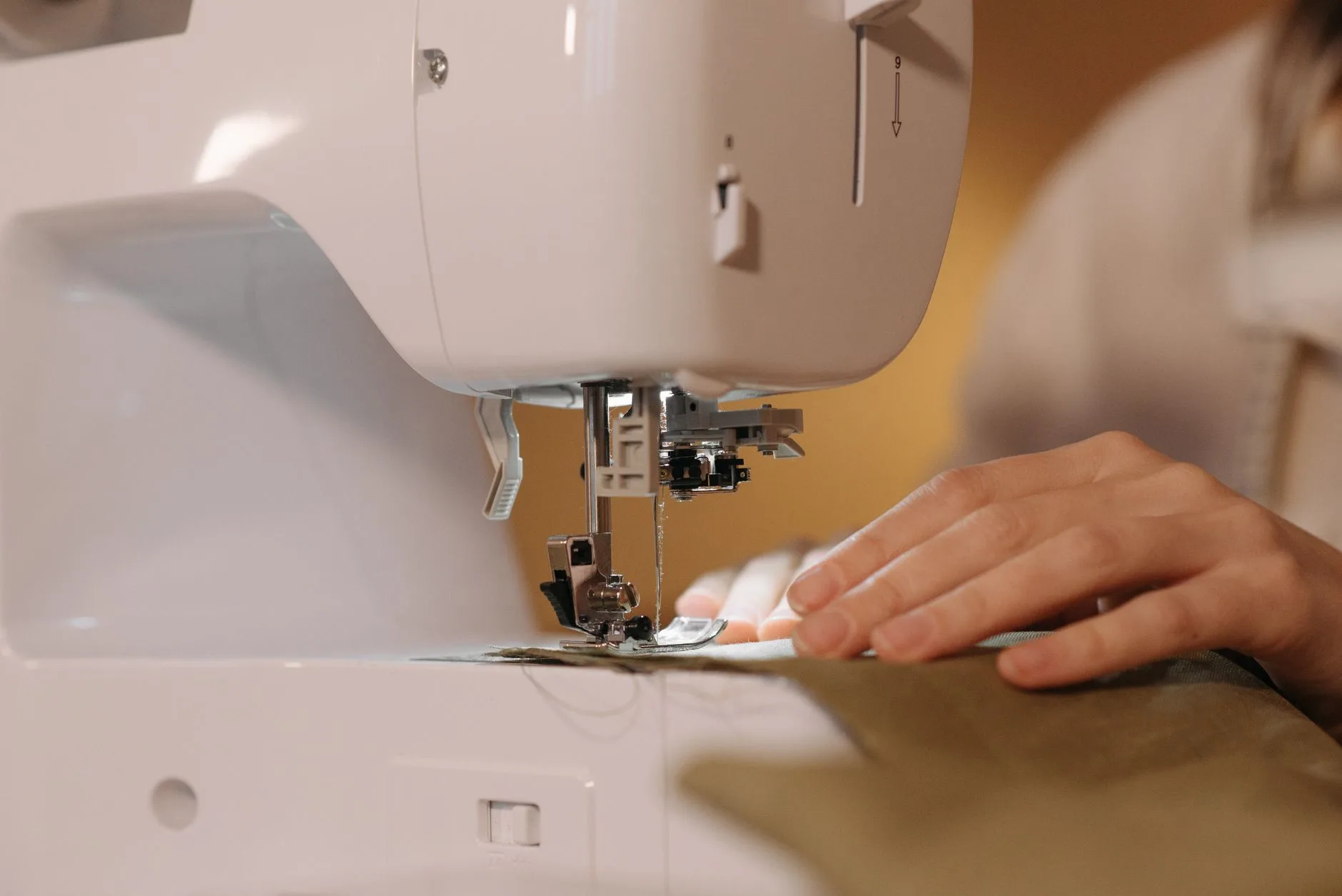
Seam gauges are one of those sewing tools that look almost too simple to matter until you actually need one. For hemming, spacing buttonholes, marking tucks, or keeping seam allowances consistent, a good gauge saves time and cuts down on the small measuring errors that can throw off an otherwise careful project. Buyers usually start looking for Best Seam Gauges when they are tired of eyeballing measurements, shifting rulers around mid-project, or reaching for the wrong tool every few minutes.
The most common mistake is assuming all seam gauges do the same thing equally well. In reality, some are better for quick garment adjustments, some are built for repeated measurements in a classroom or studio, and some are more useful for quilting or machine sewing than for hand finishing. The right choice depends on how often you sew, whether you prefer metal or acrylic, and how much you value a locking slider, easy-to-read markings, or extra features like point turners and pattern-marking holes.
For most shoppers, the best seam gauge is the one that feels fast, readable, and dependable in everyday use. Beginners usually want something straightforward with clear markings and a smooth slider. More experienced sewists may care more about durability, versatility, or buying multiples for a workroom. The top overall pick here stands out for its 12-pack value and set-and-stay slider, which makes it especially practical when accuracy needs to be repeated across several pieces or users.
If you are short on time, the comparison table below gives a quick side-by-side look at the strongest options.
Quick Answer
The best all-around choice for most sewists is the Dritz 6" Seam Gauges, 12-Pack because it combines a familiar format with a locking slider and enough pieces for classes, group projects, or keeping several gauges in different sewing spaces. If you want the lowest entry price, the SINGER 00220 Sewing Gauge is the simplest budget-friendly pick. For buyers who want a more multi-purpose layout, the Madam Sew Seam Allowance Ruler & Magnetic Seam Guide offers machine-sewing convenience that goes beyond a basic hand gauge, while the Seam Width Gauge is the most specialized option for seam allowance precision.
Best Seam Gauges Comparison Table
| Product | Best For | Main Strength | Key Specs |
|---|---|---|---|
| Dritz 6" Seam Gauges, 12-Pack | Groups, classrooms, and frequent use | Locking slider with 12-piece value set | 6-inch length, repeat marking, hem and buttonhole use |
| SINGER 00220 Sewing Gauge | Budget-conscious beginners | Simple, familiar, and inexpensive | 6-inch ruler, inches and centimeters, sliding marker |
| Dritz 620 Sewing Gauge | Everyday garment sewing | Classic single-gauge utility | Sliding measure, repeated marking, compact size |
| Sewing Gauge Measuring Tool Set 5-In-1 | Quilters and crafters | Multi-function T-shaped layout | Acrylic build, 2-piece set, seam allowance and hemming |
| 3 Pack Sewing Ruler Sliding Gauge | Value seekers who want extras | Three aluminum rulers in one set | 6-inch length, rust-resistant aluminum, portable |
| Frienda Sliding Gauge Sewing Measuring Tool, 6 Pieces | Bulk buyers and shared sewing spaces | Multiple gauges with smooth sliding action | 6-inch length, aluminum body, double-sided scales |
| 2 Pcs Seam Gauge for Sewing 5-In-1 | Beginners on a tight budget | Very low cost with useful basics | Compact T-shaped design, PP and aluminum alloy |
| Frienda 2 Pieces Sewing Gauge With Sliding Marker | General sewing and gifting | Two-piece set with practical versatility | Inches and centimeters, plastic and aluminum build |
| Seam Width Gauge | Precise seam allowance marking | Specialized edge markings and acrylic clarity | 2-inch body, 1/4 to 5/8 edge extensions, laser cut acrylic |
If you want the finer details, the reviews below explain how each gauge differs in everyday sewing use and who it fits best.
Best Seam Gauges Reviews
1. Best Overall: Dritz 6" Seam Gauges, 12-Pack

The Dritz 6-inch seam gauge in a 12-pack feels like the kind of practical purchase that makes sense as soon as you think about how often sewing tools disappear, get shared, or end up living in different project bags. The big advantage here is not just the familiar size, but the fact that the slider locks in place and stays put when you need to repeat a measurement over and over. That matters for hemming multiple garments, teaching a class, or working through a stack of identical alterations where consistency is more important than novelty.
This set is also one of the most versatile choices in the roundup because it handles the basics without trying to become something else. It is useful for hems, seam allowances, buttonhole spacing, tucks, pleats, and even pattern tweaks. The additional holes for drawing scallops and circles give it a little more range than a bare-bones gauge, which is a nice bonus if you occasionally use sewing tools for marking rather than just measuring. The 12-count format makes it especially appealing for classrooms, shared studios, or anyone who wants to keep a few gauges in different spots rather than hunting for one. Its main limitation is that the set format may be more than solo sewists need, but that is also what makes it stand out as the best overall buy.
Pros
- 12-pack value makes it ideal for classes, sewing groups, or multi-station workspaces.
- Locking slider helps maintain repeat measurements without constant readjustment.
- Useful for hems, buttonholes, tucks, pleats, and pattern marking.
- 6-inch format is compact, familiar, and easy to store.
- Extra marking holes add modest versatility for drawing circles and scallops.
Cons
- Solo sewists may not need 12 gauges, so the set can feel excessive.
- It is practical rather than fancy, with no premium materials or specialty features.
- Anyone wanting a seam guide for machine stitching will need a different tool.
Buy this if you want a dependable, no-drama seam gauge that can live in multiple kits or be handed out in a classroom without worry. It is a particularly smart pick for beginners learning the basics and for teachers or family sewists who want uniform tools on hand. If you only need one gauge for occasional hemming, a single-unit option may be enough, but for repeat use and shared sewing setups, this set is hard to beat.
To buy this product, click here.
2. Best Budget: SINGER 00220 Sewing Gauge
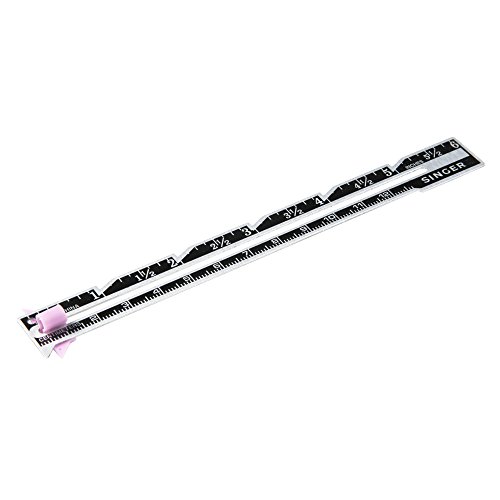
The SINGER 00220 is the kind of seam gauge that proves a basic tool does not need to be complicated to be useful. It gives you the classic 6-inch layout, a sliding marker, and both inches and centimeters on the ruler. That combination makes it easy to use for common sewing jobs like checking hem depth, spacing buttonholes, or marking tucks and pleats. For a lot of home sewists, that is exactly what a seam gauge should do, and nothing more.
Its biggest strength is price to usefulness. This is a straightforward, familiar tool that makes sense for beginners, occasional menders, or anyone who wants an inexpensive backup gauge for a travel sewing kit or drawer. The slider can hold position for repeated marking, which keeps it from feeling too bare-bones, and the ruler markings make it easy to switch between measurement systems if needed. The tradeoff is that it does not offer the extra refinement or multipack convenience of more elaborate options, and the build is clearly aimed at utility rather than long-term heavy workshop abuse. Still, for the cost, it does the essential jobs well enough that many shoppers will not need to spend more.
Pros
- Very affordable entry point for new sewists.
- Compact 6-inch size is easy to keep in a sewing box.
- Slider helps with repeated marking and common hem work.
- Inches and centimeters are both printed on the ruler.
- Simple design is easy to understand, even for first-time users.
Cons
- Does not offer the extra features found on more specialized gauges.
- Single-tool format may be less convenient for shared spaces.
- Best suited to basic sewing tasks rather than advanced workflow needs.
This is the right choice for shoppers who want the cheapest decent seam gauge and are comfortable with a no-frills tool. It makes a lot of sense for beginners, students, and casual sewists who mostly need a quick way to measure hems and button spacing. If you expect to use a seam gauge every day or need multiple copies, stepping up to a pack may be worth it, but as a budget starter, this one is easy to recommend.
To buy this product, click here.
3. Best Classic Single Gauge: Dritz 620 Sewing Gauge

The Dritz 620 earns its place because it does the core job of a seam gauge with very little fuss. Its sliding marker is designed to stay in place for repeated marking, which is the feature that really separates a useful gauge from a frustrating one. For hemming pants, spacing pleats, or marking buttonholes, that reliable hold matters more than flashy extras. The gauge feels especially appealing to sewists who know exactly what they need and want a compact, familiar tool they can reach for without thinking.
What makes this version appealing is the balance between simplicity and reliability. It is versatile enough for hems, tucks, pleats, and buttonholes, but it does not overload the user with accessories or complicated geometry. That makes it a strong everyday choice for garment sewing and alterations. It may not be the most feature-rich model in the roundup, but it is the sort of gauge many sewists keep around for years because it is easy to grab and hard to misuse. The main drawback is that it is less economical than buying a set if you want multiple gauges, and it does not have the specialty form factor of T-shaped or seam-width-specific options. For a plain, trustworthy tool, though, it remains one of the smartest buys.
Pros
- Simple and dependable for everyday sewing work.
- Sliding marker supports repeat measurements without constant resetting.
- Good for hems, tucks, pleats, and buttonholes.
- Compact profile makes it easy to store in a notion pouch.
- Trusted format for sewists who want a classic, no-nonsense gauge.
Cons
- Only one gauge included, so there is no built-in backup.
- Does not add specialty functions beyond basic measuring and marking.
- Better value alternatives exist if you need several gauges at once.
Choose this if you want a dependable sewing gauge from a familiar brand and do not care about extras. It is a good fit for garment sewists, hemming work, and anyone who prefers the smallest possible learning curve. If you need a more modern multi-use design or multiple tools for a shared room, one of the pack options will serve you better. For traditional everyday use, this one is still very easy to trust.
To buy this product, click here.
4. Best For Quilting And Multi-Tasking: Sewing Gauge Measuring Tool Set 5-In-1

This 5-in-1 sewing gauge set is aimed at people who like a little more flexibility from their tools. The T-shaped design is useful because it gives you a broader contact point and a more deliberate feel when marking hems, seam allowances, button spacing, or quilting lines. The acrylic construction also gives the set a different personality from the thin metal gauges that dominate this category. It is meant to be visible, stable, and easy to read on fabric, which can be especially helpful when you are working on darker prints or need to check a mark quickly before moving on.
It also stands out because it is built for more than one type of project. Quilters, garment sewists, embroidery hobbyists, and general crafters can all find a use for a tool like this. The set includes a straight ruler along with the sliding gauge, which gives it more range than a single gauge alone. That said, the larger shape may feel less nimble than a classic ruler-style gauge if you mostly work on small garment adjustments. It is also a little more specialized in its handling, so absolute beginners may need a short adjustment period. Even so, if you want one of the more versatile options in the roundup, this is a strong contender.
Pros
- 5-in-1 concept covers more tasks than a standard basic gauge.
- Acrylic build offers strong visibility and a tidy, modern feel.
- Useful for both sewing and quilting workflows.
- Includes a straight ruler alongside the sliding gauge for added flexibility.
- Good choice for users who want one tool set for multiple fabric projects.
Cons
- Bigger than a traditional gauge, so it is not the most pocket-friendly option.
- May feel more specialized than necessary for purely basic hemming work.
- Acrylic can be less forgiving than simple metal tools if dropped often.
This is a smart buy for quilters and crafters who want a more adaptable measuring tool than a standard seam gauge. It is also a good fit for sewists who appreciate easy-to-read markings and a bit of extra control. If you mostly need a quick ruler for simple hems, this may be more tool than you need. But for mixed sewing and quilting tasks, it offers real practical value.
To buy this product, click here.
5. Best Value Pack: 3 Pack Sewing Ruler Sliding Gauge
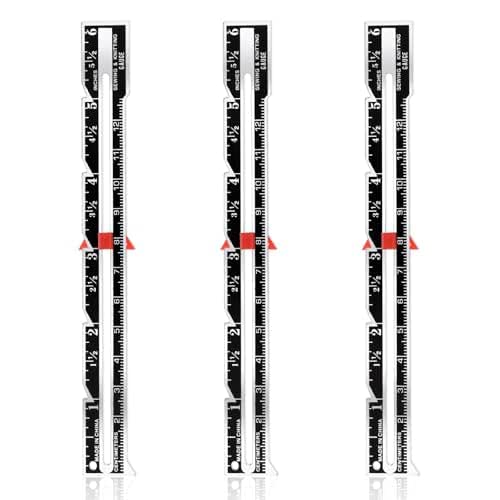
The appeal of this three-pack is straightforward, which is often exactly what shoppers want from a seam gauge purchase. Instead of buying one ruler and hoping it stays where you need it, you get three aluminum gauges that can live in different project bags, sewing areas, or machine stations. That is useful for anyone who alternates between home sewing, alterations, and craft work. The rulers are lightweight, rust-resistant, and simple to keep close at hand, which makes them easy to use without ceremony.
From a practical standpoint, this set is best for buyers who value redundancy and portability. Having three gauges means you are less likely to misplace the only one you own, and the aluminum material should handle normal sewing-room wear better than softer plastic tools. The measurement range is standard, so it covers the usual hemming and marking jobs without requiring a learning curve. The tradeoff is that these are utilitarian tools, not feature-rich ones. There is no especially clever shape or extra marking system, just a reliable set of compact gauges. For many sewists, that is enough, and the value of having spares may outweigh the lack of bells and whistles.
Pros
- Three gauges offer strong value and built-in backup.
- Aluminum construction adds durability and rust resistance.
- Compact 6-inch size suits everyday sewing and travel kits.
- Simple layout keeps the learning curve minimal.
- Good for stitchers who keep tools in multiple locations.
Cons
- Does not offer the extra versatility of more advanced shapes.
- May be more than a casual sewist needs if only one gauge will be used.
- Design is practical, but not especially refined.
Buy this set if you want multiple gauges without spending much more than a single premium-style tool. It is a nice match for beginners, frequent travelers, or anyone who likes a spare in the drawer, sewing box, and machine table. If you want the most polished or specialized option, look elsewhere. If you want practical extras, this is one of the better deals in the category.
To buy this product, click here.
6. Best For Shared Sewing Spaces: Frienda Sliding Gauge Sewing Measuring Tool, 6 Pieces

This six-piece Frienda set makes a lot of sense for anyone outfitting a shared room, classroom, or group workspace. The real strength is quantity, but not at the expense of basic usability. Each gauge is a 6-inch aluminum ruler with a sliding marker, which keeps the format consistent and easy to understand across the set. The double-sided scales are especially helpful when different sewists prefer slightly different ways of reading a ruler or when a project moves between metric and imperial measurements.
The build is aimed at practical durability rather than elegance. Aluminum bodies and plastic sliders are a familiar combination in this category, and the result is a tool that can handle regular use without becoming precious. For sewing, patchwork, and marking buttonholes or seam allowances, these gauges do exactly what they are supposed to do. The main tradeoff is that the set is more about quantity than innovation. It does not offer the extra versatility of a T-shaped design or the specialized geometry of a seam-width tool. If your priority is to have several dependable gauges available at once, though, this is a sensible and efficient buy.
Pros
- Six-piece quantity is useful for groups and busy sewing rooms.
- Double-sided scales add convenience for different measurement preferences.
- Aluminum construction supports durability and corrosion resistance.
- Standard 6-inch size keeps them familiar and easy to use.
- Good for seam allowances, buttonholes, and patchwork marking.
Cons
- Less distinctive than more specialized gauge shapes.
- Not the most compact solution if you only need a single tool.
- Plastic slider component may feel less premium than all-metal designs.
Choose this if you need several gauges for a shared setup or simply like having extras in reach. It is a strong fit for teachers, family sewing spaces, and group workshops. If you want a single premium gauge with niche functions, this is not the one. If you want dependable quantity at a reasonable cost, it is a solid answer.
To buy this product, click here.
7. Best Budget T-Shape Option: 2 Pcs Seam Gauge for Sewing 5-In-1
This two-piece T-shaped gauge set is a good example of how a very low price does not have to mean a throwaway tool. The design is built for practical sewing tasks, with a sliding marker and a compact shape that makes hemming and seam allowance checks straightforward. For beginners, that matters. A gauge that is easy to read and easy to hold is often more valuable than one with a complicated feature list. The compact size also makes it simple to tuck into a kit without taking up much room.
Its strengths are portability and accessibility. The PP and aluminum alloy construction suggests an emphasis on lightweight use rather than heavy-duty workshop abuse, but that is not necessarily a problem at this price. For routine garment construction, small tailoring fixes, quilting prep, and craft work, it should cover the basics well enough. The main limitation is obvious, which is that it is not as polished or robust as some of the better-known branded gauges. Still, for someone who wants a very inexpensive starter set or a backup pair to keep in a project bag, it does the job without much risk.
Pros
- Very affordable way to get a T-shaped sliding gauge.
- Two-piece set gives you a spare right away.
- Compact size makes storage and transport easy.
- Good starter option for beginners learning seam allowance work.
- Useful for hemming, tailoring, and general sewing tasks.
Cons
- Materials are more basic than premium metal or acrylic options.
- Less established branding than classic sewing notion names.
- May not satisfy users who want a heavier, more refined tool.
This is a sensible pick if price matters most and you want a functional seam gauge without spending on a better-known brand. It works best for beginners, occasional sewists, and anyone who wants a spare set for the toolbox or travel kit. If you sew constantly and want a tool with a more substantial feel, you may want to move up. For the money, though, it is hard to dismiss.
To buy this product, click here.
8. Best Two-Piece General Use Set: Frienda 2 Pieces Sewing Gauge With Sliding Marker
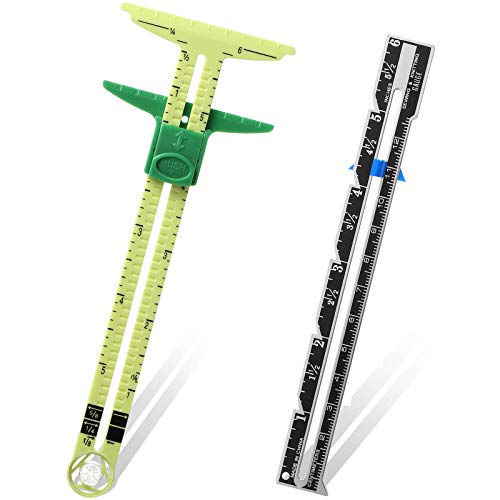
The Frienda two-piece set is the kind of middle-ground product that makes sense for shoppers who want something more complete than a single gauge but not as large as a classroom pack. The T-shaped layout is practical for marking seam allowance and buttonholes, and the mixed plastic and aluminum build helps keep the tools light. The included inch and centimeter markings make the gauges easy to read whether you are following a domestic pattern or switching between measurement systems on the fly.
Where this set does especially well is everyday usefulness. It is broad enough to cover sewing, patchwork, DIY craft work, and simple fabric marking, but not so niche that it feels locked into one type of project. That makes it a good general-purpose choice for sewists who bounce between small alterations and casual making. The two-piece format also adds peace of mind if one gauge is misplaced. Its only real drawback is that it does not stand out strongly in any one direction. There are more affordable single gauges and more polished premium options, so this set wins mainly on balance. For many shoppers, balance is exactly what they need.
Pros
- Two-piece format is useful without becoming excessive.
- Clear inch and centimeter markings improve flexibility.
- Good for sewing, patchwork, and general DIY fabric work.
- Lightweight materials make the set easy to carry and store.
- Useful middle-ground option for casual and regular sewists alike.
Cons
- Does not feel especially premium compared with all-metal tools.
- Not specialized enough for buyers who need one specific feature only.
- Some shoppers may prefer a single classic gauge instead of a pair.
This is a solid pick for anyone who wants a straightforward, general-use seam gauge set. It suits beginners and intermediate sewists who value practicality over prestige. If you need the absolute lowest price, one of the single gauges may be better. If you want a balanced pair that can handle routine sewing without complaint, this is a fair option.
To buy this product, click here.
9. Best For Seam Allowance Precision: Seam Width Gauge

The Seam Width Gauge is more specialized than the rest of the roundup, and that is exactly why it deserves a place here. It is built around seam allowance accuracy, with edge markings that make it easier to line up consistent widths on light or dark fabric. The 1/8-inch acrylic construction gives it a sturdy feel, and the laser-cut design suggests a tool intended for clean, repeatable marking rather than casual guesswork. For sewists who care deeply about seam width consistency, that specificity is valuable.
It is also one of the cleaner tools in the category for visually checking a measurement before committing to the cut or stitch. The small size is handy for quick reference, and the hang hole is a nice storage detail that helps keep it visible in a crowded sewing area. The drawback is that this is a more focused tool than a full-featured gauge with a slider, so it may not be the best standalone option if you want one object to do everything. But if your main concern is reliable seam allowance marking, this product offers exactly the kind of purpose-built utility that many sewists appreciate.
Pros
- Specialized design focuses on seam allowance precision.
- Easy-to-see markings help on both light and dark fabrics.
- Laser-cut acrylic body feels sturdy and tidy.
- Small size is easy to store and grab quickly.
- Best for users who value consistent edge marking above all else.
Cons
- More specialized than a traditional slider gauge.
- Less useful for shoppers who want one tool to cover many tasks.
- Smaller form factor may not appeal to those who prefer a longer ruler.
This is the right choice for detail-oriented sewists who want a cleaner, more focused seam allowance tool. It is especially useful when consistency matters more than versatility. If you want a broad-purpose gauge for general hemming and buttonhole work, another pick may fit better. If you are the kind of sewer who appreciates a purpose-built tool for one critical job, this one stands apart.
To buy this product, click here.
How We Chose
To narrow the field, we focused on seam gauges that address the most common sewing tasks readers actually need help with, especially hemming, seam allowance marking, buttonhole spacing, tucks, and pleats. We gave extra weight to tools with clear markings, reliable sliding mechanisms, and practical materials such as aluminum or acrylic. Since many shoppers use seam gauges as everyday notions rather than specialty gadgets, we also looked closely at portability, storage convenience, and whether the format makes sense for beginners as well as experienced sewists.
We also prioritized real-world usefulness over novelty. A seam gauge can have extra features, but if the basic measurement behavior feels awkward, it is not very useful. For that reason, products with stable sliders, readable scales, and straightforward layouts ranked higher than those with flashy but less practical design touches. Where applicable, we considered whether a product made more sense as a single backup tool, a multi-pack for shared use, or a specialized accessory for more advanced sewing workflows.
Buying Guide
When choosing among the Best Seam Gauges, start with the kind of sewing you do most often. If you mainly hem garments or shorten curtains, a simple gauge with a reliable slider is usually enough. If you work on quilts, patchwork, or mixed craft projects, a T-shaped or seam-width-focused design may save you time. And if you sew with other people, or keep tools in more than one place, a multipack can be more useful than a single polished tool.
Material matters more than many shoppers expect. Aluminum gauges tend to feel durable and lightweight, while acrylic versions can be easier to read on darker fabrics. Plastic components are not automatically bad, but they should feel smooth and stable rather than flimsy. If you expect the tool to live in a sewing basket or travel bag, durability and low weight are both worth considering.
Slider quality is another major factor. The slider should move smoothly, hold its position, and not drift while you are marking. That matters whether you are repeating the same hem depth across several panels or checking identical buttonhole spacing on multiple garments. A sloppy slider turns an otherwise useful gauge into a frustration. If you are buying for a beginner, this is the detail most likely to determine whether the tool gets used.
Look at readability next. Clear inch and centimeter markings can make a simple gauge much more versatile. High-contrast printing is especially helpful when working in dim light or on patterned fabric. Some sewists also appreciate extra holes or edge markings for circles, scallops, or seam allowance references, but those features should support the core job rather than distract from it.
Think about how many gauges you actually need. A single well-made gauge is enough for occasional sewing. A three-pack or six-pack is often more practical if you like having a backup near the machine, in the notions drawer, or inside a project tote. The 12-pack Dritz set is especially useful for teaching spaces, shared studios, or anyone who wants uniform tools for multiple people.
Finally, match the tool to your experience level. Beginners usually benefit from a simple gauge that is easy to read and not overloaded with features. Intermediate and advanced sewists may prefer a more specialized layout if it improves workflow or consistency. There is no single best seam gauge for everyone, which is exactly why the best buying decision comes from identifying your most common task and choosing the tool that makes that task faster, cleaner, and less error-prone.
Frequently Asked Questions
What Does A Seam Gauge Do?
A seam gauge helps measure short, repeatable distances in sewing. It is commonly used for hems, seam allowances, tucks, pleats, and buttonhole spacing. Because it is small and easy to reposition, it is much more convenient than pulling out a full ruler for every minor adjustment.
Are Seam Gauges Better Than Regular Rulers?
For small sewing tasks, yes. A seam gauge is made for repeated short measurements and often includes a sliding marker that stays in place. A regular ruler can work in a pinch, but it is usually slower and less convenient for common sewing jobs like hemming or spacing trims.
Should Beginners Buy A Single Gauge Or A Set?
Most beginners can start with a single gauge unless they are sewing in a classroom, sharing tools, or want backups. A single budget-friendly option is often enough to learn the basics. Sets become more useful once you sew often enough to appreciate having extra gauges within reach.
What Is The Best Material For A Seam Gauge?
Aluminum is a strong all-purpose choice because it is light, durable, and easy to handle. Acrylic can be useful when visibility matters, especially on dark fabric. Plastic components are common in sliders, but they should move smoothly and feel solid enough for repeated use.
Can A Seam Gauge Be Used For Quilting?
Yes, many seam gauges are useful for quilting, especially when marking seam allowances or keeping repeated dimensions consistent. Some T-shaped or multi-function designs work especially well for quilting because they combine short measurements with broader marking support.
What Size Seam Gauge Is Most Useful?
The 6-inch size is the most versatile for general sewing. It is small enough to fit in a notions kit, but long enough to handle everyday tasks like hems and buttonholes. Specialty seam-width gauges can be smaller if you want a tool dedicated to seam allowance precision.
Do I Need A Seam Gauge With Both Inches And Centimeters?
It is not required, but it is helpful. Dual markings make the tool more flexible, especially if you use patterns from different sources or follow tutorials that mix measurement systems. For most buyers, having both is a small convenience that pays off often.
Are Multipacks Worth It?
They are worth it if you sew in more than one place, teach others, or simply like having a backup. Multipacks are also good value if you tend to misplace small tools. If you only sew occasionally and keep a tidy workspace, one well-made gauge may be enough.
Final Verdict
For most shoppers, the Dritz 6" Seam Gauges, 12-Pack is the best overall choice because it solves the real problem many sewists have, which is not just measuring accurately, but doing it repeatedly without having to look for the same tool every time. The locking slider, familiar 6-inch format, and generous quantity make it useful in a way that goes beyond simple specs. It is the most practical all-around pick in the roundup, especially for classrooms, shared workspaces, and sewing rooms where tools tend to migrate.
That said, the right seam gauge depends on how you sew. The SINGER 00220 is the budget answer for basic needs, while the Madam Sew Seam Allowance Ruler & Magnetic Seam Guide is a stronger fit for machine-sewing users who want more specialized control. Quilters and crafters may prefer a T-shaped or seam-width-specific model, while value seekers might like the multi-pack options. The best buying decision is the one that matches your routine. If your projects are mostly quick hems and simple alterations, keep it simple. If accuracy and repeatability matter every week, choose the gauge that makes those jobs feel almost automatic.
Leave a Reply