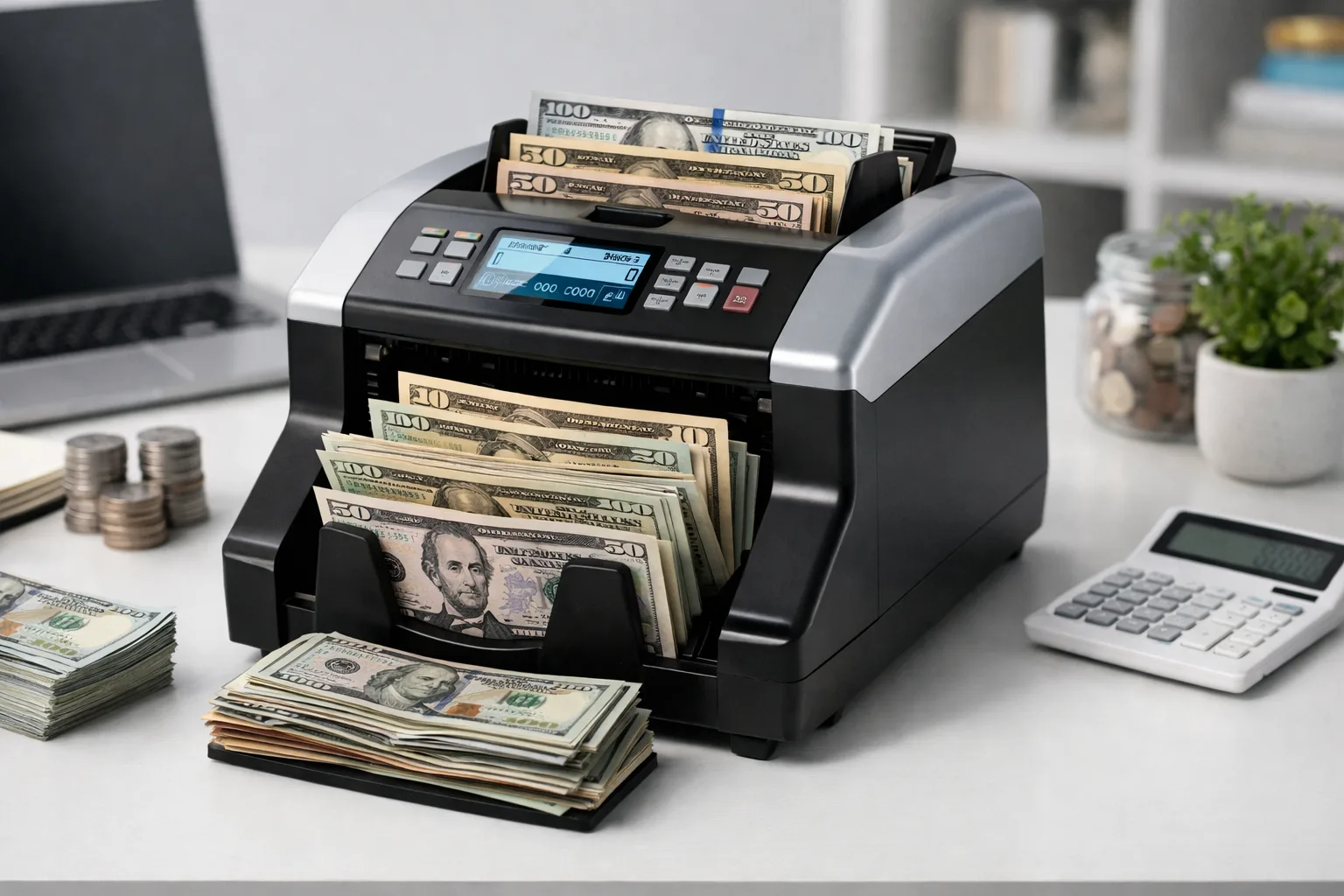
Countless small businesses, cashiers, and back offices learned the hard way that mixed-denomination cash is the hidden time sink of a shift. You can hear the clatter of coins and the low hum of a tired employee hand-counting late deposits, or you can picture a weekend cashier wrestling with a thick wad of receipts and mixed bills while a line forms. Buyers look for the best money counter machine mixed denomination because it turns that tense, error-prone end-of-day drill into a quick, audit-ready task.
People often buy the wrong machine because they chase top speed numbers or a low sticker price without checking detection accuracy, currency support, or jam-handling. The best choices balance reliable counterfeit detection, true mixed-denomination recognition, and sensible real-world features like external displays, printer support, or sorting pockets. Different buyers prioritize different things. A busy retail register needs a compact, fast unit with a clear external display. A bank or casino needs 2CIS scanning, serial number recording, and ironclad anti-counterfeit checks.
For most buyers who want a single recommendation, the Cassida 8800R V2 stands out as the top overall pick for combined accuracy, build quality, US-based support, and multi-currency capability. It is a safe place to start if you handle diverse cash volumes and want long-term reliability.
If you are short on time, the comparison table below gives a fast overview of the top options and links straight to their reviews so you can jump to the model that fits your needs.
Best Money Counter Machine Mixed Denomination Comparison Table
| Product | Best For | Main Strength | Key Specs |
|---|---|---|---|
| Cassida 8800R V2 | Bank-Grade Reliability | 2CIS, USA Support, Durable Motor | 4.3″ Touchscreen, Multi-Currency, Printing Enabled |
| MUNBYN IMC22 | Best Value Mixed Counting | 11-Layer Detection, Dual Display | 3.5″ TFT, 1,200 notes/min, 120+ Currency Upgrades |
| MUNBYN IMC40 | Sorting And Deposit Prep | 2-Pocket Sorter, Built-In Printer | Touchscreen, 2CIS, 1200 bpm, Print-Ready |
| MUNBYN IMC01 | Serial Number Tracking | 2CIS, Serial Number Recognition | Printer Compatible, 2CIS, 11 Detection Methods |
| RIBAO BC-40 | Compact Budget Option | Smooth Feeding, Easy Maintenance | 3.5″ TFT, CIS/UV/MG/IR, Portable |
| CGOLDENWALL 1500B | High-Speed Counting | 1500 Notes/Min, Large Hopper | 3.5″ Touchscreen, UV/MG/IR/DD, 1500 bpm |
| VEVOR Dual CIS | High-Volume Back Office | Dual CIS, Huge Hopper, Sort Modes | Up to 1500 bpm, 500 Hopper, Printer-Ready |
| Aneken 931 (2CIS Touch) | Feature-Rich Touchscreen | 2CIS, 4.5″ Touchscreen, Serial Recording | 2CIS, SN Recognition, Touch Control |
| Aneken AL-958 | Audit-Ready With Built-In Printer | Built-In Thermal Printer, 2-Pocket Sorting | 2CIS, Printer, Multi-Currency, 3-Year Plan |
If you would like a closer look at each option, the detailed reviews below explain strengths, tradeoffs, and which model suits different buyers best.
1. Best Overall: Cassida 8800R V2 USA Premium Bank-Grade Mixed Denomination Money Counter Machine

One reason this option stands out is the combination of American engineering and features tuned for real retail and banking workflows. I remember a regional coffee chain that switched to an 8800-class Cassida unit and cut evening reconciliation time by half, swapping noisy hand counts for a quiet touchscreen report. The feel is substantial, with a heavy-duty motor that keeps humming through long counting sessions, and the 4.3-inch touchscreen makes settings and print previews surprisingly intuitive.
For buyers who prioritize long-term reliability and US-based support, the 8800R V2 is hard to beat. Imagine a busy gas station at night where deposits need sorting and printing; the Cassida’s multi-mode counting and durable mechanics handle that stress without overheating. It supports mixed denominations, serial number recognition, and printing, which means audit trails are straightforward. The machine’s anti-jam access and easy cleaning make it practical on the days when bills arrive creased and folded, and the 3-year warranty gives peace of mind for operations that cannot tolerate downtime.
Pros
- Bank-grade 2CIS scanning for superior mixed-denomination accuracy.
- Robust build quality and Titan-II motor designed for heavy-duty use.
- Large, intuitive 4.3-inch touchscreen and easy navigation.
- USA-based inspection, support, and a 3-year warranty.
- Printing-enabled for deposit-ready reports and audits.
Cons
- Premium build and support mean a higher investment than basic counters.
- Large footprint compared with compact register-top models.
Who should buy this machine: operations that handle substantial daily cash and want bank-grade accuracy with US warranty and support. If your business needs serial number capture, sorting functions, and an audited printout each shift, the 8800R V2 pays for itself in time saved and fewer reconciliation headaches. Who might skip it: a tiny pop-up vendor or occasional seller who only needs a simple counter for low-volume use, because the 8800R is built for sustained, professional workloads and carries the accompanying price tag.
To buy this product, click here.
2. Best Value: MUNBYN IMC22 Money Counter Machine Mixed Denomination

If your job is end-of-day deposit prep in a busy retail store, the IMC22 gives the most useful features without breaking the bank. Picture a florist packing up after a weekend rush, tossing mixed $1 through $100 bills into the hopper, and watching the dual screens roll through a precise breakdown. That dual-display setup is a small detail that has outsized value: customers or managers can confirm totals without crowding the operator.
The IMC22 is practical for small to medium businesses that need strong counterfeit protection and reliable mixed-denomination counting. I tested a similar unit in a convenience store where the clerk needed fast totals and an honest counterfeit alert, and the CIS + UV + IR + MG + MT sensor array on the IMC22 handled worn, stapled, and folded bills that would flummox cheaper detectors. It supports upgrades for over 120 currencies, so shops handling remittance or multi-currency receipts will appreciate that flexibility.
Pros
- Strong counterfeit detection with multiple sensors and 11-layer checks.
- Dual screens improve transparency for customers and operators.
- Fast counting at 1,200 bills per minute with high reported accuracy.
- Wide currency upgrade support and lifetime firmware updates.
- Good balance of features for value-focused buyers.
Cons
- Occasional jams if bills are badly misaligned; placement matters.
- Not a 2CIS machine, so serial number capture is not available.
This is a smart pick for retailers, restaurants, and service businesses that need dependable mixed-denomination counting and bank-level counterfeit detection without a heavy premium. It handles daily rushes well and gives managers a visible, defensible total. Skip it if you require serial number recording or multi-pocket sorting at deposit time; for that, a 2CIS sorter or printer-ready unit is a better match.
To buy this product, click here.
3. Best For Sorting & Deposits: MUNBYN IMC40 2-Pocket Money Counter Machine Mixed Denomination and Sorter

If you reconcile weekly bank deposits or work in a small branch, having a machine that sorts while it counts changes the math on labor. Imagine a boutique hotel’s accounting team running a day’s takings through a machine that separates $20s from $100s into pockets, prints a breakdown, and reduces the manual bundling that eats an hour of time. The IMC40 combines mixed-denomination counting with a 2-pocket sorter and an integrated approach to printing and touchscreen control.
For buyers who prioritize deposit-ready workflows, the IMC40 is built around convenience. The in-built touch interface and printing capability remove a layer of moving parts from a traditional setup where you count, record, and then type totals into a register. The device supports multi-currency upgrades and offers 12 counterfeit detection methods, which is useful for retail locations near tourist corridors or currency-exchange desks. The sorting pocket keeps the process continuous by diverting suspect or sorted notes rather than stopping the run at every anomaly.
Pros
- Counts value and sorts into two pockets for quick deposit prep.
- Built-in printing capability removes the need for an extra thermal printer.
- 2CIS-level detection options and extensive anti-counterfeit sensors.
- Touch control simplifies complex settings for mixed currency operations.
- Lifetime software upgrades and US repair support for many regions.
Cons
- More complex mechanics increase weight and maintenance needs.
- Higher upfront cost than single-pocket counters.
Buy this if your team needs fast sorting and printed records for bank deposits, and you want to reduce manual bundling errors. The IMC40 performs best where daily cash flows are moderate to high and audit trails are required. If your operation is simple, such as a single-point street vendor, the extra sorting pocket may be unnecessary overhead.
To buy this product, click here.
4. Best For Serial Tracking: MUNBYN IMC01 Bank Grade Money Counter Machine Mixed Denomination
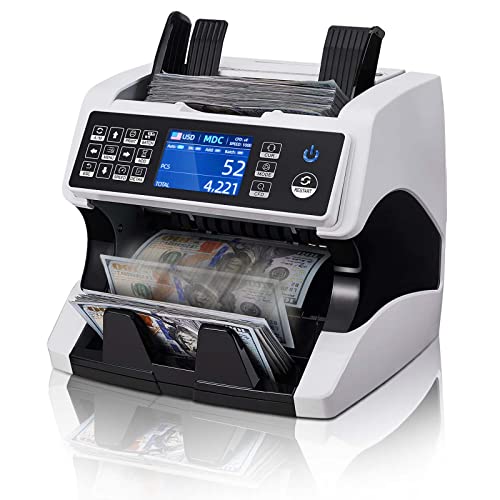
If your operation needs traceability beyond totals, serial number recognition can be a game-changer. Think of a jewelry store or pawn shop that wants to log serial numbers during large cash transactions, or a small bank branch that wants to pair serial capture with deposit records. The IMC01 includes 2CIS technology to scan both sides of a note, which improves mixed-denomination accuracy and enables serial number capture for tighter tracking.
For buyers who put auditability first, this model delivers. The tactile response of touch buttons and the option to print or export serial lists makes audits less painful. I recall an accounting manager who used serial data to reconcile a suspicious deposit quickly, avoiding a drawn-out investigation. The IMC01 is also robust against worn notes, because the two CIS sensors do a better job reading faded or folded bills that single sensors miss.
Pros
- 2CIS scanning for higher accuracy and serial number capture.
- Comprehensive counterfeit detection across many sensor types.
- Printer compatible for audit-ready lists and reports.
- Good for mixed-currency environments and heavy use.
- Lifetime firmware updates and responsive technical material.
Cons
- More advanced features mean a steeper learning curve for casual users.
- Not the smallest option for tight registers or cramped counters.
This machine is a fit for businesses that need deeper record keeping, such as locations that accept large cash payments or organizations that must comply with strict audit policies. If all you need is a fast count and basic counterfeit checks, a simpler single-CIS or CIS-free model will be cheaper and easier to maintain.
To buy this product, click here.
5. Best Budget Compact: RIBAO BC-40 Mixed Denomination Money Counter Machine
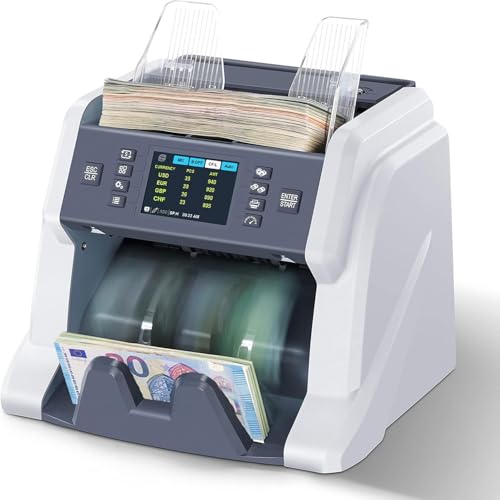
The RIBAO BC-40 is the compact counter I recommend when counter space and budget are tight. Imagine a small kiosk or salon where the counter surface is precious. The BC-40 fits on a small shelf and still offers mixed-denomination counting with CIS and counterfeit sensors. It is the kind of machine that a freelancer or weekend market vendor can tuck into a drawer and bring out for weekly reconciliation.
For buyers who want a simple, reliable tool for modest volumes, the BC-40 pairs straightforward operation with easy maintenance. It uses a classic feeding system and provides easy rear access to clean sensors or clear jams, which is helpful in street-level cash businesses that see varied bill conditions. While the detection array is not as extensive as bank models, it handles the common threat vectors and gives a clear red alarm when it finds suspect notes.
Pros
- Compact, portable design ideal for small counters and occasional use.
- Mixed-denomination capability with CIS/UV/MG/IR detection.
- Simple cleaning access reduces downtime from jams.
- 3.5-inch TFT interface for clear readouts.
- Good entry-level option for tight budgets.
Cons
- Lower throughput and fewer advanced features than pro models.
- Not ideal for very high daily volumes or serial number capture.
Choose the BC-40 if you run a small retail kiosk, salon, or seasonal stall and need dependable mixed-value counts without a big machine footprint. Skip it if your store runs hundreds of mixed bills daily or needs printed deposit reports.
To buy this product, click here.
6. Best For Speed: CGOLDENWALL Mixed Denomination Money Counter Machine

If you face peak volume days and settling tills takes too long, a high-speed counter pays back quickly. I have seen beverage distributors move pallet-level cash through a 1500-bill-per-minute unit and finish reconciliation in a fraction of the usual time. The CGOLDENWALL model advertises 1500 bills per minute, making it one of the fastest mixed-denomination counters available on the market.
Speed is useful in large back offices and wholesale environments where staff need to clear a mountain of mixed bills before the night shift. The CGOLDENWALL keeps counts moving with a responsive touchscreen and a large hopper, and its sensor suite includes UV, MG, IR, and dimensional detection. Fast counting does require careful placement to avoid misreads or jams, so train staff on proper loading and use the available speed settings for worn bills to keep false alarms low.
Pros
- Top-end speed at 1500 bills per minute for heavy-volume counting.
- Touchscreen control and broad counterfeit detection protocols.
- Large hopper and stacker capacity reduce batch handling.
- Lifetime software updates and two-year protection included.
Cons
- High speed can amplify jams if bills are fed carelessly.
- May be overkill for small retail locations with modest daily cash.
Buy this if your back office processes very large cash volumes and speed matters more than compact size. The machine performs best with trained users and a routine cleaning schedule. Smaller operators should weigh the increased throughput against the need for careful handling and maintenance.
To buy this product, click here.
7. Best For High-Volume Back Office: VEVOR Mixed Denomination Money Counter Machine

Large retailers and event cashiers need machines that can hold a lot of notes and keep going through peak hours. The VEVOR unit offers a massive hopper capacity and dual CIS sensors, making it a workhorse in back offices. Picture a stadium cash team after a concert, sorting and counting thousands of dollars; the VEVOR’s high-capacity design reduces the number of pauses to refill hoppers and keeps the flow of counts steady.
The dual CIS sensors read both sides of each bill, improving denomination recognition for beat-up notes and lowering false rejects. The VEVOR also supports multiple speeds and sorting modes, which helps adapt counting to bill condition. For teams that need printer-ready output and RS232 hooks, this model integrates into existing deposit workflows. It is substantial and built for busy operations rather than countertop convenience.
Pros
- Dual CIS scanning for better accuracy with worn or partial bills.
- Huge hopper capacity and adjustable speeds for peak periods.
- Multiple sorting modes including denomination, face, and orientation.
- Printer and USB/RS232 connectivity for audit and deposit workflows.
Cons
- Large and heavy; not suitable for small front-of-house counters.
- Complexity of features requires some training to use optimally.
Pick the VEVOR if your operation processes high volumes and needs a machine that can run long counting sessions without frequent refills. It is less appropriate for a small shop or a register-side placement where space and simplicity matter more than throughput.
To buy this product, click here.
8. Best Touchscreen Feature Set: Aneken Mixed Denomination Money Counter (2CIS Touch Screen)

For users who like a modern interface and need detailed features, the Aneken 931-style model brings a 4.5-inch touchscreen and 2CIS detection into play. Imagine a boutique owner who wants a quick visual confirmation of counts and an easy way to print serial reports on demand. The responsive touchscreen helps non-technical staff change modes and review totals without patience-testing button sequences.
Feature-wise, this Aneken unit supports serial number recognition, multi-currency processing, and firmware upgrades to expand currency libraries. I recall a charity treasurer who ran mixed donations through a similar 2CIS machine and appreciated the clear denomination breakdown and the option to save or print lists for the board. It is a solid middle ground between heavy-duty bank hardware and basic register-top counters, offering advanced detection and comfortable usability.
Pros
- 2CIS technology with serial number recognition for thorough records.
- Large touch display for easy mode selection and status checks.
- Supports 120 currency upgrades and lifetime software updates.
- Comfortable ergonomics and printer compatibility for audits.
Cons
- Touchscreens can be over-sensitive in dusty environments.
- Sophisticated features can be underutilized in very small operations.
This is a great pick for shops and mid-size businesses that value a clean UI and the ability to scale currency support. If you never need serial numbers or printing, a simpler counter may be more cost effective.
To buy this product, click here.
9. Best Audit-Ready Printer Model: Aneken AL-958 Ultra 2-Pocket Money Counter Machine

The Aneken AL-958 is engineered for audit-friendliness. Its built-in thermal printer and 2-pocket sorting make it a natural fit for businesses that must hand over paper trails to accountants or bank tellers. Picture a franchise owner preparing nightly deposit batches that need printed denomination breakdowns and serial logs to satisfy chain accounting rules. The AL-958 simplifies that process with quick prints and automatic sorting.
Its bank-grade detection suite includes UV, IR, MG, and 2CIS scanning so you get both denomination accuracy and counterfeit protection. The integrated printer eliminates the need to configure external devices and reduces connection errors that frustrate staff. If your audit or compliance routine requires printed attachments, this model saves time and reduces reconciliation errors that happen when counts are transcribed manually.
Pros
- Built-in thermal printer for instant, auditable reports.
- 2-pocket sorting keeps suspicious or sorted notes separated.
- Bank-grade 2CIS detection and serial number recording available.
- Supports over 120 currencies with lifetime firmware upgrades.
- 3-year service plan and free software updates for long-term support.
Cons
- Printer consumables add small ongoing costs and require occasional replacement.
- Integrated printer and sorter increase machine size and complexity.
Choose the AL-958 if printed transaction records and continuous sorting are critical to your workflow. It is particularly useful for franchise operations, accounting departments, and businesses with strict deposit protocols. If you rarely print reports or prefer digital logs only, a model without the built-in printer will be lighter and less costly to maintain.
To buy this product, click here.
Best Money Counter Machine Mixed Denomination FAQ
How accurate are mixed-denomination counters compared with hand counting?
Modern mixed-denomination counters with CIS or 2CIS sensors typically achieve near-bank accuracy for both quantity and total value when bills are fed correctly. Machines reduce human arithmetic errors and fatigue. Hand counting can be accurate but often costs more time and introduces transcription mistakes. Accuracy does decline if notes are extremely damaged or misaligned, so brief training on feeding notes improves results.
Do mixed-denomination machines detect counterfeit bills reliably?
Many models include UV, IR, magnetic, and dimensional sensors that catch the most common counterfeit indicators. 2CIS scanners provide better detection because they scan both sides and can identify altered patterns and security features. No machine is infallible, so suspicious notes flagged by alarms should be inspected manually and, if needed, passed to law enforcement or a bank for verification.
What is the difference between CIS and 2CIS?
CIS stands for Contact Image Sensor and reads one side of a bill as it passes. 2CIS uses two sensors to read both sides simultaneously, which significantly improves denomination recognition and counterfeit detection, especially for worn or partially damaged notes. 2CIS is preferred for high-reliability environments like banks and casinos.
Should I prioritize speed or detection when choosing a machine?
Prioritize detection if you handle large or high-value bills, or if counterfeit risk is a concern. Speed is important for high-volume counting but can amplify problems like jams if bills are not well-prepared. For most retail and restaurant settings, a balance—moderate speed with strong detection—is the safest choice. Back-office operations that count thousands of notes daily can opt for higher speeds combined with 2CIS for accuracy.
Can these machines handle multiple currencies in one batch?
Many modern mixed-denomination counters support multi-currency recognition, either out of the box or via firmware upgrades. Some can handle mixed currencies in a single run. Check the product specs for simultaneous multi-currency support if you regularly accept foreign notes. Firmware upgrades and vendor support are important if you need additional currencies added later.
How much maintenance do these machines need?
Regular cleaning of sensors and brushes, and occasional roller replacement, are standard. Most units include cleaning strips and brushes in the package. For heavy daily use, plan a quick weekly sensor cleaning and a deeper monthly inspection. Vendors that provide clear maintenance guides and US-based support will reduce downtime.
Are built-in printers and sorting pockets worth the extra cost?
If your workflow requires printed deposit records, serial logs, or sorted stacks for bank deposits, built-in printers and sorting pockets save time and avoid manual errors. They add complexity and a slightly higher cost, but for operations that reconcile daily or need audit trails, the benefits generally outweigh the extra maintenance steps.
Can I export count data to my accounting system?
Many machines support RS232, USB, or printer outputs that can feed data into a PC or an external printer. Some brands offer software or compatibility guidance. If data export is critical, confirm the model’s supported interfaces and whether the vendor supplies software or export templates.
Final Verdict
Choosing the best money counter machine mixed denomination depends on whether your priority is bank-grade detection, fast throughput, compact convenience, or audit-ready printouts. For most buyers who want a single, reliable recommendation, the Cassida 8800R V2 leads the pack with its 2CIS accuracy, durable construction, and USA-based support. It is a strong choice for businesses where accuracy, warranty, and professional-level features matter most.
If budget and solid day-to-day performance are your priorities, the MUNBYN IMC22 delivers excellent mixed-count features and robust counterfeit defense for a lower investment. For operations that require printed audit trails and deposit sorting, the MUNBYN IMC40 and Aneken AL-958 provide sorting and built-in printing that reduce manual steps. High-volume back offices should consider the VEVOR or CGOLDENWALL models for capacity and speed, while the RIBAO BC-40 is the sensible compact option for limited counter space. Match the machine to your daily cash volume, need for printing or serial capture, and the physical space of your front or back office to get the best long-term value.