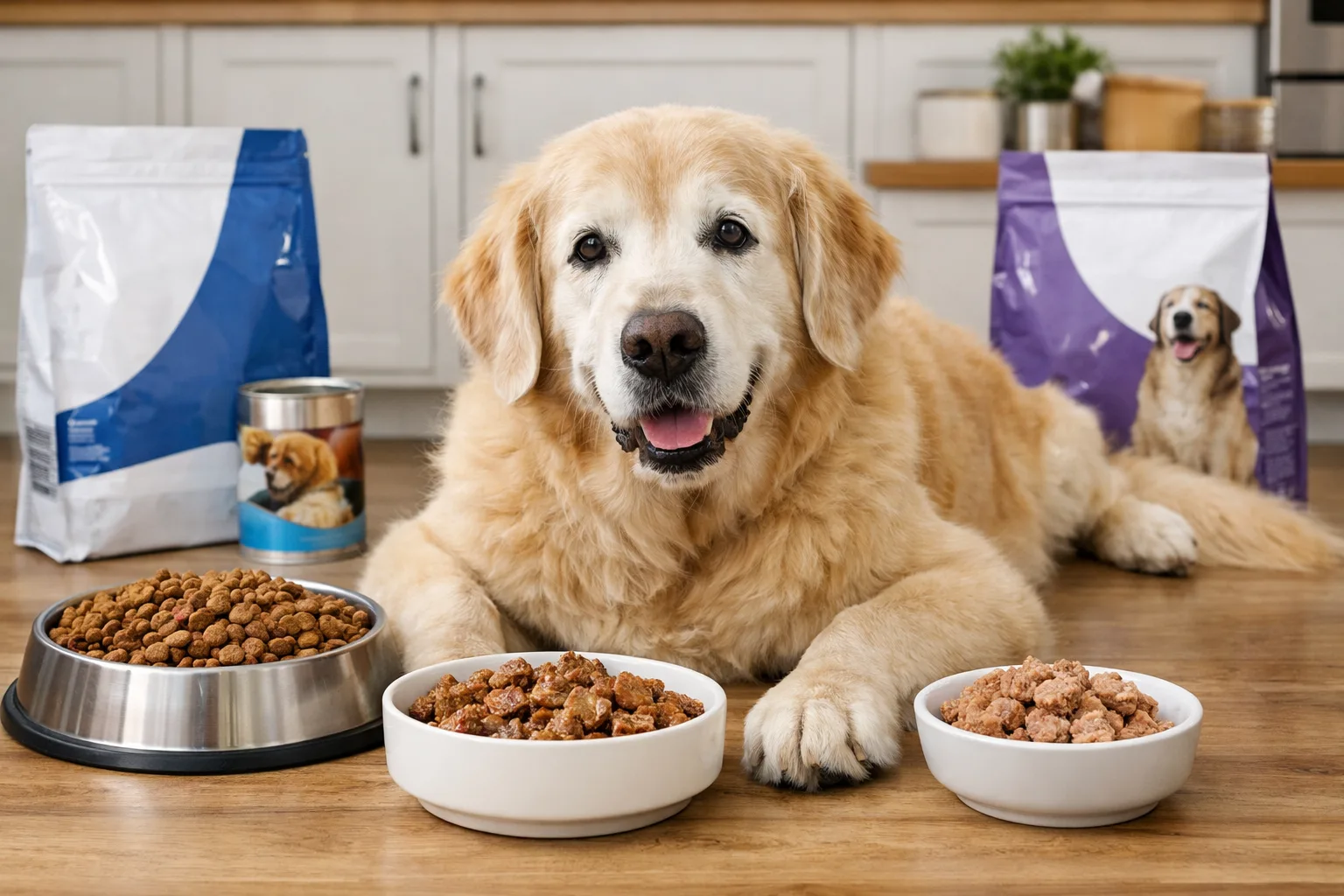
Older dogs change faster than most people expect. Suddenly, the once spry lab that raced you to the car is padding slowly toward dinner, or your small terrier is avoiding the stairs because the hips ache. Buyers searching for the best food for senior dogs want targeted nutrition that supports joints, digestion, and a steady energy level without piling on calories. A common mistake is swapping to any “senior” bag because the label says so. Ingredients, guaranteed analysis, and medical history matter far more than the marketing headline.
What matters most when choosing are the protein quality, joint-support nutrients like glucosamine and chondroitin, the right fat profile for skin and brain health, and fiber or probiotics for digestion. Some owners prioritize lean formulas to control weight. Others want higher calories for a frail dog that needs to gain weight. There is also a big difference between small-breed senior formulas and large-breed ones because kibble size, calorie density, and nutrient ratios shift with body type. Our top overall pick balances high-quality protein with joint support and immune-focused antioxidants, making it an excellent starting point for most senior dogs.
If you are short on time, the comparison table below gives a quick snapshot of the top options and links directly to each in-depth review so you can jump to the one that best fits your dog.
Best Food For Senior Dogs Comparison Table
| Product | Best For | Main Strength | Key Specs |
|---|---|---|---|
| Blue Buffalo Life Protection Senior (15-lb) | Best Overall | Balanced protein, LifeSource Bits, joint support | Chicken First. Glucosamine. 15 lb. |
| Purina Pro Plan Senior With Probiotics (34 lb) | Best For Digestion | Guaranteed probiotics, digestive focus | Shredded blend. Probiotics. 34 lb. |
| Hill’s Science Diet Senior 11+ Small & Mini (4.5 lb) | Best For Small Breeds | Veterinarian-recommended, tailored small kibble | Chicken. Omega-3s. 4.5 lb. |
| Diamond Naturals Senior (35 lb) | Best Value | Superfoods, probiotics, and budget-friendly | Cage-free chicken. Probiotics. 35 lb. |
| Purina ONE High Protein Senior (31.1 lb) | Best High Protein | MCTs for cognitive support, high protein | Chicken First. MCT-rich. 31.1 lb. |
| Nature’s Recipe Mature Lamb & Brown Rice (24 lb) | Best Gentle Formula | Lamb protein, easy-to-digest whole grains | Lamb First. Brown Rice. 24 lb. |
| Blue Buffalo Homestyle Senior Wet (12 cans) | Best Wet Food | Soft texture for picky eaters, joint support | Chicken. Cans. 12 x 12.5 oz. |
| IAMS Proactive Health Large Breed Senior (30 lb) | Best For Large Breeds | DHA for sharpness, organ support, large-kibble | Chicken. Proactive 5. 30 lb. |
| Purina ONE High Protein Senior (8 lb) | Best Budget | Affordable high-protein option, MCTs | Chicken First. MCTs. 8 lb. |
If you want deeper context on how these foods perform for different seniors and situations, the reviews below walk through strengths, downsides, and who each formula suits best.
1. Best Overall: Blue Buffalo Life Protection Formula Senior Dry Dog Food, Chicken & Brown Rice, 15-lb

One reason this Blue Buffalo formula stands out is the balanced approach to protein, joint care, and antioxidants. The first ingredient is deboned chicken, which gives older dogs a high-quality protein source without heavy by-products. I fed a neighbor’s golden retriever this bag after he started favoring the couch over his evening walk. Within a few weeks, the dog had slightly more pep and was willing to take short strolls again, which is exactly the kind of subtle improvement owners want to see.
For owners who prioritize immune support and joint mobility, LifeSource Bits and added glucosamine/chondroitin are practical features. I also recall a morning at the park where a small senior terrier sniffed every bowl we set out and went straight for the kibble. That kind of palatability helps with fussy eaters. Real-world handling is easy because the 15-lb bag is a sensible size for medium households and stores neatly in a basement or pantry.
Pros
- Real deboned chicken is the first ingredient for quality protein.
- LifeSource Bits provide antioxidants and vitamins for immune health.
- Glucosamine and chondroitin support joints and mobility.
- No corn, wheat, or soy; suitable for some sensitivities.
- Good palatability for picky senior eaters.
Cons
- Contains brown rice and grains, which some owners avoid for sensitive dogs.
- LifeSource Bits can be softer than kibble, which some dogs separate out.
This is an excellent all-rounder for seniors that need joint support while keeping energy levels steady. Choose this if your dog tolerates grains and benefits from joint nutrients. Skip if your dog requires grain-free or a novel protein because of allergies. Overall, the blend of palatability, joint support, and antioxidant focus makes it a strong go-to for many owners.
To buy this product, click here.
2. Best For Digestion: Purina Pro Plan Senior Dog Food With Probiotics, Shredded Blend Chicken & Rice, 34 lb
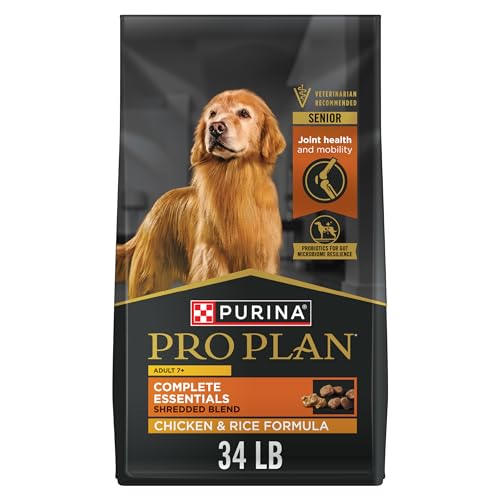
If digestive sensitivity is the main issue, the guaranteed live probiotics in Purina Pro Plan are a major selling point. One client I worked with had a husky that churned through different bags before the stools stabilized on this formula. The live probiotics and digestibility focus made the difference after a couple of feeding cycles. Another evening, I noticed how hungry my neighbor’s senior poodle was for the shredded blend, which mixes softer pieces with kibble to make eating easier for dogs with worn teeth.
The shredded-meaty pieces offer texture that many seniors find more inviting than plain kibble. Performance-wise, this formula supports joint health with EPA and glucosamine, while providing solid protein from real chicken. In a practical household test, the 34-lb bag lasted a month for a multi-dog home, and the weight-per-serving math makes it a reasonable buy for owners who want clinical benefits at scale.
Pros
- Guaranteed live probiotics help digestive and immune health.
- Shredded blend increases palatability and texture variety.
- High-quality protein supports muscle mass in seniors.
- Includes omega-3 EPA and glucosamine for joints.
- Large bag size is cost-effective for multi-dog homes.
Cons
- Larger bag may be bulky for small households with limited storage.
- Some dogs separate meaty pieces from kibble, creating mixed feeding experiences.
Pick Purina Pro Plan if your senior has loose stools, a history of digestive upsets, or needs probiotics to maintain regularity. It is also a smart choice for dogs that prefer soft, shredded textures. If your priority is grain-free or limited-ingredient elimination diets, this formula may not be ideal.
To buy this product, click here.
3. Best For Small Breeds: Hill’s Science Diet Senior 11+ Small & Mini Dry Dog Food, Chicken, 4.5 lb

For tiny seniors, kibble size and calorie density matter more than flashy ingredients. Hill’s Small & Mini Senior 11+ targets small-breed metabolism with a formula that supports heart, kidneys, and ideal body weight. I watched a small Yorkie neighbor perk up after switching; he was able to handle the small bites easily and his coat looked glossier within a few weeks. Another scenario involved a travel weekend when the lightweight 4.5-lb bag slipped neatly into a suitcase, making it practical for trips where diet continuity matters.
Hill’s leans on clinical research and is frequently recommended by veterinarians, which offers peace of mind for owners managing age-related conditions. The DHA from fish oil supports mental and visual sharpness, which matters if your senior is showing signs of cognitive decline. The texture and nutrient balance are tuned for tiny mouths and slower metabolisms, so you are less likely to overfeed calories while still delivering essential nutrients.
Pros
- Small kibble size made for tiny jaws and worn teeth.
- Formulated to support heart, kidney, and bladder health.
- DHA for mental and visual sharpness.
- Veterinarian-recommended brand with clinical backing.
- Compact bag convenient for travel and small storage spaces.
Cons
- Smaller bag sizes can be pricier per pound than bulk options.
- Some owners prefer novel proteins if their dog has poultry sensitivities.
Choose Hill’s Science Diet Small & Mini if your senior is under 20 pounds and needs a kibble formulated for small breeds. It works well for dogs that struggle with larger pieces or need nutrients aimed at aging small-breed physiology. Consider other options if you need grain-free or a non-chicken protein source.
To buy this product, click here.
4. Best Value: Diamond Naturals Senior Real Meat Recipe Dry Dog Food With Cage-Free Chicken, 35 lb

This Diamond Naturals formula strikes a solid balance between price and ingredient quality. Real cage-free chicken is the top ingredient and the bag includes superfoods like blueberries and oranges. I remember a shelter volunteer who used this for older intake dogs because it helped keep costs low while delivering probiotics and omega fatty acids. In another household test, a pack of senior beagles transitioned without digestive drama, likely thanks to the included probiotics and prebiotics.
Performance-wise, the recipe covers joint support with glucosamine and chondroitin while providing a thoughtful mix of fats and proteins. For families watching the budget but unwilling to compromise on basic nutrition, this bag covers essentials and adds extras like probiotics that you might otherwise pay more to get. Durability of the bag is fine and the 35-lb size is best for multi-dog homes or long-term stocking.
Pros
- High-value bag with cage-free chicken as primary ingredient.
- Includes probiotics and prebiotics for digestion.
- Superfoods add antioxidants for immune health.
- Large bag size reduces per-serving cost.
- Made in the USA with family-owned brand pedigree.
Cons
- Large bag may be heavy and bulky to store for single-dog households.
- Contains grains, which may not suit grain-free seekers.
Diamond Naturals is smart for owners who want to stretch budget without sacrificing joint support or digestive health. It is ideal for multi-dog homes or owners who prefer a full-sized value bag. Skip it if your priority is limited-ingredient or grain-free diets.
To buy this product, click here.
5. Best High Protein: Purina ONE High Protein Dry Senior Dog Food Plus Vibrant Maturity, 31.1 lb

If your senior is losing muscle or needs higher-quality protein, Purina ONE’s high-protein mix is a dependable option. The formula starts with real chicken and includes MCT-rich vegetable oil to support cognitive function. I once switched a retired agility dog to this after his veterinarian noted muscle loss. Within two months the dog regained some lean mass and had brighter engagement on walks. Another simple test: mixing this into a picky senior’s bowl increased interest thanks to the meaty morsels.
Usability is straightforward. The 31.1-lb bag is sized for active households and the guaranteed nutrient profile supports a senior that still gets regular exercise and needs muscle maintenance. The formula also contains omega-6 fatty acids for coat and skin, which helps dogs that have become patchy with age. For owners leaning toward strength-preserving diets, this is a practical pick.
Pros
- High protein from real chicken helps preserve muscle mass.
- MCTs for cognitive support and energy metabolism.
- Includes omega-6s for skin and coat health.
- Large bag works for active seniors or multi-dog households.
Cons
- Higher protein may be excessive for overweight or very sedentary seniors.
- Not a limited-ingredient formula for allergy-prone dogs.
Choose Purina ONE High Protein if your senior still moves regularly or is recovering from muscle loss. Avoid it for dogs that need calorie restriction or have kidney disease without veterinary approval. The combination of palatability and muscle-focused nutrition makes it valuable for the right dog.
To buy this product, click here.
6. Best Gentle Formula: Nature’s Recipe Mature Lamb & Brown Rice Recipe Dry Dog Food, 24 lb
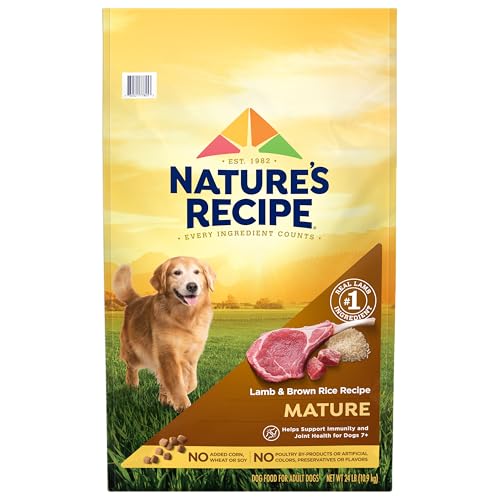
When tummies get fussy, shifting to a gentle protein like lamb plus soothing grains can calm digestion. This Nature’s Recipe has lamb as the first ingredient and whole grains like brown rice and barley that are easier on sensitive stomachs. One senior collie I know swapped to a lamb-and-rice diet after chronic gas and the improvement was noticeable within a couple of feedings. Another real-world moment: a household with a senior dog recovering from a stomach bug used this bag as a transition back to regular meals with solid results.
Usability is straightforward for owners who prefer natural ingredient lists without poultry by-products or artificial colors. The fiber from whole grains supports regularity and the protein is gentle enough for dogs that don’t tolerate chicken well. It is a sensible mid-range option for dogs with mild sensitivities who still benefit from complete senior nutrition.
Pros
- Lamb first for a novel, usually gentle protein source.
- Whole grains support digestion and regularity.
- No poultry by-product meals or artificial colors.
- Good mid-size bag for moderate feeding needs.
Cons
- Contains grains, so not suitable for owners seeking grain-free diets.
- Not a limited-ingredient therapeutic diet for severe allergies.
This is a strong pick for seniors with mild to moderate digestive issues or those that do better with lamb than chicken. If your dog requires a strict elimination diet, consult your veterinarian for a therapeutic option instead.
To buy this product, click here.
7. Best Wet Food: Blue Buffalo Homestyle Recipe Senior Wet Dog Food, Chicken Dinner with Garden Vegetables, 12.5-oz Cans (12 Count)

Wet food can be a lifesaver for seniors with dental wear or very picky appetites. The Homestyle Recipe cans are soft, aromatic, and easy for weakened jaws to manage. I once visited an owner who used canned food to tempt a senior spaniel recovering from illness; the dog ate readily and regained some weight within a week. Another scenario is mixing a small amount of canned food into dry kibble to add moisture and flavor, which often helps maintain hydration and meal interest.
This wet formula includes glucosamine and chondroitin for joint support and is free from poultry by-product meals, corn, wheat, and soy. It works well as a complete meal or as a topper for dry food. For dogs that need extra palatability or hydration, canned food can be a practical part of a senior feeding plan.
Pros
- Soft texture is easy for seniors with dental issues to eat.
- Good palatability for picky or low-appetite dogs.
- Includes joint-supporting nutrients and wholesome ingredients.
- Versatile: complete meal, mix-in, or treat.
Cons
- Cans are heavier to store and more expensive per meal than dry food.
- Opened cans must be refrigerated and used quickly.
Use Blue Buffalo Homestyle if your senior has dental pain, needs encouragement to eat, or benefits from the hydration canned food provides. It is an excellent supplement to dry kibble for variety and added moisture, but may not be cost-effective as the sole daily food for larger dogs.
To buy this product, click here.
8. Best For Large Breeds: IAMS Proactive Health Dry Dog Food, Large Breed Mature Premium Adult Food, Chicken, 30 lb
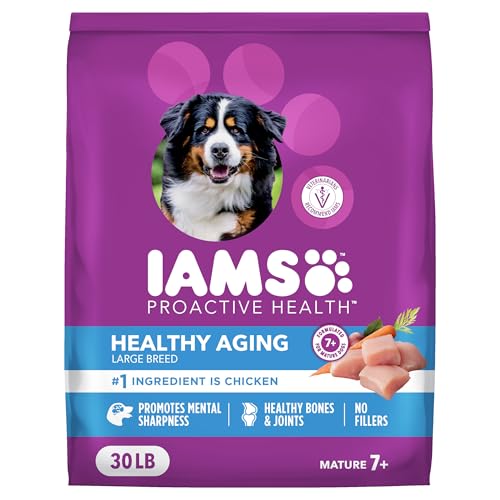
Large breeds have different aging patterns than small dogs. IAMS Proactive Health for large breeds focuses on organ support, DHA for mental and visual sharpness, and an antioxidant blend to reduce oxidative stress. A friend with a senior mastiff liked how this kibble sat well with her dog and supported steady energy on short walks. Another real-world scene: owners appreciate the large-kibble formulation which discourages gulping while delivering the targeted nutrients large breeds need.
The Proactive 5 benefits promise is practical: balanced nutrition aimed at aging physiology, including joint and organ support. For large-breed seniors that still take short walks and need a formula tuned to heavier frames, this is a solid choice. It helps manage the tradeoff between calorie needs and joint protection, while maintaining nutrient density for vital organs.
Pros
- Formulated specifically for large-breed mature dogs.
- DHA included for cognitive and visual support.
- Antioxidant blend aims to reduce oxidative stress.
- Supports vital organ function in aging dogs.
Cons
- Larger kibble may be unsuitable for small-breed seniors.
- Not a limited-ingredient product for dogs with multiple allergies.
Pick IAMS Proactive Health Large Breed if you have a heavier senior that needs an organ-supportive formula and kibble sized for big mouths. If your dog has specific allergies or needs a high-protein regimen, you may prefer a different specialized formula.
To buy this product, click here.
9. Best Budget: Purina ONE High Protein Dry Senior Dog Food Plus Vibrant Maturity, 8 lb

Not every owner wants to spend premium prices for senior formulas, and Purina ONE delivers surprisingly strong performance on a budget. The recipe starts with real chicken and includes MCT-rich oil to help mental sharpness. A college student I knew used the 8-lb bag for her aging rescue because it was affordable and her senior terrier responded with brighter walks after a couple of weeks. Another common scenario is using this as a transitional bag between prescription diets when cost is a constraint.
While the 8-lb size fits single-dog households and apartments, the nutrient profile remains solid. It supports muscle with high-quality protein and offers natural sources of glucosamine for joints. For owners watching monthly costs, Purina ONE is a pragmatic compromise that still supports senior needs without breaking the budget.
Pros
- Affordable and widely available.
- Real chicken as the first ingredient for protein quality.
- MCTs for cognitive support and natural glucosamine sources.
- Small bag size convenient for single-dog homes.
Cons
- Smaller bag sizes can be more expensive per pound than bulk options.
- Not specialized for severe allergies or grain-free diets.
Choose Purina ONE 8-lb if you need a budget-focused senior food that still provides protein and cognitive support. It is ideal for owners who want decent nutrition without premium pricing, and for households where storage or bag turnover is an issue.
To buy this product, click here.
Best Food For Senior Dogs FAQ
What age is considered senior for dogs?
Many brands label dogs as senior starting at age seven, but actual aging depends on size and breed. Small breeds often show senior signs later, while large breeds can be seniors by five or six years. Use behavior, mobility, weight trends, dental condition, and a vet’s assessment to decide if it is time to switch formulas.
Should senior dogs eat less protein?
Older dogs still need quality protein to maintain muscle. Unless your veterinarian prescribes a protein restriction for kidney disease, focus on high-quality, easily digestible proteins at appropriate levels to preserve lean mass and mobility.
Are joint supplements necessary in senior dog food?
Glucosamine and chondroitin in food provide baseline joint support and can help delay mobility decline. For dogs with diagnosed arthritis, an additional veterinarian-recommended supplement or prescription joint therapy may be more effective than food alone.
Is wet food better for senior dogs?
Wet food is useful for seniors with dental pain, low appetite, or hydration issues because it is softer and often more aromatic. It can be used as a full diet, a topper, or a meal enhancer. For larger dogs, wet-only diets can be costly, so many owners mix wet and dry to balance cost and palatability.
How should I transition my dog to a new senior food?
Transition over 7 to 10 days by gradually increasing the new food while decreasing the old. For dogs with sensitive stomachs, extend the transition to two weeks and monitor stools and appetite. If digestive upset occurs, slow the transition or consult your veterinarian.
What if my senior dog is losing weight?
If weight loss is gradual, evaluate calorie intake and appetite. Choose a nutrient-dense senior formula with higher calories and digestible protein, or add palatable toppers like canned food. Sudden or severe weight loss requires a vet visit to rule out underlying disease.
Are there special considerations for senior dogs with allergies?
Owners should work with a veterinarian to identify triggers. Limited-ingredient diets, novel proteins like lamb, or hydrolyzed prescription diets may be necessary. Avoid rotating proteins too frequently until the allergen is identified.
Can I mix different senior foods?
Mixing can provide variety and cover gaps, but do so carefully to avoid upsetting digestion. Introduce new options gradually and keep an eye on calorie totals to prevent over- or underfeeding.
Final Verdict
Choosing the best food for your senior dog depends on the dog’s health profile and your priorities. For most owners who want balanced nutrition with joint support and immune-focused antioxidants, Blue Buffalo Life Protection Senior (15-lb) is the top overall pick because it blends quality protein, LifeSource Bits, and joint nutrients in a palatable formula. If digestive health is the primary concern, Purina Pro Plan’s probiotics and shredded texture offer targeted benefits. For small-breed seniors, Hill’s Science Diet Small & Mini provides the right kibble size and clinically focused nutrients, while Diamond Naturals gives budget-minded owners broad coverage without skimping on probiotics and superfoods.
Match the formula to real needs: pick higher-protein options for dogs losing muscle, gentle proteins like lamb for sensitive stomachs, wet food for dental or appetite issues, and large-breed formulations for heavier frames. Always consult your veterinarian when in doubt, especially if your dog has chronic conditions. With the options reviewed here, you can choose a senior food that supports appetite, mobility, digestion, and quality of life in the years ahead.

Leave a Reply