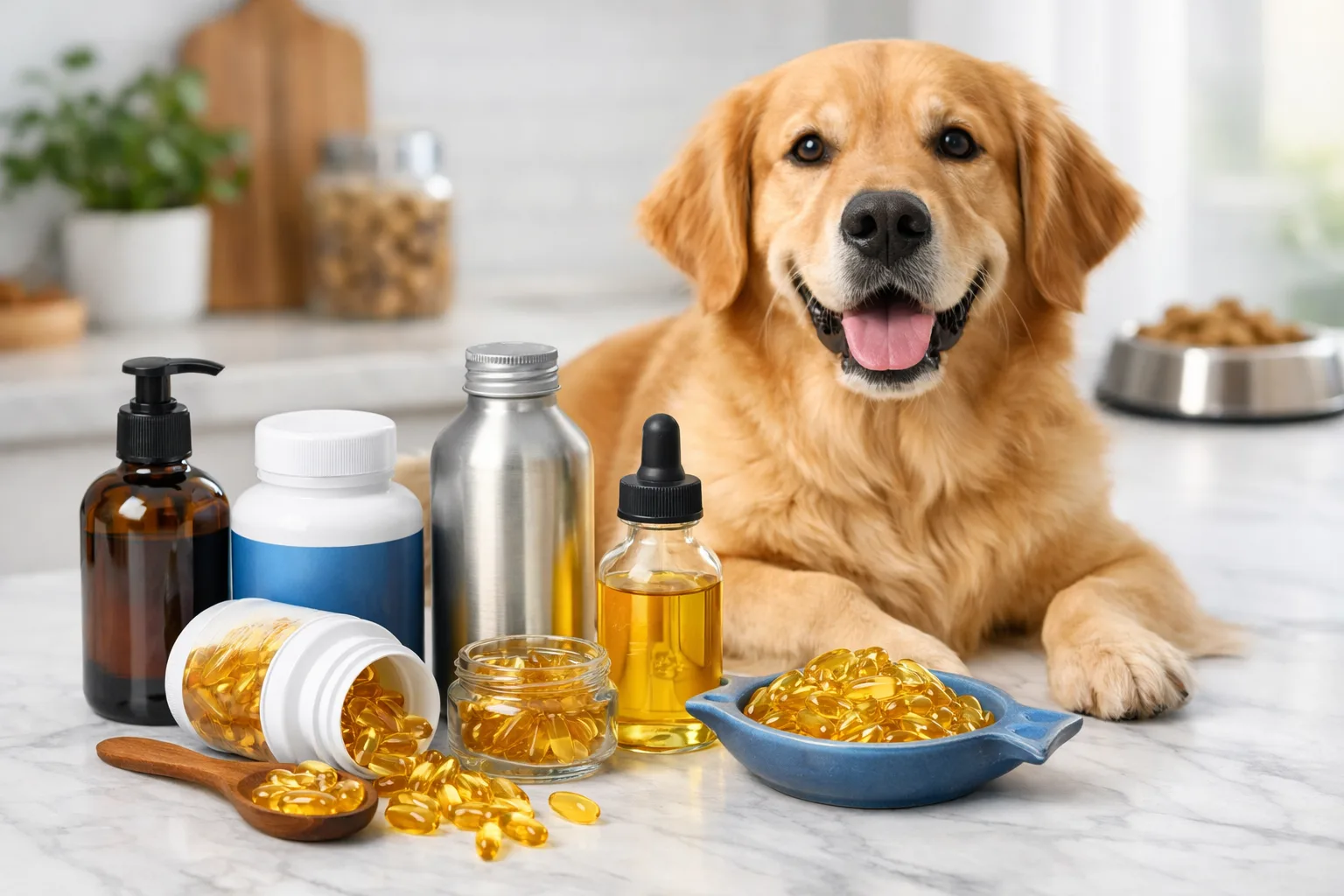
The search for the best fish oil for dogs usually starts after one of those telltale moments: a dog who scratches through the night, a coat that looks dull after a bath, or a senior companion slowing on the stairs. Fish oil delivers concentrated EPA and DHA that help skin, coat, joints, heart, and brain function, so many owners reach for a bottle hoping for visible improvement within weeks. The tricky part is separating marketing from meaningful differences. Some formulas are thin, low in active EPA/DHA, or carry a heavy fishy smell that rejects picky eaters. Others are premium, molecularly distilled, and lab-tested, but cost more than a month of kibble.
What matters most will depend on the dog. For a scent-sensitive terrier, low-odor and a pump dispenser make daily dosing painless. For a working dog or large breed with joint wear, look at EPA/DHA concentration and source. For multi-dog households, size and value matter. Common mistakes include assuming all “salmon oil” has the same EPA/DHA profile, ignoring third-party testing for contaminants, or using human fish oil meant for people. My top pick balances clean sourcing, usable dosing, and consistent results in coats and mobility, and it also performs well for picky eaters.
If you are short on time, the comparison table below gives a quick look at the top choices and what each one does best. Click any product name to jump straight to its full review and purchase link.
Best Fish Oil For Dogs Comparison Table
| Product | Best For | Main Strength | Size |
|---|---|---|---|
| Zesty Paws Wild Alaskan Omega-3 Blend (8.5 oz) | Everyday Use | Balanced Salmon + Pollock Blend | 8.5 oz |
| Nordic Naturals Omega-3 Pet (16 oz) | Premium Purity | High Omega-3 Concentration, Triglyceride Form | 16 oz |
| Nutramax Welactin (16 oz) | Vet Recommended | Science-backed Formula | 16 oz |
| Natural Dog Company Wild Alaskan Salmon Oil (16 oz) | Easy Dosing | Pump Bottle, Sustainable Sourcing | 16 oz |
| Native Pet Omega 3 (8 oz) | Sensitive Skin | Biotin + Vitamin E Added | 8 oz |
| Plano Paws Wild Caught Omega 3 (8 oz) | Low Odor | Molecularly Distilled, Multiple Small Fish Sources | 8 oz |
| Wonder Paws Premium Salmon Oil (8 oz) | NASC-Certified Quality | Pure Norwegian Salmon Oil | 8 oz |
| HEAPETS Wild Alaskan Salmon Oil (8 oz) | Budget Buy | Third-Party Tested, Low Smell | 8 oz |
| Fish Oil For Dogs Bulk (64 oz) | Best Bulk Value | Large Volume, Multi-Pet Households | 64 oz |
If you want a closer look at each option, the reviews below explain strengths, typical users, and how they compare in real life.
1. Best Overall: Zesty Paws Wild Alaskan Omega-3 Blend Pollock + Salmon Oil (8.5 oz)
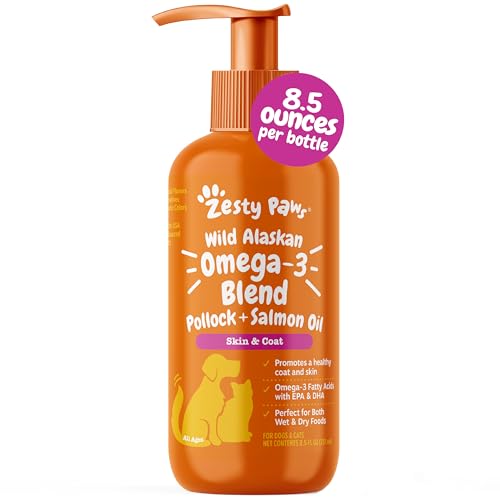
One reason this option stands out is its blend of pollock and salmon, which gives a rounded fatty acid profile that suits most dogs. In my experience with spray-top and pump bottles, a pump makes mornings easier when feeding four hungry dogs. Picture a small bulldog that refuses pills but gobbles food when it smells a light fish gloss on top. This bottle delivers that convenience, and consistent users report shinier coats in as little as three to six weeks.
For owners juggling immune support, joint maintenance, or simple coat improvement, this formula covers the bases without being too strong-smelling for sensitive noses. I’ve used it after grooming sessions because it helps settle flared skin after hot-spot flare-ups, and a neighbor used it on her senior lab to ease stiffness on cold mornings. It’s an everyday oil rather than a clinical-strength concentrate, which makes it a dependable staple for weekly use.
Pros
- Balanced pollock and salmon blend that supports skin, joints, and heart.
- Easy-to-use pump; mixes well with kibble or wet food.
- Gentle flavor that picky eaters accept more readily than strong oils.
- Good all-purpose formula for multi-issue support.
- Available in smaller size for trial without big investment.
Cons
- Not the highest EPA/DHA concentration per teaspoon compared with medical-grade oils.
- Smaller bottle requires more frequent repurchase for multi-dog homes.
This is the product to choose if you want a reliable, easy-to-dose fish oil that improves coat quality and gives general omega-3 support. Skip it if you need a pharmaceutical-strength dose of EPA/DHA for severe inflammatory conditions, in which case a concentrated, laboratory-tested product may be preferable. For everyday maintenance, especially in households with fussy eaters, this blend hits the sweet spot between effectiveness and palatability.
To buy this product, click here.
2. Best Premium: Nordic Naturals Omega-3 Pet (16 oz)

For buyers who prioritize purity and absorption, Nordic Naturals is a strong choice. This product uses the triglyceride form of omega-3s, which is the molecular structure found in fish and generally easier for animals to absorb. I recall a household with a hypothyroid greyhound that responded better to a triglyceride-form oil compared with a standard ethyl ester oil; the coat regained luster and the dog’s energy felt slightly improved after consistent dosing.
Another scenario: a performance dog on a high training schedule needs clean, reliably processed supplements. Nordic’s batch testing and transparent sourcing are reassuring in that context. The texture is smooth and nearly odorless, which keeps meal routines calm for sensitive eaters. Expect this to be a longer-term investment given the premium positioning, but the tradeoff is higher concentration and consistent lab-backed quality.
Pros
- High-quality triglyceride form for better absorption.
- Rigorous purity standards and reputable brand history.
- Unflavored and low odor, suitable for sensitive dogs.
- Larger bottle size is convenient for big dogs or multi-pet homes.
Cons
- Premium positioning makes this a higher cost per ounce.
- Less of a “tasty” topper; some picky eaters might need encouragement.
Choose Nordic Naturals if you want a top-tier, clinically minded product where purity and absorption are priorities. It suits active, large, or aging dogs where you expect measurable benefits in mobility and coat over several months. If budget is tight or you want an immediately tasty food topper, a flavored salmon oil may be a better match.
To buy this product, click here.
3. Best Vet-Recommended: Nutramax Welactin Omega 3 Fish Oil (16 oz)
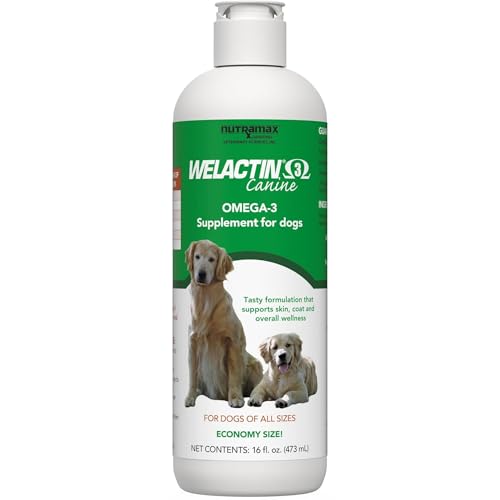
This formula earns a place because of Nutramax’s long track record in veterinary supplements. Veterinarians frequently recommend Welactin for dogs with skin and joint issues because the product is standardized and comes with clear dosing tools. I remember a case where a springer spaniel with chronic flakiness improved after a vet-prescribed routine that included Welactin, combined with a tailored shampoo and antihistamine course. The oil complemented the vet plan rather than replacing it.
It’s useful for owners who want something with clinical familiarity. The included scoop and measured dosing help owners avoid guesswork. If you’re treating specific conditions under a vet’s guidance, this branded option provides comfort through third-party recognition and long-term data in clinical settings.
Pros
- Widely used and recommended by veterinarians.
- Clear dosing scoop simplifies administration.
- Broad support claims for skin, joints, and organ health.
- Trusted brand with history in pet supplements.
Cons
- Not as flavorful; may need food-mixing for picky dogs.
- Some owners find it less cost-effective than bulk oils for multi-dog homes.
This is the right pick if your dog is under veterinary care for skin or joint problems and you want a recognizable, science-backed supplement. It’s less about novelty and more about consistency and trust. If your priority is flavor or ultra-high EPA/DHA concentration per teaspoon, consider a more concentrated premium oil instead.
To buy this product, click here.
4. Best For Ease Of Use: Natural Dog Company Wild Alaskan Salmon Oil Formula (16 oz)
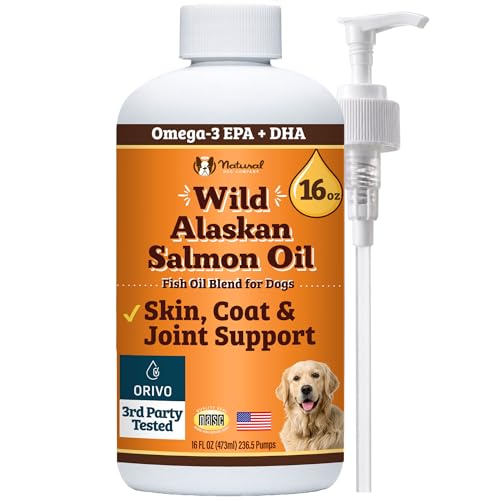
If your mornings are busy and you need a mess-free routine, this pump-top salmon and pollock blend is built for that life. One pet parent told me their picky corgi switched from rejecting capsules to licking food clean when the pump added a thin, appealing sheen to kibble. The dosing guidance by weight is practical for mixed-breed households, and the product emphasizes sustainable sourcing and verified species origin.
Another common scenario is seasonal itchiness in spring. Owners using this product often report fewer hot spots and calmer skin after steady use. It’s not a miracle cure, but for daily maintenance and easy introduction to fish oil, this hits an accessibility sweet spot that keeps people consistent with dosing, which matters more than a slightly higher potency used inconsistently.
Pros
- Convenient pump with clear dosing for different weight ranges.
- Sustainably sourced and verified for species authenticity.
- Palatable for picky eaters; doubles as a meal topper.
- Suitable for all life stages, including puppies and seniors.
Cons
- Moderate EPA/DHA content compared with lab-concentrated oils.
- Pump mechanism can clog if not used regularly.
Pick this if you want a no-fuss daily oil that your dog will accept. It’s especially useful for multi-dog households where dosing clarity prevents accidental over- or under-dosing. If you have a dog with severe inflammation or need lab-grade molecular distillation for contaminants, consider a different option with those specifications.
To buy this product, click here.
5. Best For Sensitive Skin: Native Pet Omega 3 Fish Oil (8 oz)

For buyers focused on flaky or sensitive skin, this formula combines salmon and pollock oil with vitamin E and biotin to support the skin barrier. I tested a sample on a terrier that flared under seasonal allergies. Within a month the owner noted less redness around the ears and fewer roll-in-the-grass scratching episodes. The added biotin can be helpful where the coat looks brittle or hair regrowth is slow after clipping.
Another real-world moment: an elderly poodle with thinning fur responded well to the gentler taste and consistent daily dosing. This product’s reputation for being easy on stomachs helps when you’re introducing fish oil to a dog with sensitive digestion. It balances targeted skin support with general omega-3 benefits for joints and heart.
Pros
- Formulated to support skin barrier with biotin and vitamin E.
- Gentle flavor and texture for sensitive eaters.
- Made in the USA from wild-caught fish sources.
- Good for dogs showing seasonal or chronic skin irritation.
Cons
- Smaller bottle size means more frequent purchases for larger dogs.
- Not as concentrated as specialized therapeutic oils.
This is an excellent pick when itchy, flaky skin is a main concern and you want supplemental nutrients that support hair regrowth and skin health. If your dog needs maximal anti-inflammatory dosing for arthritis, a higher-concentration veterinary formula may be a better choice.
To buy this product, click here.
6. Best Low Odor Option: Plano Paws Wild Caught Omega 3 (8 oz)
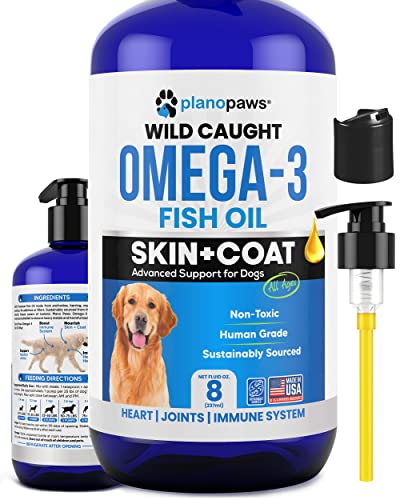
Low odor is a simple but important feature for many owners. This Plano Paws formula uses anchovies, herring, mackerel, and sardines, then molecularly distills the oil to reduce contaminants and smell. I remember a house where the owner stopped buying fish oil because the smell lingered on hands and counters. Switching to a low-odor distillate like this kept the kitchen more pleasant and still delivered joint and coat benefits.
Another scenario is giving oil to apartment-based dogs. A low-odor oil keeps close neighbors happy and makes daily feeding cleaner. The product also emphasizes sustainability, which matters to many buyers balancing pet health with environmental responsibility.
Pros
- Molecular distillation reduces heavy metals and strong fish smell.
- Multiple small fish sources provide a stable omega profile.
- Designed to be human-grade and safer for long-term use.
- Good for apartments or smell-sensitive households.
Cons
- Distinct taste profile may be less appealing to some picky dogs.
- Less focus on added skin-specific nutrients like biotin.
Choose Plano Paws if odor is a top priority and you want a product that balances safety with subtle flavor. It’s sensible for people who handle the bottle daily or feed indoors, and who want to minimize lingering fish smell while still supporting coat and joint health.
To buy this product, click here.
7. Best Certified Quality: Wonder Paws Premium Salmon Oil (8 oz)

Wonder Paws markets a 100 percent Norwegian salmon oil that is NASC certified. That certification indicates adherence to industry quality standards, which is reassuring if you track supplement provenance. I’ve spoken with owners who prioritize NASC because it reduces the guesswork when using supplements long term for chronic issues. One senior dog owner paired this oil with a joint supplement and saw incremental mobility gains over several months.
The product’s emphasis on Norwegian sourcing is more than marketing for buyers who believe origin matters for purity and EPA/DHA profile. If you want a middle ground between pure single-source premium oil and everyday blends, this is a solid choice.
Pros
- NASC certification signals strict quality controls.
- Pure Norwegian salmon oil with strong EPA/DHA support.
- Good flavor for picky eaters, with pump convenience.
- Manufactured in FDA-registered, GMP-certified facilities.
Cons
- Smaller size can be expensive over time for large dogs.
- Packaging claims may be similar to other premium brands without lab-report transparency on the listing.
This is a go-to for owners who want certification and clear sourcing. It’s particularly suitable for single-dog households or small breeds where an 8-ounce bottle lasts. For very large or multi-dog homes, a bulk option may be more economical despite comparable per-serving quality.
To buy this product, click here.
8. Best Budget Pick: HEAPETS Wild Alaskan Salmon Oil (8 oz)

If you want to trial fish oil without a big outlay, this HEAPETS option is a practical start. Many owners try a budget-friendly bottle on a single itchy pup before committing to larger or premium bottles. One anecdote that comes up often is a rescue adopter who used a budget bottle for two months to confirm the dog’s response before upgrading to a higher-concentration oil. That small test period can tell you if omega-3s help your pet without overspending.
HEAPETS emphasizes third-party testing and a milder scent, which reduces the common worry that cheaper oils are dirtier or smellier. It’s a sensible choice for households that want basic omega-3 support and third-party verification on a budget.
Pros
- Accessible price point for trialing or occasional use.
- Third-party testing and GMP-certified manufacturing claimed.
- Low smell and palatable for many dogs.
- Comes with pump or cap options for dosing flexibility.
Cons
- Lower EPA/DHA concentration compared with premium oils.
- Smaller bottle size means frequent repurchasing for multiple dogs.
Buy this if you want to test whether fish oil helps your dog’s skin, coat, or mobility without committing to premium pricing. If you get positive results, consider moving to a higher concentration or larger bottle for long-term use to lower per-serving cost and increase potency.
To buy this product, click here.
9. Best Bulk Value: Fish Oil For Dogs – Healthy Skin & Coat (64 oz)

Large households and breeders benefit from a cost-effective bulk option. This 64-ounce fish oil provides a high-volume supply for multiple dogs, and many owners like knowing the per-serving cost is lower when buying in bulk. I visited a small boarding facility that used a bulk bottle to top meals across dozens of dogs. The staff found it economical and effective for coat maintenance, provided the oil is stored correctly to avoid oxidation.
The major caveat is storage and freshness. Bulk oils must be kept cool and sealed, and once opened they should be used within manufacturer guidance to prevent rancidity. Another real-world detail is dispensing: invest in a pump or measured scoop so dosing stays consistent across multiple caregivers.
Pros
- Excellent value per ounce for multi-dog homes or kennels.
- Formulated for skin, coat, joint, and immune support.
- Sustainably sourced messaging supports eco-conscious buyers.
- Large supply reduces ordering frequency.
Cons
- Requires careful storage to avoid oxidation and loss of potency.
- Not ideal for single-dog households due to size and potential waste.
This is the smartest buy if you run a multi-dog household or a small business and can manage storage correctly. Choose a smaller premium bottle if you are testing response or have a single dog with limited use to avoid wasting product.
To buy this product, click here.
Best Fish Oil For Dogs FAQ
How quickly will I see results after starting fish oil?
Most owners notice coat improvements and reduced flakiness within three to six weeks when dosing consistently, while joint and mobility benefits may take two to three months. Immediate changes like reduced itchiness can appear sooner in some dogs. Consistency matters; missing doses prolongs the timeline. For serious inflammatory issues, talk to your veterinarian about therapeutic dosing and monitoring.
What dose of fish oil should I give my dog?
Dosing varies by product concentration and your dog’s weight. Follow the manufacturer’s instructions and, when in doubt, consult your veterinarian. A common approach is to start at a lower dose for a week to check tolerance, then move to the recommended maintenance dose. If your dog is on medications like blood thinners, check with a vet before starting omega-3 supplementation.
Is liquid fish oil better than capsules?
Liquid oils are often easier to add to a dog’s food and allow flexible dosing for different weights. Capsules can be convenient for single-dose administration but may be harder with picky eaters or smaller dogs. Pick the format that fits your routine, because consistent administration is what produces results.
How can I tell if an oil is fresh or rancid?
Rancid oil will smell sharply fishy or unpleasant. Fresh, high-quality oils are usually mild in scent. Always check the expiration date, store bottles in a cool, dark place, and refrigerate if the brand recommends it. If an oil smells off, discard it. Oxidized oils lose potency and can upset digestion.
Should I choose single-source salmon oil or a mixed fish oil?
Single-source salmon oils often have a pleasant flavor and consistent EPA/DHA ratios, which helps with picky eaters. Mixed fish oils might provide a broader omega profile and can be more economical. If purity and traceability are top priorities, opt for a brand that publishes third-party test results. Consider your dog’s preferences and health needs when choosing between the two.
Are there safety concerns with fish oil for dogs?
Fish oil is generally safe, but high doses can affect blood clotting and interact with certain medications. Quality matters: choose oils that are third-party tested for heavy metals and PCBs. If your dog has pancreatitis or a fat-sensitive digestive condition, seek veterinary advice before starting fish oil. Always introduce supplements gradually and monitor for vomiting or loose stools.
How should I store fish oil?
Keep bottles sealed and stored in a cool, dark place. Many brands advise refrigeration after opening to slow oxidation. Avoid leaving the bottle near a stove or in direct sunlight. For bulk bottles, transfer a portion into a smaller pump bottle for daily use to minimize repeated exposure of the main supply to air.
Can puppies take fish oil?
Yes, many fish oils are formulated for all life stages, including puppies, but use puppy-appropriate dosing. Some products include specific guidance for young dogs. For breeders and new puppy owners, consult a veterinarian to ensure dosing supports growth without interfering with balanced puppy nutrition.
Final Verdict
For most owners, Zesty Paws Wild Alaskan Omega-3 Blend (8.5 oz) is the strongest everyday choice. It delivers a palatable, easy-to-dose blend that improves coat condition and supports joints and heart while staying affordable enough for routine use. If purity and absorption are your top priorities, Nordic Naturals stands out as the premium recommendation with its triglyceride form and rigorous quality controls. For those seeking veterinarian-endorsed reliability, Nutramax Welactin provides the familiar, standardized dosing vets often recommend.
Match your pick to the household: choose a pump-top, mid-range blend if you want convenience and consistency; pick a premium triglyceride oil for athletes and seniors where absorption matters; and opt for bulk if you manage multiple dogs and can store oil properly. Whatever you buy, keep dosing consistent, store the oil correctly, and check with your veterinarian for individualized advice when treating chronic or severe conditions.