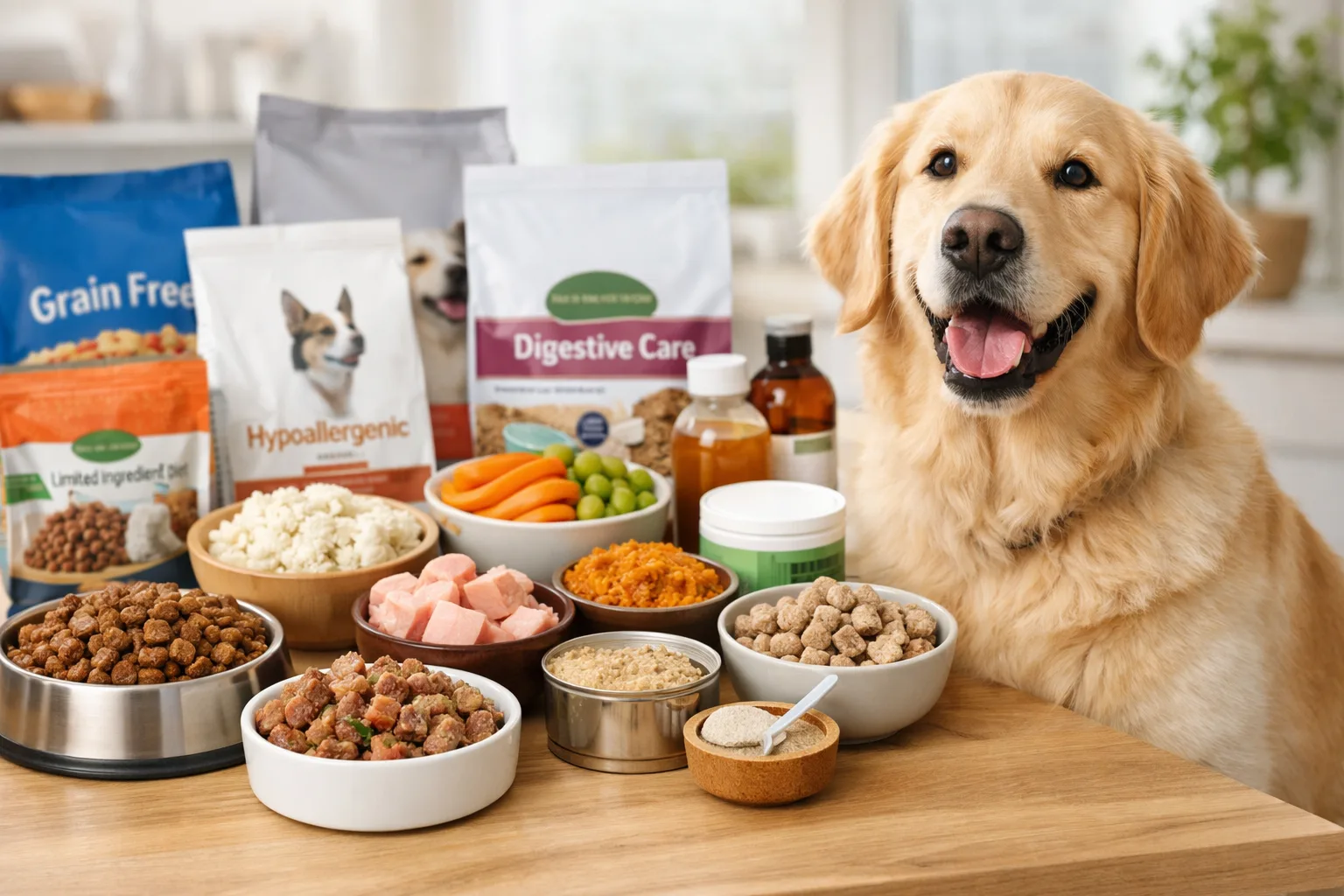
If your dog has a sensitive stomach, mealtime can feel like a minefield. Owners often chase the latest “digestive formula” or switch brands every few weeks after one bad episode. That understandable reaction can backfire, because sudden diet changes and unnecessary treats are two of the most common mistakes that prolong stomach issues rather than fix them. What most people actually need is a food that balances gentle ingredients, proven digestibility, and steady nutrient delivery so the gut can calm down and heal.
Choosing the right food depends on what triggers your dog’s symptoms. Some pups respond to limited-ingredient diets, others need novel proteins, and a few do best on hydrolyzed or prescription formulas. Texture and kibble size, fat levels, fiber sources, and even meal frequency matter when you’re trying to eliminate flare-ups. Different owners will prioritize cost, vet-recommendation status, or convenience of buying the same food across retailers.
For most dogs with recurring soft stool or bloating, a limited-ingredient or prescription-sensitive formula is the fastest route to steady improvement. Our top overall pick combines clinical evidence, palatability, and widespread vet support, and we highlight budget, limited-ingredient, and grain-free options so you can match a plan to your dog’s needs.
If you’re short on time, the comparison table below gives a quick snapshot of each top option and what it’s best for. Click a product name in the table to jump to its full review below for a deeper look.
Best Food For Dogs With Sensitive Stomachs Comparison Table
| Product | Best For | Main Strength | Key Specs |
|---|---|---|---|
| Hill’s Science Diet Sensitive Stomach & Skin | Top Overall | Clinically tested digestibility | Balanced fat, prebiotic fiber, multiple sizes |
| Royal Canin Veterinary Diet Gastrointestinal | Best Prescription | Vet-formulated for GI upset | Highly digestible, controlled nutrients |
| Purina Pro Plan Sensitive Skin & Stomach | Best Value | Good balance of price and performance | Probiotics, omegas, available in multiple proteins |
| Blue Buffalo Basics Limited Ingredient | Best Limited-Ingredient | Simple recipe, no chicken or beef | Limited proteins, natural ingredients |
| Wellness Simple Limited Ingredient Diet | Best For Food Sensitivities | Single protein, gentle carbohydrates | No artificial additives, probiotics |
| Natural Balance L.I.D. Limited Ingredient Diet | Best Variety Of Novel Proteins | Uncommon protein choices | Limited ingredients, multiple flavors |
| Merrick Limited Ingredient Diet Grain-Free | Best Grain-Free Option | High-quality ingredients, coarse kibble | Single protein, grain-free |
| Iams ProActive Health Sensitive Stomach | Best Budget | Affordable, accessible | Prebiotics, moderate price range |
| Royal Canin Hydrolyzed Protein | Best For Severe Allergies | Hydrolyzed protein reduces immune response | Prescription-only, highly digestible |
If you want more detail on each formula, the reviews below explain the differences and who will benefit most from each option.
1. Best Overall: Hill’s Science Diet Sensitive Stomach & Skin

One reason this option stands out is its clinic-backed approach to digestion and skin health. Hill’s uses a mix of prebiotic fiber, moderate fat, and a carefully balanced amino acid profile that helps normalize stool and support nutrient absorption. Many owners report noticeable improvement in stool quality within a week when switching gradually. The formula also includes omega fatty acids that soothe irritated skin, which is useful because digestive issues and skin sensitivities often occur together.
For buyers who prioritize convenience and vet endorsement, this formula is widely recommended and available in multiple bag sizes and kibble shapes for different breeds. It works well for dogs that need a dependable, long-term maintenance diet rather than a short-term elimination experiment. The downside is that some picky eaters take a few days to accept the flavor, so introducing it with a little warm water or mixing briefly with the previous food helps with transition.
Pros
- Clinically tested for digestibility and stool quality
- Includes prebiotic fiber and omega fatty acids
- Widely available and commonly stocked by vets
- Multiple sizes and breed-specific options
- Good for dogs with both skin and stomach sensitivities
Cons
- Some dogs may take time to adjust to the taste
- Not a true limited-ingredient formula for elimination trials
This is an excellent everyday maintenance choice for dogs with mild to moderate digestive upset who need a balanced, vet-recommended option. Owners aiming to run a strict elimination diet would pair a switch to a limited-ingredient or hydrolyzed food for the diagnostic phase, then consider this for long-term management. Choose this if you want steady results and broad availability across stores and vet offices.
To buy this product, click here.
2. Best Prescription: Royal Canin Veterinary Diet Gastrointestinal
For dogs that suffer frequent vomiting, chronic diarrhea, or inflammatory bowel disease, a vet-prescribed gastrointestinal diet is often the fastest way to get symptoms under control. Royal Canin’s gastrointestinal formula prioritizes high digestibility and controlled nutrient levels to reduce the workload on the stomach and intestines. The kibble is engineered to be gentle on the gut while delivering complete nutrition, which makes it a common choice after a veterinary diagnosis.
This diet is intended for short-term therapeutic use and can be life-changing for dogs with severe digestive conditions. It’s easy to mix with water to increase palatability and hydration, helpful for dogs that won’t eat during flare-ups. The main limitations are access and cost, since it requires a vet authorization and can be pricier than over-the-counter options. Still, when a disorder needs medical nutrition, this formula is a proven step.
Pros
- Formulated specifically to support gastrointestinal recovery
- Highly digestible ingredients reduce stool volume and frequency
- Can be prescribed alongside medical treatment
- Available in wet and dry formats for picky eaters
Cons
- Requires veterinary authorization
- Higher cost than many supermarket brands
Choose this if your dog has been through tests and your veterinarian recommends a controlled GI diet. It is less suitable for mild, occasional upset that responds to a simple ingredient switch. The real advantage is clinical support and consistency; the tradeoff is needing vet involvement and a higher price point.
To buy this product, click here.
3. Best Value: Purina Pro Plan Sensitive Skin & Stomach
If stretching your budget without compromising digestive support is the goal, this Purina Pro Plan formula is a strong contender. It combines probiotics to support healthy gut flora with moderate fat content and targeted amino acids to promote skin and coat. Many owners find it strikes a solid balance between price and performance, offering improvements in stool consistency and a pleasant coat sheen over several weeks.
Usability is another strong point: Purina produces a wide range of protein choices and bag sizes, so it’s simple to pick a variant that matches your dog’s preferences. While it isn’t a limited-ingredient line for strict allergy diagnosis, the consistent ingredient quality and inclusion of live probiotics make it a practical first step for owners who want improvement without moving to prescription diets immediately.
Pros
- Good cost-to-performance ratio
- Contains probiotics for digestive support
- Multiple protein options and sizes available
- Improves coat quality as well as digestion
Cons
- Not ideal for strict elimination or severe allergies
- Some dogs with very sensitive palates are picky
This product suits owners who need a reliable, wallet-friendly option that still addresses digestive and skin concerns. It’s less appropriate when a vet-prescribed hypoallergenic or novel protein is required. Pick this for steady maintenance or when you’re trying to avoid the expense and logistics of prescription food.
To buy this product, click here.
4. Best Limited-Ingredient: Blue Buffalo Basics Limited Ingredient
Limited-ingredient diets remove common culprits like chicken, beef, or dairy and shrink the recipe down to a few simple components. Blue Buffalo Basics follows that logic with single-protein recipes and gentle carbohydrate sources such as potatoes or pumpkin. Many owners use this brand during an elimination trial because it keeps the ingredient list short and readable, which makes spotting triggers much easier.
Flavor and texture are often praised by picky dogs, and the brand avoids artificial preservatives and colors. The main drawback is that limited-ingredient does not guarantee a dog will tolerate a specific protein; novel proteins work best for dogs allergic to the usual suspects. Additionally, rotating among limited-ingredient flavors can reintroduce allergens if you are still diagnosing the problem.
Pros
- Short ingredient list simplifies elimination trials
- No artificial colors, flavors, or preservatives
- Palatable to many picky eaters
- Multiple single-protein options
Cons
- Not a guarantee for allergy relief if protein is still reactive
- Can be more expensive than mainstream brands
Choose Blue Buffalo Basics for a straightforward elimination diet or when you want a clean-label limited-ingredient food. If your dog requires a truly novel protein the brand offers several options, but owners should monitor the ingredient list carefully during long-term feeding to avoid accidental re-exposure to triggers.
To buy this product, click here.
5. Best For Food Sensitivities: Wellness Simple Limited Ingredient Diet
If you need a genuinely minimal recipe with high-quality sources, Wellness Simple is a thoughtful choice. The company emphasizes single protein sources like turkey or lamb plus uncomplicated carbohydrate choices, and adds probiotics and omega fatty acids for gut and skin health. Real-world users report reduced gas and firmer stools after several weeks of consistent feeding.
The kibble texture is also designed to be mouth-friendly for small and medium breeds, making it a good pick for dogs that struggle with larger, denser kibbles. The limitations are similar to other limited-ingredient foods: it’s not automatically effective for immune-mediated food allergies, and some recipes come in smaller bag sizes which may make unit cost higher for large dogs.
Pros
- High-quality single protein options
- Includes probiotics and omega fatty acids
- Good palatability for picky eaters
- Minimal ingredient lists reduce exposure to common triggers
Cons
- Smaller bag sizes can raise per-pound cost
- Not a medical diet for severe gastrointestinal disease
Wellness Simple is ideal for owners who want a clean, limited-ingredient formula with supplemental digestive support. It’s an excellent middle ground between supermarket formulas and prescription diets, especially for dogs that respond to dietary simplification but don’t require vet-only nutrition.
To buy this product, click here.
6. Best Variety Of Novel Proteins: Natural Balance L.I.D. Limited Ingredient Diet
Natural Balance stands out because of the breadth of unusual protein choices such as duck, venison, or limited fish formulas. That variety is useful when a dog has already reacted to common proteins; offering a truly novel protein increases the chances of success during an elimination trial. The formula also keeps carbohydrates simple, which is helpful for dogs that respond poorly to grain fillers.
Usability is strong—owners can pick a new protein profile if a dog fails to improve on the first trial. On the downside, some novel proteins can be pricier or less available in larger bag sizes, and switching proteins without proper trial periods confuses the diagnostic process. For owners committed to identifying a single trigger, Natural Balance provides the options needed to zero in on the right choice.
Pros
- Wide range of novel protein choices
- Simple carbohydrate sources support digestion
- Good for strict elimination diets
- Multiple kibble sizes and flavors
Cons
- Some novel proteins may be more expensive
- Availability can vary by region
Pick Natural Balance if your dog needs a novel protein and you plan to run a stepwise elimination. It’s best for owners who can commit to consistent feeding without treats or table scraps, so the diagnostic process yields a clear result. Those seeking a long-term maintenance food without vet involvement might prefer a more mainstream option after identifying the trigger.
To buy this product, click here.
7. Best Grain-Free Option: Merrick Limited Ingredient Diet Grain-Free
Grain-free limited-ingredient diets can help if a dog is sensitive to certain grains or reacts to multiple common proteins. Merrick’s line combines single proteins with grain-free carbohydrates like peas or sweet potatoes to provide energy without wheat or corn. The recipes are rich in quality protein and typically include added glucosamine and chondroitin for joint support, which is a bonus for older dogs.
Many owners praise the taste and how quickly their dog’s digestion settled. However, grain-free diets have been scrutinized for potential links to certain heart conditions in specific cases, so they’re not an automatic choice for every dog. Consulting a veterinarian before long-term grain-free feeding is a good practice, particularly for large breeds or dogs with existing cardiac concerns.
Pros
- High-quality single protein options
- Good palatability and rich protein content
- Includes joint-support ingredients in some lines
- Grain-free for dogs that react to grains
Cons
- Grain-free long-term feeding may require vet monitoring
- Some formulas use peas or legumes that can be problematic for some dogs
This is a smart choice for owners whose dogs show clear signs of grain sensitivity or who prefer a grain-free lifestyle after vet consultation. Avoid if your dog has a heart condition or you prefer to minimize legume-heavy recipes; in those cases a grain-inclusive limited-ingredient diet could be safer.
To buy this product, click here.
8. Best Budget: Iams ProActive Health Sensitive Stomach
Not every household has room in the budget for premium veterinary diets, but that doesn’t mean you must sacrifice digestive support. Iams ProActive Health offers a sensitive stomach line that includes prebiotics and moderate fat levels to ease digestion. It’s a sensible first step for owners who want to test whether dietary changes alone will fix recurring soft stool or minor gas without escalating to pricier options.
Real-world users report decent improvements for mildly sensitive dogs and appreciate the accessible price and broad retail availability. The tradeoff is that the ingredient list includes more mixed proteins and additives than limited-ingredient or prescription options, which makes it less useful for strict elimination trials. Still, the affordability and decent results make it a practical baseline option.
Pros
- Affordable and widely available
- Contains prebiotics for gut support
- Good option for mild sensitivities
- Multiple bag sizes for different household needs
Cons
- Not suitable for diagnosing or managing serious allergies
- Ingredient list is less strict than limited-ingredient brands
Choose Iams if cost and ease of purchase are high priorities and your dog has only mild or occasional digestive problems. If symptoms persist, upgrade to a limited-ingredient or prescription diet and consult your veterinarian for targeted testing.
To buy this product, click here.
9. Best For Severe Allergies: Royal Canin Hydrolyzed Protein
Hydrolyzed protein diets break proteins into very small pieces that the immune system is less likely to recognize, making them the go-to choice for dogs with confirmed food allergies or severe atopic conditions. Royal Canin’s hydrolyzed formulas are engineered for absolute digestibility and minimal antigenic stimulus. Vets often recommend these when skin tests or bloodwork indicate a food-driven immune response.
The formula’s taste can be a hurdle for finicky patients, but many owners find that the dramatic reduction in itching and chronic digestive upset outweighs initial palatability challenges. Because these diets are therapeutic, they require veterinary oversight and are usually prescribed for an extended diagnostic or treatment period.
Pros
- Hydrolyzed proteins reduce immune reactions
- Extremely digestible and low antigenic potential
- Clinically used for allergy diagnosis and management
- Can resolve severe skin and GI symptoms when allergies are confirmed
Cons
- Requires veterinary prescription
- Some dogs find the taste less appealing
Use a hydrolyzed diet when tests indicate an immune-mediated food allergy or when other diets fail to control severe symptoms. It is not a casual swap; commitment to the prescribed trial length is essential to get reliable diagnostic results and symptom relief.
To buy this product, click here.
Best Food For Dogs With Sensitive Stomachs FAQ
How quickly should I expect results after changing my dog’s food?
Expect at least 7 to 14 days of gradual improvement in stool consistency for many sensitive-stomach formulas, with clearer changes appearing after three to six weeks. Prescription and hydrolyzed diets can produce faster relief for severe conditions, but full diagnostic trials typically run 8 to 12 weeks to confirm whether a new food is truly effective.
Should I try a limited-ingredient diet or see my vet first?
For mild, intermittent symptoms, a limited-ingredient or novel-protein trial can be a reasonable first step. If symptoms are severe, persistent, include vomiting, weight loss, or blood in stool, see your veterinarian before changing food so they can rule out medical causes and recommend appropriate therapeutic diets or testing.
Are probiotics helpful for dogs with sensitive stomachs?
Yes. Probiotics support beneficial gut bacteria and can improve stool quality and digestion when paired with a suitable diet. Look for foods that include guaranteed probiotic strains or discuss a veterinary probiotic supplement for targeted care.
How should I transition my dog to a new food?
Use a 7-10 day gradual transition: start with 25% new food and 75% old for two to three days, then 50/50 for another two to three days, then 75/25, and finally 100% new. Slower transitions reduce the risk of flare-ups. For dogs with very sensitive guts, extend the timeline to two weeks or add small amounts of water to soften kibble.
Is grain-free better for sensitive stomachs?
Not automatically. Some dogs benefit from grain-free diets if they react to specific grains, but many dogs do well on grain-inclusive diets with simple carbohydrate sources like rice or oatmeal. Discuss any long-term grain-free feeding with your vet, especially for large breeds or dogs with heart concerns.
Can treats or table scraps ruin an elimination diet?
Absolutely. Even small amounts of table scraps or unapproved treats can reintroduce allergens and confound an elimination trial. Use only vet-approved treats or pieces of the new diet during the testing window to get a clear result.
When is a hydrolyzed diet necessary?
A hydrolyzed diet is recommended when immune-mediated food allergies are suspected or confirmed. These diets are typically prescribed after other trials fail or when testing suggests an allergic component to skin or GI disease. They require strict adherence and veterinary supervision.
How do I choose between a prescription and an over-the-counter sensitive formula?
Start with the severity of symptoms. Mild to moderate digestion problems often respond to limited-ingredient or sensitive-over-the-counter formulas. Severe or persistent symptoms, weight loss, or signs of systemic disease indicate the need for veterinary assessment and likely a prescription therapeutic diet.
Final Verdict
For most owners seeking reliable improvement without an immediate vet visit, Hill’s Science Diet Sensitive Stomach & Skin stands out as the top overall choice because it combines clinical research, palatability, and practical nutrient balance. Purina Pro Plan offers the best value if you need to balance budget and performance, while limited-ingredient brands like Blue Buffalo Basics and Wellness Simple are the right tools for targeted elimination trials. Prescription options from Royal Canin are indispensable when medical nutrition is required, especially hydrolyzed formulas for severe allergies.
Match your choice to your dog’s symptoms and your household constraints. If the problem is mild, try a well-reviewed sensitive or limited-ingredient over-the-counter food with a slow transition and monitor for at least four to eight weeks. If symptoms are severe or don’t improve, seek veterinary testing and consider a prescription gastrointestinal or hydrolyzed diet. The right approach pairs a calm, consistent feeding plan with observation and vet follow-up, which together give most dogs the best chance to settle into comfortable, predictable digestion.

Leave a Reply