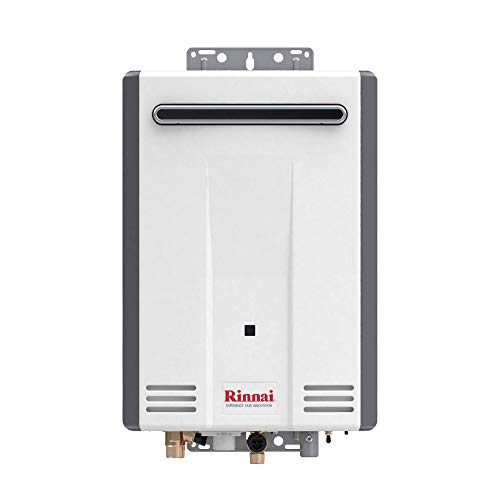
The Rinnai V53DeP Tankless Hot Water Heater stands out in the Japanese gas water heater market with its 16L capacity. While 20L units are common and similarly priced, the 16L is positioned as a “specialized customization,” offering cost savings without compromising performance. This makes it an ideal choice for households like the one described, with a kitchen and bathroom.
Key features include endless hot water supply, thanks to its compact and durable design tailored to fit various homes and lifestyles. The tankless gas water heater is energy and space-efficient, heating water only when necessary and incorporating enhanced scale detection to prevent potential long-term damage. It ensures optimal water pressure, delivering a high-performance flow rate of up to 5.3 gallons per minute, sufficient for simultaneous use by up to 4 appliances.
Professional installation is recommended for proper setup, and Rinnai provides a Find a Rinnai PRO service to locate qualified technicians. With a robust residential warranty, including 10 years for the heat exchanger, 5 years for labor, and 1 year for parts, the Rinnai V53DeP offers a reliable, energy-efficient solution for consistent hot water needs.
Pros of the Rinnai V53DeP Tankless Water Heater
1. Truly Endless Hot Water That Handles Whole-House Demand with Ease
One of the most consistently praised advantages of the Rinnai V53DeP is its ability to deliver genuinely endless hot water, even under simultaneous demand. Users report running showers, sinks, and appliances at the same time without experiencing temperature drops or pressure loss—a clear upgrade from traditional tank systems that quickly run out during peak use. This makes the V53DeP particularly well-suited for families, multi-bathroom homes, or households where hot water usage overlaps throughout the day. Instead of planning usage around tank recovery time, users enjoy uninterrupted availability, which fundamentally changes the daily hot water experience.
2. Straightforward Installation That Reduces Setup Friction
Many users describe the installation process as surprisingly easy, especially for those replacing an older Rinnai unit or upgrading from a similar tankless model. The compact design, clear mounting points, and logical connections contribute to a smoother setup experience than expected for a gas-powered tankless heater. While professional installation is still recommended for safety and compliance, users appreciate that the unit itself does not introduce unnecessary complexity—making the transition to tankless feel far less intimidating than anticipated.
3. Noticeably Improved Shower Performance and Comfort
Shower performance is one area where the V53DeP receives particularly enthusiastic feedback. Users highlight stronger, more consistent hot water delivery that results in better pressure and a more satisfying, steamier shower experience. Unlike older systems that struggle to balance hot and cold water, the V53DeP allows for finer temperature control at the fixture, making it easier to dial in the desired comfort level. For many users, this upgrade alone significantly improves daily comfort and justifies the switch to a tankless system.
4. Meaningful Energy Efficiency and Reduced Propane Consumption
Energy efficiency is another major advantage cited by users, particularly those switching from older propane-based systems. Several reviews note that the V53DeP uses substantially less propane—sometimes less than half compared to previous units—while delivering superior performance. By heating water only when needed, the system avoids standby energy losses associated with tank heaters. Over time, this efficiency translates into lower fuel consumption and operating costs, making the V53DeP a more economical option for long-term ownership.
5. Flexible and User-Friendly Temperature Adjustment
Users appreciate how easy it is to adjust the output temperature to suit household preferences. The ability to raise the temperature up to 140°F is frequently mentioned as a valuable feature, particularly for users who prefer hotter water for showers, cleaning, or outdoor use. Customer support is also praised for being responsive and helpful when guidance is needed, reinforcing confidence in fine-tuning the system safely and effectively. This flexibility allows the unit to adapt to different lifestyles rather than forcing users into fixed presets.
6. Powerful Output That Maintains Performance Under Pressure
The Rinnai V53DeP is widely commended for maintaining strong hot water output even under demanding conditions. Users report being able to perform high-demand tasks—such as washing vehicles with steaming hot water—without experiencing drops in pressure or temperature. This level of performance demonstrates the system’s ability to handle real-world workloads rather than just ideal conditions, making it suitable for both household and light-duty outdoor applications.
7. Precise Low-Flow Control Improves Usability
Unlike older tankless models that require a relatively high water flow to activate, the V53DeP offers fine flow control that allows hot water delivery even at very low flow rates. Users specifically mention being able to draw a trickle of hot water—something their previous systems could not handle reliably. This improvement enhances usability at sinks, during gentle rinsing, or when conserving water, and reflects a more refined and responsive system design.
8. Proven Longevity and Reliable Long-Term Performance
Long-term reliability is a recurring theme in user feedback. Many owners report years of consistent operation without the need for servicing or performance-related issues. This durability reinforces Rinnai’s reputation for engineering quality and gives buyers confidence that the V53DeP is built for extended use rather than short replacement cycles. For homeowners seeking a dependable long-term solution, this track record is a significant advantage.
9. Professional Installation Guidance Enhances Overall System Performance
While not a feature of the unit itself, the strong emphasis on professional installation contributes positively to overall user satisfaction. Users note that proper setup—often guided by Rinnai-certified technicians—ensures optimal performance, correct venting, and safe operation. This focus on correct installation helps prevent common issues and allows the system to perform exactly as intended over time.
10. Durable, Compact Design Suitable for Indoor or Outdoor Installation
The physical build quality of the V53DeP also receives positive remarks. Its compact, durable construction allows for flexible installation options, including mounting on exterior walls. This frees up indoor space and makes the unit especially appealing for homes with limited utility room capacity. The sturdy housing is designed to withstand outdoor exposure when properly installed, adding to its versatility and long-term durability.
Cons of the Rinnai V53DeP Tankless Water Heater
1. Installation Instructions May Feel Unclear for First-Time Users
A number of users mention that the installation instructions could be clearer, particularly for those who are new to tankless water heater systems. While the documentation does cover essential steps, some reviewers feel that certain explanations lack detail or assume prior technical knowledge. This can lead to confusion during setup, especially for DIY installers who are not already familiar with gas tankless configurations. In practice, many users resolve this by consulting online resources, contacting customer support, or opting for professional installation—but clearer, more beginner-friendly documentation would improve the out-of-box experience.
2. Electrical Input Port Design Could Be More Installer-Friendly
One user specifically points out dissatisfaction with the electrical input port design, noting that it lacks a clearly defined method for clamping flexible conduit securely in place. There are also concerns about wire size accommodation, which may require additional attention during installation. While this issue does not affect all users and is primarily relevant during setup, it can add minor frustration for installers who expect a more intuitive or standardized electrical entry design. For professional installers, this is usually a manageable detail, but DIY users may find it less forgiving.
3. Gas Supply Requirements May Necessitate Plumbing Upgrades
The Rinnai V53DeP requires a 3/4-inch gas supply line to operate at full capacity, which can be a limiting factor for some homes. Users with older plumbing setups or smaller gas lines may need to invest in upgrades before installation, increasing upfront cost and complexity. While this requirement is common among high-performance tankless water heaters, it can come as a surprise to buyers transitioning from traditional tank units. For homes already equipped with adequate gas infrastructure, this is not an issue—but it is an important consideration during planning.
4. Noticeable Lag Time Before Hot Water Reaches Fixtures
Some users report a brief delay before hot water reaches the shower or faucet, particularly in homes with longer pipe runs. This lag is not unique to the V53DeP and is common with tankless systems that heat water on demand rather than storing it. While many users view this as an acceptable trade-off for improved energy efficiency and lower operating costs, it may still be noticeable for those accustomed to instant hot water from tank-based or recirculating systems. In many cases, this can be mitigated with system optimization or recirculation solutions, but it remains a factor to be aware of.
Installation Process
- Examine Components: Begin by reviewing the provided components and note that an exhaust pipe is not included in the package.
- Plan Exhaust System: Plan the exhaust system, opting for a straightforward setup involving a 90-degree bend, a straight pipe, and an outdoor pipe—totaling three pipes.
- Check Existing Hole: Assess the existing hole for compatibility. If it’s too small, make a note to enlarge it during the installation.
- Prepare for Enlargement: Given the need for hole enlargement, gather necessary tools and materials. If the home has undergone recent renovation, consider purchasing dustproof bags to prevent mess.
- Purchase Exhaust Pipe: Procure the exhaust pipe separately, keeping in mind its unique size and the potential challenge of finding suitable sellers.
- Assemble Components: Assemble all components, including the exhaust pipe, ensuring everything is ready for installation.
- Mark Wall for Drilling: Mark the designated spots on the wall for drilling holes, maintaining precision for the unique exhaust pipe size.
- Drill Exhaust Hole: Drill the exhaust hole carefully, considering the non-flexible nature of this exhaust pipe. Precise alignment is crucial.
- Connect Components: Once the exhaust hole is ready, proceed with connecting the water pipes, gas pipe, transformer, exhaust pipe cover, and the gas water heater cover.
- Evaluate Installation Status: Acknowledge that the installation might not be completed immediately. Evaluate the progress, considering external factors such as a busy period coinciding with the arrival of goods.
- Manage After-Effects: Understand that significant after-effects may follow a busy installation period, including daily sweating and fatigue.
- Personal Involvement: Acknowledge the preference for personal involvement in the renovation process rather than relying on external assistance.
FAQs – Rinnai V53DeP Tankless Water Heater
1. Is the Rinnai V53DeP suitable for a whole house?
Yes. The Rinnai V53DeP is designed to support whole-house hot water needs in small to medium-sized homes. With a maximum flow rate of up to 5.3 GPM, it can handle multiple fixtures simultaneously—such as a shower, sink, and kitchen use—without noticeable temperature drops, provided the demand stays within its capacity range.
2. How is the V53DeP different from larger 20L tankless models?
While 20L units offer higher maximum flow rates, the 16L (V53DeP) model is often considered a more balanced option for households with one bathroom and a kitchen. It delivers strong real-world performance at a lower cost and with reduced gas consumption, making it a practical choice for users who do not require extreme output.
3. Does the V53DeP really provide endless hot water?
Yes. As a tankless water heater, the V53DeP heats water on demand rather than storing it in a tank. As long as the unit operates within its rated flow capacity and has sufficient gas supply, it can deliver continuous hot water without running out.
4. How long does it take for hot water to reach the faucet or shower?
The V53DeP typically delivers hot water faster than traditional tank heaters once activated, but some delay may still occur depending on pipe length and home layout. In larger homes or systems without recirculation, a brief wait is normal. This can be reduced with optimized plumbing or optional recirculation solutions.
5. Can the water temperature be adjusted?
Yes. The output temperature of the Rinnai V53DeP can be adjusted, and users commonly set it between standard household ranges up to 140°F. Adjustments are straightforward, and Rinnai customer support is often cited as helpful if guidance is needed during setup.
6. Is professional installation required?
Professional installation is strongly recommended. The V53DeP is a gas-powered appliance that requires proper gas sizing, venting, and electrical connection. Rinnai offers a “Find a Rinnai PRO” service to help users locate qualified installers, which helps ensure safety, efficiency, and warranty compliance.
7. What type of gas supply does the V53DeP require?
The unit typically requires a 3/4-inch gas supply line to operate at full capacity. Homes with smaller or older gas lines may need an upgrade. Confirming gas supply specifications before purchase can help avoid installation delays or additional costs.
8. Is the V53DeP energy efficient?
Yes. The Rinnai V53DeP is ENERGY STAR qualified and has a high Uniform Energy Factor (UEF). By heating water only when needed, it avoids standby heat loss common in tank heaters, which can lead to lower fuel consumption over time.
9. Can the V53DeP be installed outdoors?
Yes, the V53DeP features a compact and durable design that allows for outdoor installation when properly mounted and vented. This is especially useful for freeing up indoor space in homes with limited utility room capacity.
10. What kind of maintenance does the V53DeP require?
Like most tankless water heaters, periodic maintenance is recommended—especially in areas with hard water. This typically involves flushing or descaling the system to prevent mineral buildup and maintain optimal performance. Regular maintenance helps extend the unit’s lifespan and preserve efficiency.
11. Does the V53DeP require electricity to operate?
Yes. Although it is a gas water heater, the V53DeP relies on electricity for ignition and control systems. During power outages, the unit will not function unless connected to a backup power source such as a UPS.
12. What warranty coverage does the Rinnai V53DeP include?
The V53DeP comes with a strong residential warranty, typically including 10 years for the heat exchanger, 5 years for labor, and 1 year for parts. This coverage reflects Rinnai’s confidence in the product’s durability and long-term reliability.
Final Verdict
Overall, the Rinnai V53DeP Tankless Hot Water Heater stands out as a dependable and well-balanced solution for households seeking consistent hot water without the limitations of a traditional tank system. Its ability to deliver truly endless hot water, combined with strong shower performance, precise temperature control, and noticeably improved energy efficiency, makes it a compelling upgrade for everyday residential use.
What users value most is not just the unit’s performance on paper, but how it improves daily comfort in real-world scenarios—from back-to-back showers to simultaneous appliance use—without pressure drops or temperature instability. The compact, durable design further adds flexibility in installation, especially for homes looking to save indoor space or mount the unit externally.
That said, the V53DeP is not entirely plug-and-play. Installation instructions could be clearer for first-time tankless users, and proper gas supply and professional installation are important to achieving optimal performance. A slight delay in hot water delivery may also be noticeable in some layouts, a common trade-off with on-demand systems.
Taken as a whole, these limitations are minor when weighed against the long-term benefits. For homeowners who prioritize reliability, efficiency, and continuous hot water—and who are prepared to install the system correctly—the Rinnai V53DeP represents a cost-effective, long-lasting investment that consistently earns user confidence and recommendation.