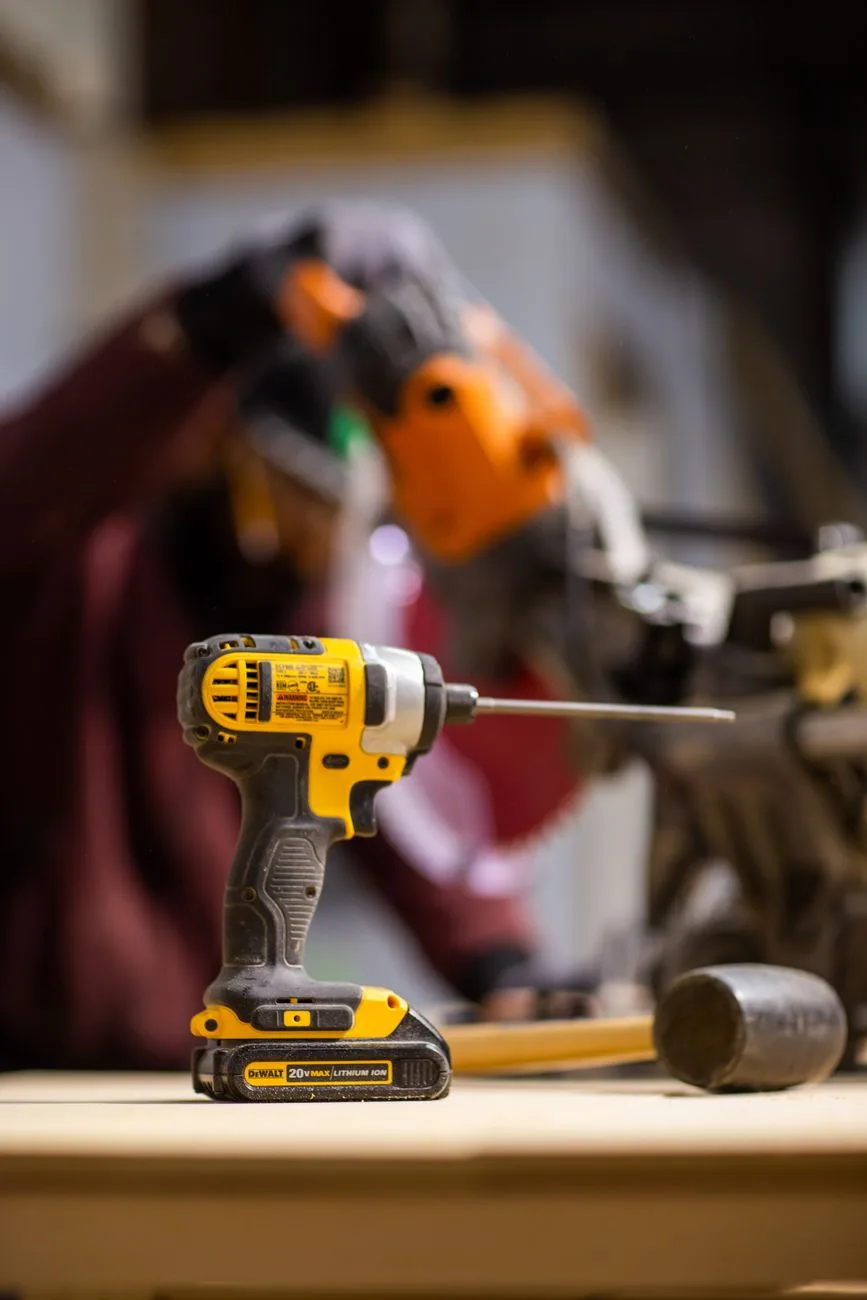
People usually start looking for the best impact drivers for beginners when a basic drill starts struggling with long screws, deck boards, lag bolts, or stubborn fasteners that need a little more force. The category looks simple at first, but beginners run into the same mistakes over and over: buying too much power, overlooking bit compatibility, choosing a tool that feels awkward in the hand, or forgetting that some impact drivers are sold tool-only without a battery or charger. For a first-time buyer, the right pick should feel predictable, manageable, and easy to live with, not just powerful on paper.
What matters most is a mix of control, comfort, and practicality. A beginner does not usually need the most aggressive model in the lineup, but they do need a tool that starts smoothly, fits common bits, and is easy to store and charge. Different shoppers will prioritize different things. Some want the simplest cordless setup for household repairs. Others want a hand impact driver for rusted fasteners in a garage or on a car. A few buyers may even want to start with a guidebook before buying the tool itself. The best overall choice here is the one that makes learning easier without creating unnecessary frustration.
If you are short on time, the comparison table below gives a quick way to sort the strongest options before you read the full reviews.
Quick Answer
If you want the easiest all-around starting point, the CRAFTSMAN 20V MAX Impact Driver Kit is the most beginner-friendly cordless pick in this group because it includes the battery and charger, offers solid torque without feeling overwhelming, and comes from a line of tools that many homeowners already recognize. If you are looking for the lowest-friction way to get started with no separate purchases, it makes a lot of sense.
For shoppers who need a simpler, lower-cost path, the RYOBI ONE+ 18V Cordless 1/4 in. Impact Driver is appealing if you already own compatible batteries. For rusted screws or stuck bolts, the best starting point is one of the hand impact drivers, especially the CRAFTSMAN Hand Impact Driver or the ZHAX 1/2″ Hand Impact Driver Set. And if you are still learning the basics, the HOW TO USE AN IMPACT DRIVER guide is a useful first purchase before you spend more on hardware.
Best Impact Drivers For Beginners Comparison Table
| Product | Best For | Main Strength | Type |
|---|---|---|---|
| How To Use An Impact Driver | Absolute beginners who want to learn the tool safely | Clear, low-cost foundation before buying hardware | Guidebook |
| Ryobi One+ 18V Cordless 1/4 In. Impact Driver | Budget cordless buyers with a compatible battery system | Light, familiar, and easy to use | Cordless driver |
| Craftsman 20V Max Impact Driver Kit | First-time cordless buyers who want a complete kit | Battery and charger included | Cordless driver kit |
| Zhax 1/2" Hand Impact Driver Set | DIYers dealing with rusted screws and seized bolts | Hammer-driven torque without a battery | Manual impact driver |
| DeWalt 20V Max Xr Impact Driver | Beginners who want room to grow | Better control with stronger performance | Premium cordless driver |
| Craftsman Hand Impact Driver | Home mechanics and casual repair users | Simple, durable, and easy to store | Manual impact driver |
| GreatNeck Imd5 Impact Driver Set | Shoppers who want a very affordable hand tool | Low-cost solution for stubborn fasteners | Manual impact driver |
| DeWalt 20V Max 1/4 In. Brushless Cordless Impact Driver | Beginners who want a compact, capable tool | Compact body with strong everyday performance | Cordless driver |
| Workpro 98-Piece Magnetic Nut Driver Set | Users who want a broad accessory kit | Big assortment with strong organizational value | Accessory set |
For a closer look at what separates these options, the reviews below explain which tools are easiest to learn on and which ones make sense as you build confidence.
Best Impact Drivers For Beginners Reviews
1. Best Overall: How To Use An Impact Driver
For someone who is truly new to impact drivers, starting with a guide can be smarter than buying a tool first. This beginner-focused book stands out because it addresses the part many shoppers skip, which is how to use the tool confidently and safely once it is out of the box. A lot of first-time buyers do not need more torque. They need a better understanding of bit selection, hand position, fastener control, and the difference between a standard drill and an impact driver. That makes this an unusually practical first step for a category where mistakes are often caused by inexperience rather than bad hardware.
It is also the most affordable way to reduce the learning curve. The value here is not in horsepower or accessories, but in helping beginners avoid stripped screws, surprise kickback, and the frustration that can come from forcing the wrong tool into the wrong job. If you are the sort of shopper who likes to learn the basics before committing to a power tool platform, this is a sensible starting point. It will not drive a deck screw, but it may help you choose the right driver the first time.
Pros
- Useful for absolute beginners who want a clear introduction before buying hardware.
- Can help reduce common mistakes such as bit slippage and overdriving fasteners.
- Low-cost purchase compared with buying the wrong tool first.
- Helpful for understanding safety and technique, which matter more than raw power early on.
- Fits well as a companion to a cordless or manual driver purchase.
Cons
- It is not a tool, so it does not solve any fastening job by itself.
- Experienced DIYers may already know most of what it covers.
- Less useful if you already understand impact driver basics and only want hardware.
This is the best pick for readers who feel uncertain about the category and want to avoid an expensive misstep. It is especially useful if you are shopping for your first impact driver, but are not yet sure whether you want cordless convenience or a manual tool for stubborn fasteners. If you only want the physical tool, you can skip it. If you want a smoother learning curve, it is one of the smartest starting points in the group.
To buy this product, click here.
2. Best Budget Cordless: Ryobi One+ 18V Cordless 1/4 In. Impact Driver

The Ryobi One+ impact driver makes sense for beginners because it lowers the barrier to entry without asking the buyer to learn a complicated system. It is a tool-only model, so the value depends heavily on whether you already own Ryobi One+ batteries. If you do, this becomes a straightforward and affordable path into cordless impact driving. The form factor is approachable, the 1/4-inch chuck is familiar, and the tool is designed around the kind of everyday fastening work most homeowners encounter first.
Where it really helps a new user is simplicity. You get the basic impact-driver experience without paying for a top-tier platform you may not need yet. It is also easier to justify for light projects, furniture assembly, and regular home repairs than a heavier-duty professional tool. The main limitation is obvious, though. Battery not included means new buyers may need to spend more than they expected before they can use it. Still, for someone already invested in the One+ ecosystem, this is one of the least intimidating ways to get started.
Pros
- Budget-friendly entry point for buyers already using Ryobi batteries.
- Lightweight and familiar layout makes it easy for beginners to handle.
- Good fit for routine household fastening, furniture, and light repair work.
- Compact 1/4-inch bit setup keeps accessory choices simple.
- A practical way to start cordless without overpaying for features you may not need.
Cons
- Battery and charger are not included.
- New buyers may end up spending more once the ecosystem cost is added.
- Less appealing if you do not already own Ryobi One+ batteries.
This is a strong beginner choice for homeowners who want a real cordless impact driver but do not want to jump into a premium lineup right away. It is best when paired with a battery system you already trust. If you are starting from zero and need an all-in-one kit, another option in this roundup will be easier to justify. But if the battery issue is solved, the Ryobi is a sensible and low-drama first tool.
To buy this product, click here.
3. Best Starter Kit: Craftsman 20V Max Impact Driver Kit

This Craftsman kit is one of the most beginner-friendly buys in the roundup because it removes the guesswork. The battery and charger are included, which matters more than many first-time buyers realize. A lot of new tool owners get stuck comparing specs and forget that a tool-only impact driver may not be usable on day one. Here, you get a complete package that is easy to put to work quickly. The moderate torque rating and one-handed bit change system also make it a comfortable introduction to the category rather than an overwhelming one.
For typical home use, this is the kind of impact driver that feels helpful instead of intimidating. It is suited to fastening screws, lag bolts, and larger hardware, but it does not push so aggressively that a beginner is likely to feel out of control. The LED work light is a nice touch in dark corners, under sinks, and in garages where beginners often work. It may not be the cheapest route, and the included battery is modest, but as a complete starter kit it is hard to ignore.
Pros
- Battery and charger are included, which is ideal for first-time buyers.
- Balanced power for common household fastening tasks.
- LED light helps when working in garages, closets, or dim spaces.
- Easy one-handed bit changes are helpful for users still getting comfortable.
- Feels like a complete, no-surprises starter package.
Cons
- Not the most powerful option in the lineup.
- The included battery is not especially large for extended work sessions.
- May eventually feel limited for users who move into bigger renovation projects.
If you are buying your first cordless impact driver and want the least complicated setup, this Craftsman kit belongs near the top of the list. It offers the kind of convenience beginners need, while still giving enough capability for real household use. More advanced users may outgrow it, but that is not a flaw for a first purchase. It is designed to help you get started without overcommitting.
To buy this product, click here.
4. Best For Stuck Fasteners: Zhax 1/2″ Hand Impact Driver Set
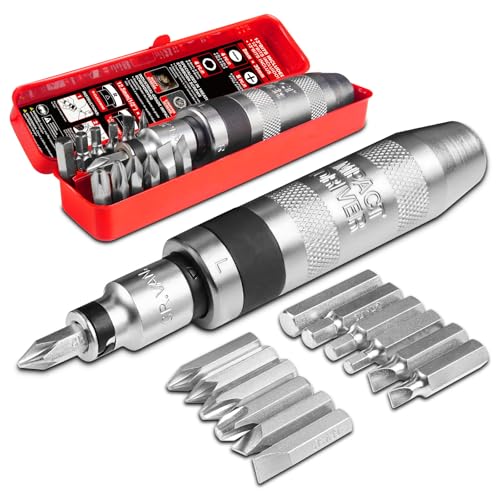
Beginners often think impact drivers are only cordless power tools, but a hand impact driver has a very different job. The Zhax set is built for rusted screws, seized bolts, and fasteners that refuse to move with ordinary hand tools. That makes it especially useful for car repairs, motorcycle work, and older household hardware. The appeal is simple. You strike the tool with a hammer and it converts that force into rotational torque. For a beginner, that can feel almost old-fashioned, but it is still one of the most effective solutions for stubborn hardware.
This set is a strong buy if your first project involves repair work rather than general screw driving. The included bit assortment is broad enough for many common fixes, and the storage case helps keep everything together. The drawback is that it is not as broadly useful as a cordless driver for day-to-day jobs like furniture assembly or hanging shelves. It is a specialized tool, and that specialization is exactly why it works. If you need to break things loose, this is the kind of beginner tool that earns its place quickly.
Pros
- Excellent for rusted, stripped, and frozen fasteners.
- No battery or charging system to maintain.
- Includes a broad selection of slotted, Phillips, and hex bits.
- Good choice for automotive and motorcycle repairs.
- Compact, portable, and easy to store in a toolbox or trunk.
Cons
- Not the right choice for general-purpose home fastening.
- Requires a hammer and a little technique to use effectively.
- Less convenient than a cordless tool for repetitive assembly work.
This is best for beginners who already know they are dealing with stuck hardware and do not want to rely on a drill that might only spin in place. It is less ideal as a first and only impact tool for general home use. If you want a repair-focused tool that can rescue old fasteners, though, it is a practical and well-matched choice.
To buy this product, click here.
5. Best Premium Choice: DeWalt 20V Max Xr Impact Driver

For beginners who prefer to buy once and keep using the same tool as their skills improve, the DeWalt 20V Max XR is the premium pick here. It has the kind of control features that make a difference as soon as someone starts doing more than basic projects. The three-speed setting, variable trigger, and brushless motor all help the tool feel more refined than a basic starter driver. That matters because beginners often overcorrect with a tool that is either too weak or too twitchy. This one is built to give the user more control over both speed and torque delivery.
It is also a more future-proof choice. If your first year of ownership includes simple repairs, then some furniture assembly, then a bigger project later on, this tool is likely to keep up. The tradeoff is cost. It is not the most accessible option for a casual buyer, and tool-only packaging means it makes the most sense if you already own batteries in the DeWalt ecosystem. Still, for a beginner who knows they want quality, this is the kind of purchase that avoids an early upgrade.
Pros
- Strong torque and speed for users who want room to grow.
- Three-speed setting improves control for newer operators.
- Brushless motor helps with efficiency and runtime.
- Integrated LED work light improves visibility in tight spaces.
- Good long-term choice for homeowners who expect bigger projects later.
Cons
- More expensive than most beginner-friendly alternatives.
- Tool only, so battery ownership matters.
- May be more tool than a casual once-in-a-while user needs.
This is the right choice for buyers who want a more serious cordless impact driver without sacrificing ease of use. It is especially appealing if you value precise control and are willing to pay for it. Beginners with modest needs can absolutely skip it, but anyone who expects regular use and a longer ownership window will see the appeal quickly.
To buy this product, click here.
6. Best Manual Option: Craftsman Hand Impact Driver

Not every beginner needs a battery-powered driver. The Craftsman hand impact driver is a good reminder that some jobs still call for simple mechanical force. It is designed to loosen frozen screws, rusted bolts, and stubborn fasteners without needing electricity, charging, or a compressor. That makes it a dependable tool for garage kits, vehicle repair bags, and anyone who wants a compact backup for emergencies. The ability to drive 3/8-inch sockets also gives it a broader role than a basic screwdriver set.
Where this tool shines is in restraint. Beginners sometimes assume more spinning speed automatically means better results, but in repair work the right hammer-driven impact can do less damage than a power tool spinning a damaged fastener even harder. The downside is that it is not as beginner-friendly in a casual household sense. You need to understand how to set it, strike it properly, and choose the right bit. Still, for the right user, this is a sturdy and useful tool that can handle a surprising amount of abuse.
Pros
- Useful for rusted screws, bolts, and stripped fasteners.
- No batteries, cords, or chargers to manage.
- Can drive 3/8-inch sockets, which adds versatility.
- Lifetime warranty is reassuring for a basic hand tool.
- Good compact option for a toolbox or roadside kit.
Cons
- Requires a hammer and some technique.
- Not ideal for everyday assembly or light household fastening.
- Fewer bits than some competing sets.
This is a smart choice for beginners who want to be ready for stuck fasteners without investing in a cordless platform. It is especially useful as a second tool after a cordless driver, but it can also serve as the first if your main need is repair work. Buyers who want a fast, easy, push-button experience should look elsewhere. Buyers who want a rugged problem solver will appreciate it.
To buy this product, click here.
7. Best Value Hand Tool: GreatNeck Imd5 Impact Driver Set
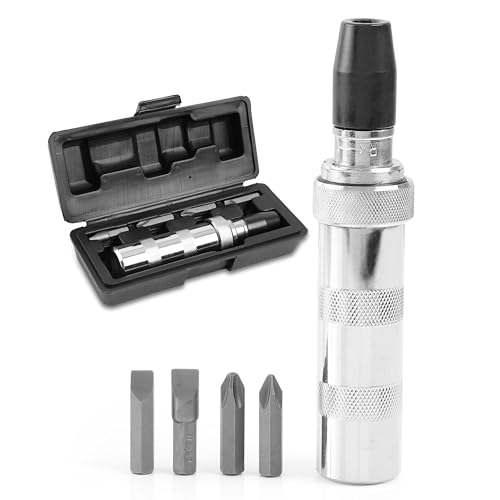
The GreatNeck IMD5 is the kind of tool that appeals to beginners who want a low-cost answer to a specific problem. It is not flashy, and it does not try to be an all-purpose system. Instead, it focuses on freeing rusted, stripped, and stubborn fasteners. The reversible manual design makes it useful for tightening and loosening, and the knurled grip is a small but important detail because it helps keep the tool steady when a hammer blow is involved. That matters for beginners who are still learning how much pressure and force to apply.
What gives this set real value is the mix of price, simplicity, and included storage. For a basic garage toolkit, it is easy to recommend as a backup or specialty item. The bit selection is limited, though, so if you need a wide accessory package, this is not the one. It performs best when you already know the fastener type and just need a solid manual driver to break it loose. For the money, it is a sensible, no-nonsense option.
Pros
- Very affordable entry into manual impact driving.
- Knurled grip improves handling and control.
- Good for automotive and home repair tasks.
- Storage case keeps the set organized.
- Reversible design adds flexibility for tightening and loosening.
Cons
- Smaller bit selection than some competitors.
- Not the best option for general household use.
- Requires a hammer and some care during use.
If you are shopping on a tighter budget and want something that can solve stuck-fastener problems without becoming a project of its own, this is a respectable choice. It is not a first pick for buyers who want a cordless driver, but it is a worthwhile backup for anyone building a practical toolkit. The value is in its narrow focus and low buy-in.
To buy this product, click here.
8. Best Compact Cordless: DeWalt 20V Max 1/4 In. Brushless Cordless Impact Driver

Compact impact drivers are often the best fit for beginners because they are easier to control in tight spaces and less fatiguing during short projects. This DeWalt model leans into that idea with a smaller body and a brushless motor that still brings respectable torque. That combination makes it attractive for people who want a serious tool without jumping straight to a bulky, high-intensity model. The variable trigger helps with control, and the 3-LED work light is genuinely useful around cabinets, under sinks, and in dim corners.
As a beginner’s tool, the main advantage is balance. It is powerful enough for large screws and common home tasks, but compact enough that it does not feel cumbersome in the hand. That said, it is still tool only, so buyers need to have a battery plan. It also sits in a midrange price bracket, which means it may be a little more tool than a casual user needs. But for people who want a capable driver they will not outgrow quickly, it is one of the best-shaped options in the list.
Pros
- Compact size helps with comfort and maneuverability.
- Brushless motor provides strong performance for the size.
- Variable speed trigger supports more controlled use.
- Integrated 3-LED light helps in low-light work areas.
- Good option for users who want a smaller tool with serious capability.
Cons
- Tool only, so battery costs are separate.
- Not the cheapest entry point for a beginner.
- May still be more than needed for very light occasional use.
This is a good pick for beginners who care as much about comfort and access as they do about power. It is especially well suited to home projects where space is limited and a full-size driver feels clumsy. If you want the simplest possible starter package, the Craftsman kit above is easier to recommend. If you want a more compact and refined driver that can grow with you, this DeWalt is the stronger long-term fit.
To buy this product, click here.
9. Best Accessory Set: Workpro 98-Piece Magnetic Nut Driver Set

This WORKPRO set is not an impact driver in the traditional sense, but it earns a place in a beginner roundup because the right accessories matter just as much as the tool itself. New buyers often overlook bit and socket compatibility, then discover their shiny new driver is less useful than expected. A broad set like this helps close that gap. It includes nut drivers, impact bits, adapters, a ratchet handle, and a storage case, which makes it appealing for someone building a small but versatile home toolkit from scratch.
The strongest selling point is range. If you are a beginner who expects to work on automotive repairs, appliance maintenance, general home fixes, and odd household jobs, having more bits and driver accessories on hand can save time and reduce frustration. The tradeoff is that this is a large set, so casual users may not need nearly all of it. It also makes more sense as a support purchase than a standalone answer. Still, if you want to be prepared for a wide range of fasteners, it is one of the more practical accessory kits here.
Pros
- Large assortment covers many common fastening and socket tasks.
- Magnetic grip helps hold bits more securely during use.
- Useful for users building a more complete starter toolkit.
- Storage case keeps a large assortment organized.
- Compatible with a wide range of tools and drive systems.
Cons
- Not a standalone impact driver.
- Many beginners will not need the full 98-piece assortment.
- Best as a companion kit rather than a first and only purchase.
If your main goal is to avoid discovering that you are missing the right bit at the wrong moment, this set is worth considering. It is particularly useful after you have already chosen a cordless or manual impact driver and want to expand your options. Buyers who want one simple tool should pass. Buyers who want preparedness and flexibility will see the appeal.
To buy this product, click here.
How We Chose
The products in this guide were selected with beginners in mind first, not advanced users. That means prioritizing ease of use, sensible control, and a low chance of buyer regret over raw speed or maximum torque. We looked at whether a product is truly approachable for a first-time user, whether it solves a real beginner problem, and whether it asks the buyer to spend extra money on batteries, chargers, or accessories just to make it usable. For cordless models, complete kits and intuitive handling carried more weight than headline performance alone.
We also tried to reflect the full range of use cases that bring people to impact drivers in the first place. Some shoppers need a tool for furniture assembly or home improvement. Others need a manual impact driver for rusted fasteners. A few are better served by learning the tool before buying anything. That is why the list includes a beginner guide, several cordless drivers, several manual impact drivers, and one accessory set. The aim was to give readers a realistic starting point, not a shelf of nearly identical tools.
Buying Guide
Start with the job you actually need to do. This is the biggest mistake beginners make. A cordless impact driver is great for driving screws and fasteners quickly, but it is not always the right answer for rusted bolts or stripped hardware. A manual impact driver can be the better tool for that. If your main projects involve assembling furniture, hanging shelves, or building small home items, a cordless driver makes sense. If you are working on older equipment, a hand impact driver may be more practical.
Pay attention to whether the tool is sold as bare tool or as a kit. This detail trips up new buyers constantly. A tool-only impact driver may look inexpensive, but if you do not already own compatible batteries and a charger, the real cost is higher. Complete kits are easier for beginners because they are ready to use right away. That is why starter kits often make the most sense for first-time buyers who are not already committed to a tool platform.
Think about comfort and control before chasing maximum torque. Beginners do not need the most aggressive impact driver on the market. In fact, too much power can make learning harder. A compact body, a good grip, a manageable trigger, and a useful work light often matter more in everyday use than a long list of peak performance numbers. If a tool feels awkward in the hand, it will be harder to use well, especially in tight spaces or overhead work.
Match the bit system to your projects. Most impact drivers use 1/4-inch hex bits, which are easy to find and simple to swap. Manual impact drivers may use different bit and socket formats, so check the included accessories and make sure they fit your likely jobs. A beginner with only Phillips screws will not benefit much from a set loaded with niche bits. On the other hand, someone working on cars or outdoor hardware may appreciate a wider assortment.
Do not ignore storage and organization. Beginners often buy the driver and then misplace the bit that makes the whole setup useful. A case, belt hook, or organized accessory tray is not flashy, but it matters. A tool that lives neatly in a garage or closet will get used more often than one that turns into a loose pile of parts. This is especially true for manual impact drivers and accessory kits.
Choose a platform you can live with. If you expect to expand into more cordless tools later, it may be worth buying into a battery family that offers a wider range of products. If you only need one tool, a manual impact driver may be a better and cheaper fit. Beginners often think they need the “best” model, but the better approach is to choose the most sensible system for the next few projects, not the next ten years.
Best Impact Drivers For Beginners FAQ
What Is The Difference Between An Impact Driver And A Drill?
An impact driver delivers rotational force in short bursts, which helps drive screws and fasteners more efficiently. A drill is better for drilling holes and lighter fastening tasks. Beginners often find impact drivers easier for long screws, while drills are better for general drilling work.
Do Beginners Need A Brushless Impact Driver?
Not necessarily. Brushless motors are efficient and often more durable, but a beginner does not need to start there if the budget is tight. A basic brushed model can still be a strong first tool for home use. Brushless makes more sense if you want a tool that will see regular use.
Should A First-Time Buyer Choose A Cordless Or Manual Impact Driver?
It depends on the job. Cordless drivers are better for everyday fastening and convenience. Manual impact drivers are better for stuck or rusted fasteners. Many beginners benefit from eventually owning both, but if you only want one, start with the tool that matches your main project.
What Should I Look For In A Beginner-Friendly Impact Driver?
Look for comfortable handling, simple bit changes, enough torque for common projects, and a package that is ready to use. If it is a cordless model, a kit with battery and charger is usually easier for beginners. If it is a manual model, look for a solid case and a useful bit selection.
Are More Torque And Speed Always Better?
No. Too much power can make a beginner tool harder to control, especially on smaller screws or delicate materials. What matters most is balanced power, good trigger control, and the ability to handle the projects you actually plan to tackle.
Why Do Some Impact Drivers Come Without A Battery?
Many tool brands sell bare tools so buyers already invested in that battery platform can save money. That is useful if you own compatible batteries, but it can be frustrating for a beginner buying from scratch. Always check whether the battery and charger are included before you compare prices.
Can A Manual Impact Driver Damage Fasteners?
It can, if used carelessly or with the wrong bit. But when used correctly, a manual impact driver is often one of the best ways to free stubborn fasteners without stripping them further. The key is to use the right bit, set the direction properly, and strike with controlled force.
Is An Accessory Kit Worth Buying With My First Impact Driver?
If you do not already own the right bits and sockets, yes. A good accessory set can make a new impact driver far more useful on day one. It is especially helpful for beginners who do not want to discover missing bit sizes in the middle of a project.
Final Verdict
The best all-around choice for most readers is the Craftsman 20V Max Impact Driver Kit because it gives beginners the easiest path into cordless use without leaving them to source batteries or chargers separately. It is balanced, accessible, and practical for the kinds of projects most first-time buyers are likely to face. If you want the cheapest way to learn before buying hardware, the HOW TO USE AN IMPACT DRIVER guide is a surprisingly smart first step. And if your work is more about rusty, stubborn fasteners than everyday fastening, one of the manual impact drivers will serve you better than a cordless model.
The right pick depends on how you plan to use it. Beginners who want a simple, ready-to-run tool should lean toward the Craftsman kit. Buyers already inside a battery platform may prefer the Ryobi or one of the DeWalt models. Shoppers dealing with repairs and seized hardware should look at the Craftsman hand driver, GreatNeck, or Zhax set. The main thing is not to buy based on power alone. Start with the job, choose the format that matches it, and pick a tool you will actually feel comfortable using. That is how you end up with an impact driver that helps, instead of one that gathers dust.
Leave a Reply