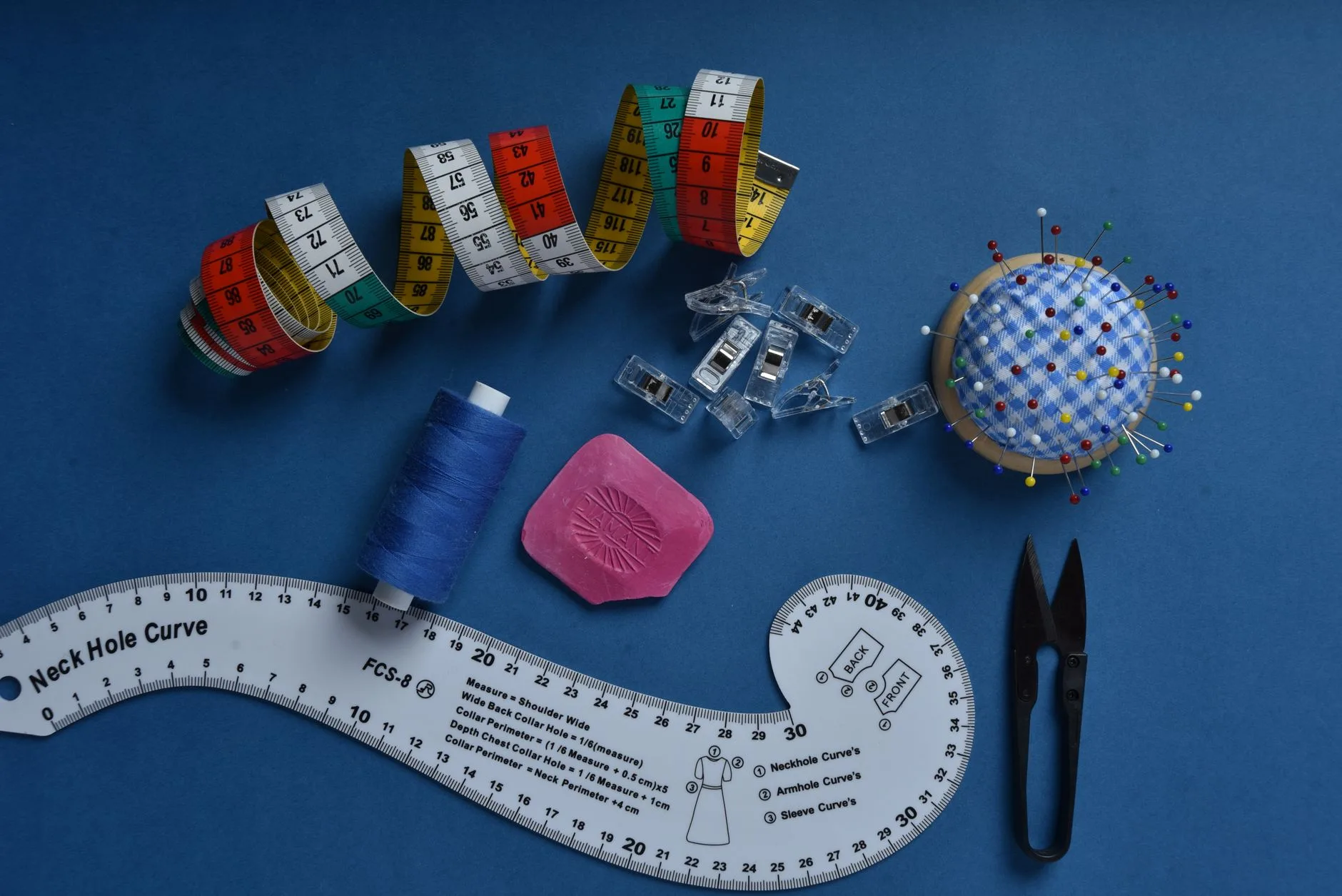
People searching for the best sewing rulers are usually trying to solve a very practical problem: they want cleaner cuts, straighter seams, and less guesswork at the cutting mat. A good ruler can make everything from garment pattern work to quilt block trimming feel more controlled, while a poor one tends to slip, blur measurements, or simply cover the wrong part of the fabric. That is why the category is easy to underestimate and surprisingly important once you start using it regularly.
The most common mistake is buying the wrong shape for the job. A small square set can be useful for quilt blocks, but it will not replace a long ruler when you are cutting yardage. Likewise, a long ruler can be cumbersome if you mostly need curves, seam alignment, or machine-guided sewing help. What matters most is choosing a ruler that matches the way you actually sew, whether that means quilting, dressmaking, patchwork, or everyday fabric measuring. Different buyers will care about different things, from grip and visibility to portability and set size, but the best option is always the one that removes friction from your workflow rather than adding more of it.
Among the strongest all-around options here, the Fiskars 3″ x 18″ ruler stands out for its practical size, clear markings, and dependable build. It is the sort of tool that fits easily into a serious sewing kit without demanding much from the user.
If you are short on time, the comparison table below gives a quick snapshot of the top choices. Click any product name to jump to its full review.
Best Sewing Rulers Comparison Table
| Product | Best For | Main Strength | Key Specs |
|---|---|---|---|
| Fiskars Sewing Ruler, 3" x 18" | Everyday fabric measuring | Balanced size with clear gridlines | 3" x 18", acrylic, removable non-slip feet |
| Quilting Rulers, 4 Piece Acrylic Square Set | Quilt blocks and square cutting | Multiple square sizes in one set | 3.5", 5", 6.5", 10.5" squares |
| Fiskars Sewing Ruler, 6" x 24" | Cutting yardage and long fabric lengths | Large format for bolt-to-cut table work | 6" x 24", two-toned markings, angle guides |
| Sewing Ruler, 5 Piece Quilting Rulers | Budget-minded multi-size measuring | Useful ruler assortment with grip rings | 5 rulers, non-slip rings, acrylic |
| Sewing Ruler Set, Clear Metric French Curve Rulers | Pattern drafting and tailoring | Curve-focused drafting set | 9 pieces, flexible PVC, metric markings |
| 3PCS Magnetic Seam Guide | Machine sewing and seam consistency | Helps keep stitch width consistent | 3 guides, magnetic, scale markings |
| Quilting Ruler, 12.5" x 12.5" Slotted | Quilt blocks and strip cutting | Slotted design speeds repeated cuts | 12.5" square, grooves, silicone grips |
| Quilting Ruler, Acrylic Curved Corner Cutter | Small templates and corner shaping | Compact and easy to store | 6" x 6", acrylic, curved template |
| LJLJ Fashion Clear Metric Sewing Ruler Set | Fashion design and curved pattern work | Flexible set for garment drafting | 9 pieces, clear metric, flexible material |
For a closer look at how these rulers differ in daily use, the reviews below explain what each one does best and where it fits in a sewing room.
Best Sewing Rulers Reviews
1. Best Overall: Fiskars Sewing Ruler, 3" x 18"

One reason this ruler earns the top spot is that it sits in the sweet spot between compact convenience and real workshop usefulness. The 3-inch by 18-inch format is long enough for many cutting and measuring tasks, yet not so large that it becomes awkward to store or maneuver. For sewists who need one ruler that can handle a wide range of everyday jobs, that balance matters. The seam allowance markings and broken grid lines are especially helpful when you are aligning fabric edges and want the ruler to show more of the material underneath rather than hiding it.
The thick acrylic build is another point in its favor. Fiskars has a long history in craft tools, and this ruler looks like something made for repeat use rather than occasional tinkering. The removable non-slip vinyl feet are a smart detail, because they give you a little more control when you need it, but they do not permanently change how the ruler feels on the table. That makes this a strong choice for quilters, garment sewists, and general crafters who want a dependable ruler without having to think too hard about the tool itself.
Pros
- Useful 3" x 18" size for common sewing and quilting tasks.
- Highlighted seam allowances make alignment easier.
- Broken grid lines help keep fabric edges visible underneath.
- Removable non-slip feet add stability when cutting.
- Thick acrylic construction should hold up well over time.
Cons
- It is not the best choice for very large quilt blocks or long yardage cuts.
- Buyers who want a full drafting kit will need additional tools.
- The design is practical, but not especially specialized.
This is the ruler I would point most readers toward if they want one tool that can do a lot without feeling bulky. It is especially appealing for home sewists who cut a mix of strips, hems, and smaller pattern pieces. If your work leans heavily toward oversized quilting projects, you may want something longer or a square set instead. But for general use, this is the most balanced pick in the group, and the included lifetime warranty adds reassuring value.
To buy this product, click here.
2. Best For Quilt Blocks: Quilting Rulers, 4 Piece Acrylic Square Set

This four-piece set is a strong fit for quilters who spend a lot of time squaring up blocks, trimming patchwork, or working in multiple sizes. The set includes the most useful square formats for everyday quilting, and that alone makes it more flexible than a single-purpose ruler. The clear acrylic construction gives you good visibility over the fabric, while the green markings are easy to spot on both light and dark cloth. That is not a minor benefit. Readability can be the difference between fast, confident cuts and constant second-guessing.
Another advantage is how complete the size range feels for a modestly priced set. Smaller blocks, medium squares, and larger finish work are all covered, which means this set can follow a project from piecing through final trimming. The polished edges and thick acrylic also suggest a product meant to be used repeatedly rather than treated as a fragile accessory. Buyers who make quilts regularly, or even sewists who like having a square ruler on hand for general layout work, will appreciate how much utility is packed into these four pieces.
Pros
- Four square sizes cover a wide range of quilt-block work.
- High-contrast green markings are easy to read.
- Clear acrylic improves visibility over fabric.
- Useful 90-degree and 45-degree guides support accurate cutting.
- Good value for buyers who want a multi-size set.
Cons
- Not as versatile as a long ruler for yardage cuts.
- Square rulers are more specialized than a general-purpose straight ruler.
- Buyers focused on garment drafting may want curve tools instead.
This is a better choice than the top pick if your sewing life revolves around quilt blocks and square geometry rather than broad all-purpose measuring. It is not the only ruler you will ever need, but it is the kind of set that fills a very specific and very common quilting need well. For beginners, the multiple sizes can also reduce guesswork because each ruler has a clear role in the workflow.
To buy this product, click here.
3. Best For Long Cuts: Fiskars Sewing Ruler, 6" x 24"
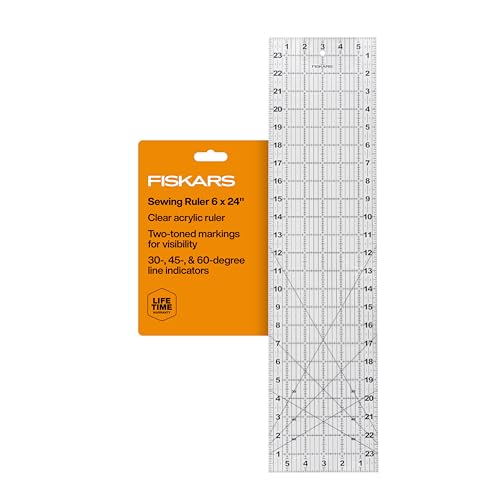
If you cut fabric from the bolt, this is the ruler that feels immediately logical. The 6-inch by 24-inch format is a classic for good reason. It covers long lines cleanly, gives you a wide enough surface for stable cutting, and reduces the need to reposition the ruler every few inches. That makes a real difference when you are working through yardage for garments, home decor, or large quilt pieces. The two-toned markings also help visibility on different fabric colors, which is exactly what a long working ruler should do.
Angle guides for 30, 45, and 60 degrees broaden its usefulness beyond straight cuts. That means it can handle diagonal tasks without making you switch to another tool right away. Like the smaller Fiskars ruler, this one leans on durability and clarity rather than gimmicks. It is not the cheapest option in the group, but it is one of the easiest to justify if your projects regularly involve long measurements and stable rotary cutting. For many sewists, this is the ruler that becomes the quiet workhorse on the cutting table.
Pros
- Ideal size for cutting fabric from the bolt.
- Long format reduces repositioning during cuts.
- Two-toned markings improve readability on light and dark fabric.
- Angle indicators add versatility for diagonal work.
- Durable build from a trusted sewing brand.
Cons
- More expensive than several smaller alternatives.
- Large format is less convenient for storage.
- Overkill for users who only sew small pieces or accessories.
Buy this if your sewing table sees a lot of long, straight cuts and you want one ruler that makes those jobs less fussy. It is a particularly good companion for rotary cutting mats and fabric prep work. If you only need a ruler for occasional hemming or small patchwork, this may be more tool than you need.
To buy this product, click here.
4. Best Budget Set: Sewing Ruler, 5 Piece Quilting Rulers

This five-piece set is appealing because it gives you multiple ruler sizes without asking for much money in return. The assorted dimensions make it useful for a wide range of tasks, from narrow strips to longer layout work, and the included non-slip grip rings add a practical touch that many budget sets skip. Those rings matter more than people often expect. A ruler that shifts at the wrong time wastes fabric, and grip accessories can help reduce that risk when the cutting mat or the fabric itself is a little slick.
The black-and-white layout is straightforward and easy to understand, which is useful for beginners who do not want to puzzle through a complicated drafting system. The rulers are also laser cut and fairly thin, which should make them comfortable to slide around for measuring and piecing. This set is best viewed as a flexible starter or backup toolkit. It will not replace a premium long ruler for every task, but it does cover a lot of everyday territory at a low barrier to entry.
Pros
- Five ruler sizes offer good range for the price.
- Includes non-slip grip rings for added control.
- Useful for quilting, sewing, piecing, and measuring.
- Straightforward design is beginner-friendly.
- Thin acrylic profile makes handling easy.
Cons
- Not as refined or brand-backed as the Fiskars options.
- Grip rings add convenience, but also another small item to manage.
- Best as a supporting set, not a single do-everything ruler.
For buyers who want a low-cost way to cover several ruler sizes at once, this set makes a lot of sense. It is a practical choice for a beginner sewing kit, a spare set for a workshop, or a value-minded setup for occasional quilting. If you want the most polished long-term option, the Fiskars picks are stronger. But if affordability and variety matter more than brand pedigree, this set is worth a serious look.
To buy this product, click here.
5. Best For Pattern Drafting: Sewing Ruler Set, Clear Metric French Curve Rulers

If your sewing projects go beyond straight-line measuring, this 9-piece drafting set opens up a different side of the category. It is aimed at pattern making, tailoring, and curve work, which means it fills a real need for dressmakers and designers. The French curves, triangle, L-square, and related shapes are the kind of tools that help when you need to shape armholes, necklines, collars, or fit adjustments with more precision than a standard ruler can provide. The clear PVC material and bold red metric markings make the pieces easier to read than many budget drafting sets.
This set is especially useful for sewists who are building patterns from scratch or making repeated alterations to commercial patterns. The flexibility of the material can help with storage and handling, though it also means these rulers do not feel as rigid as heavy acrylic squares. That is a tradeoff, not necessarily a flaw. If you need a dedicated drafting toolkit, flexibility can be part of the appeal. If you only sew simple projects, this will likely be more ruler than you need, but for garment work it is one of the more relevant choices in the lineup.
Pros
- Strong choice for pattern drafting and tailoring work.
- French curves and related shapes support garment design.
- Clear metric markings are easy to follow.
- Flexible PVC is lightweight and easy to store.
- Good value for a 9-piece toolkit.
Cons
- Less useful for simple quilting or straight cutting.
- Metric-only markings may not suit every user.
- Flexible material does not feel as rigid as acrylic.
Buy this if your sewing interests lean toward drafting, fitting, or fashion construction. It is not the most universal product in the roundup, but it is one of the most useful for a specific audience. Sewists who mostly cut quilt squares or straight strips can skip it, while garment makers will likely see the value immediately.
To buy this product, click here.
6. Best For Machine Sewing: 3PCS Magnetic Seam Guide For Sewing Machine

This is not a traditional ruler in the usual cutting-mat sense, but it still belongs in a serious guide to sewing measurement tools because it helps solve a very common problem, staying consistent while stitching. The magnetic seam guide is designed to sit on the needle plate and provide a repeatable edge reference as fabric moves through the machine. For beginners, that can be a confidence booster. For more experienced sewists, it can save time when you are sewing long parallel seams or trying to keep bindings and hems even.
The three-piece format gives you a bit of variety, and the polygonal shape is meant to improve stability and edge-binding use. The biggest caveat is compatibility. It works only on metal needle plates, so buyers with plastic surfaces will need to confirm whether the product can be used with an added metal square. That is an important limitation, but not an unusual one for magnetic accessories. If your machine is compatible, this can be a smart little helper that makes repetitive sewing less tiring and more accurate.
Pros
- Helps maintain consistent seam width while stitching.
- Three guides provide useful flexibility.
- Easy to reposition when switching tasks.
- Strong magnetic hold on compatible machines.
- Useful for beginners learning seam control.
Cons
- Only works on metal needle plates.
- Not a cutting ruler, so it serves a different function.
- Limited value if you rarely sew repetitive seams.
This is best for machine sewists who care about consistency more than layout and cutting. It is especially handy for binding work, hems, and edge guides where a tiny amount of drift can show up in the finished garment or quilt. If you mainly need a ruler for fabric prep, skip this one. If you want to improve stitching accuracy at the machine, it is a small but sensible add-on.
To buy this product, click here.
7. Best For Speed Cutting: Quilting Ruler, 12.5" x 12.5" Slotted

This square slotted ruler is aimed squarely at quilters who want to move through repeated cuts more efficiently. The grooves give the rotary blade defined paths, which can help keep cuts even without constant repositioning. That is a meaningful workflow advantage if you often strip-cut fabric or square up blocks in batches. The large 12.5-inch square format also makes it a useful block-sizing tool, and the double-color sight lines improve visibility on both light and dark fabrics.
The tradeoff is simplicity versus specialization. This ruler is very good at a focused set of tasks, but it is not a broad general-purpose tool. For someone who spends a lot of time on quilt prep, that is fine, and the silicone grips are a thoughtful addition because a big ruler needs stable contact with the surface beneath it. For occasional sewists, though, the price and size may feel hard to justify when a simpler straight ruler could cover more casual needs.
Pros
- Slotted grooves can speed up repeated rotary cuts.
- Large square format is ideal for block squaring.
- Easy-to-read markings work on different fabric colors.
- Silicone grips improve stability during cutting.
- Strong fit for dedicated quilters.
Cons
- More specialized than a standard sewing ruler.
- Bulkier and less convenient to store.
- Not the best option for general dressmaking or drafting.
Choose this if you know you need a ruler that helps you cut more efficiently at the mat and you are comfortable paying for that specialization. It is less of an all-purpose purchase and more of a workflow upgrade. Quilters who appreciate repeated precision will likely get the most out of it.
To buy this product, click here.
8. Best Compact Option: Quilting Ruler, Acrylic Curved Corner Cutter
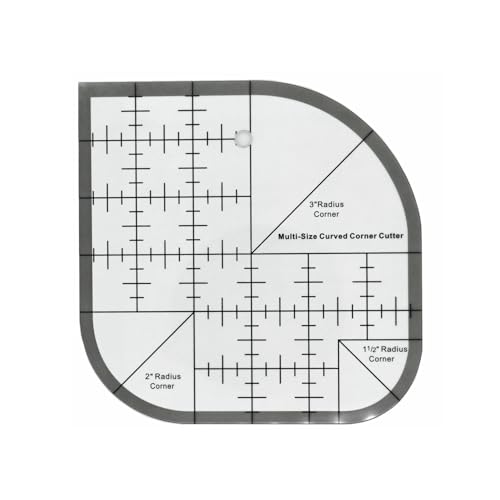
This compact 6-inch by 6-inch template is most useful when you need a smaller ruler that can travel easily and handle more specific shaping tasks. The curved corner design helps it stand apart from the straight-edge crowd, and that makes it a practical accessory for patchwork, small layout jobs, and projects where you want a rounded guide rather than a full rectangular ruler. The transparent acrylic body keeps the fabric visible, which is important when you are aligning corners and edges carefully.
Because it is lightweight and small, this ruler is easy to store in a drawer, project bin, or sewing tote. That portability is a real advantage for classes, travel sewing, or limited workspace. It does not try to replace a full cutting ruler, and that honesty is part of its appeal. Buyers who need a compact helper for niche tasks may like it a lot, while those expecting a primary ruler for all-purpose use should look elsewhere. It is best treated as a complement to a larger ruler rather than the only tool in your kit.
Pros
- Compact size is easy to store and transport.
- Curved corner shape adds useful versatility.
- Clear markings are easy to read.
- Smooth edges are more fabric-friendly.
- Good support tool for patchwork and small projects.
Cons
- Too small for many everyday cutting tasks.
- Not a replacement for a long ruler or square set.
- Specialized shape will not appeal to every sewer.
Pick this if you need a portable ruler for smaller tasks and want something that is easy to tuck away. It is a smart secondary tool, particularly for sewists who already own a longer ruler and want a compact companion. If you are building a one-ruler kit from scratch, start with something more versatile.
To buy this product, click here.
9. Best For Beginners In Fashion Sewing: LJLJ Fashion Clear Metric Sewing Ruler Set
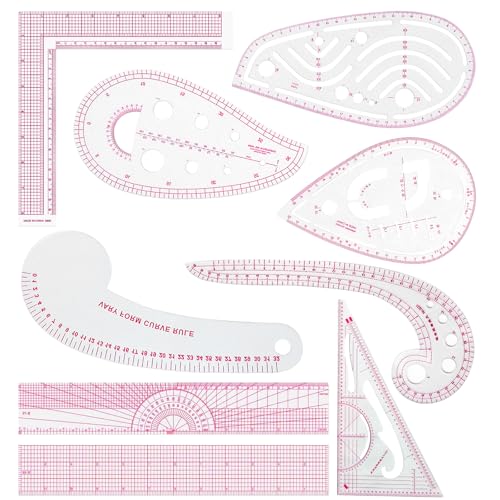
This 9-piece fashion ruler set is built for users who want to explore garment drafting and curve work without jumping straight into professional-grade equipment. The assortment covers a useful range of functions, and the flexible, clear format makes it approachable for beginners who are still learning how different rulers are used in pattern making. The pink scale design is a small but welcome usability touch because it helps the markings stand out and makes the set feel less intimidating to new users.
The strongest case for this set is its versatility in fashion and design tasks. It is suited to students, tailors, pattern makers, and anyone who needs to draw smooth curves or adapt clothing shapes. That said, it is metric-based, so shoppers who prefer imperial measurements may need to adjust their workflow. Like the other drafting-style sets in this roundup, it is most valuable when you are doing more than basic fabric cutting. If you are making garments, this set can earn its place quickly. If you only need straight rulers for quilting, you will probably be better served by one of the acrylic square or long-ruler options above.
Pros
- Good starter set for fashion drafting and tailoring.
- Flexible design helps with curved pattern work.
- Clear metric markings are easy to follow.
- Useful for students and beginner designers.
- Lightweight and easy to store.
Cons
- Less useful for standard quilting tasks.
- Metric-only focus may not suit every sewist.
- Not as sturdy-feeling as thick acrylic rulers.
This is a sensible pick for buyers who are just getting into garment construction and want a straightforward ruler set to learn with. It is also a reasonable backup for more experienced users who want a lightweight drafting kit. For pure quilting, it is not the most efficient choice. For fashion sewing and pattern drafting, it is much more relevant.
To buy this product, click here.
How We Chose
To narrow the field, we focused on the kinds of sewing rulers people actually use in real projects, rather than simply chasing the most feature-heavy listings. That meant favoring rulers with clearly defined uses, readable measurement systems, and formats that match common sewing tasks such as cutting fabric, squaring quilt blocks, drafting curves, and maintaining seam consistency at the machine. We also looked for practical details that matter in daily use, including non-slip features, durable materials, and layouts that are easy to read on different fabric colors.
Another part of the selection process was balance. A good roundup should cover the different ways people sew, not just repeat the same ruler in slightly different packaging. That is why the list includes long straight rulers, square quilting sets, drafting tools, a seam guide, and a compact specialty template. The goal was to help readers compare tools by purpose, not just by price or brand name. Finally, we paid attention to whether each product description supported a realistic recommendation. Where a ruler seemed specialized, the review says so. Where a set offered broad value, that tradeoff is explained as well.
Buying Guide
Choosing the right sewing ruler starts with the kind of sewing you do most often. If you frequently cut yardage or long strips, a 6-inch by 24-inch ruler is usually the safest bet because it gives you more control over straight cuts. If quilting is your main focus, square rulers in multiple sizes can make block trimming and patchwork layout much easier. For dressmaking and pattern work, curve rulers and drafting sets matter more than long straight edges because they help shape seams, necklines, armholes, and other garment contours.
Material is another important factor. Thick acrylic rulers tend to feel more rigid and durable, which is useful at a cutting mat. Flexible PVC drafting rulers are lighter and better suited to curve work, but they do not always feel as stable in hand. Visibility also matters more than many shoppers expect. Clear ruler bodies with bold markings can reduce errors, especially when you are switching between light and dark fabrics. High-contrast color systems are worth paying attention to if you do a lot of detailed work.
Non-slip features can also make a meaningful difference. Some rulers use removable feet, some use grip rings, and others rely on weight and surface contact. None of those options is perfect for every situation, but they can improve control if you cut carefully with a rotary cutter. If your sewing machine work needs help, a magnetic seam guide can be more useful than a conventional ruler. It will not replace a cutting ruler, but it can improve stitch consistency when you are sewing hems or binding. The best setup for many sewists is not one perfect ruler, but a small combination of tools that match how they actually work.
Best Sewing Rulers FAQ
What Size Sewing Ruler Is Best For Beginners?
A 3-inch by 18-inch or 6-inch by 24-inch ruler is usually the easiest starting point. The smaller one is more manageable for general use, while the larger one is better if you expect to cut a lot of yardage. Beginners who mostly quilt may prefer a square set, but if you only want one ruler to start, a straight acrylic ruler is the most versatile choice.
Do I Need Both A Long Ruler And A Square Ruler?
Many sewists eventually use both. A long ruler works best for fabric strips, hems, and long cuts, while a square ruler is much better for block squaring and layout work. If you quilt often, having both can make the process smoother. If you sew only occasionally, one good all-purpose ruler may be enough.
Are French Curve Rulers Worth Buying?
Yes, if you make garments or alter patterns. French curve rulers help shape curved seams and pattern lines more accurately than a straight ruler can. They are less important for quilting or basic craft sewing, so their value depends heavily on the type of projects you make.
What Makes A Sewing Ruler Easy To Read?
Clear acrylic, bold line markings, and good color contrast all help. Some rulers use black markings, some use green or red, and some use two-toned numbering. The best choice depends on the fabrics you cut most often. If you regularly work with both light and dark fabric, a ruler with high-contrast markings is a smart pick.
Do Non-Slip Features Really Matter?
Yes, especially if you use a rotary cutter. Even a little shifting can throw off a cut and waste fabric. Non-slip feet, grip rings, or silicone pads can improve control, though they are not a substitute for careful hand placement. If you work on smooth cutting mats or cut slippery fabric, these features are especially helpful.
Is A Magnetic Seam Guide The Same As A Sewing Ruler?
No. A magnetic seam guide is a machine accessory that helps you stitch consistent seam widths. A sewing ruler is usually used for measuring and cutting fabric. They solve different problems, and many sewists can benefit from both. If your issue is cutting accuracy, choose a ruler. If your issue is stitching straight and even seams, the seam guide may be more useful.
Which Sewing Ruler Is Best For Quilting?
Quilters often do best with a combination of tools. A square ruler set is excellent for blocks, a long ruler is useful for strips and yardage, and a slotted ruler can speed up repetitive cuts. If you want one best overall ruler for mixed sewing and quilting tasks, the Fiskars 3-inch by 18-inch model is the most balanced option in this roundup.
Can I Use The Same Ruler For Quilting And Dressmaking?
Sometimes, yes. A straight acrylic ruler can work for both if you are mostly measuring and cutting fabric. But dressmaking often benefits from curve rulers and drafting tools, while quilting benefits more from squares and long straight edges. If you split your time between both crafts, you may eventually want more than one ruler type.
Final Verdict
The best sewing rulers are the ones that fit the work you do most often, and that is why the top recommendation here is the Fiskars 3-inch by 18-inch ruler. It offers the kind of balanced size, clear marking system, and durable build that makes daily sewing feel easier without overcomplicating the process. For quilting-specific needs, the four-piece square set is the strongest value play, while the 6-inch by 24-inch Fiskars ruler is the best pick for long cuts and yardage work. If you are drafting garments, the French curve sets deserve a close look instead.
The practical advice is simple. Do not buy a sewing ruler based on looks alone, and do not assume one ruler will solve every measuring problem in your sewing room. Match the tool to the way you cut, measure, and shape fabric. If you want the safest all-around buy, start with the top Fiskars pick. If you want the best budget set, the five-piece acrylic ruler bundle offers a lot of utility for the money. If your sewing leans toward pattern making, choose the drafting sets instead of forcing a quilting ruler to do a designer’s job. The right ruler will feel less like an accessory and more like a small upgrade to every project you touch.
Leave a Reply