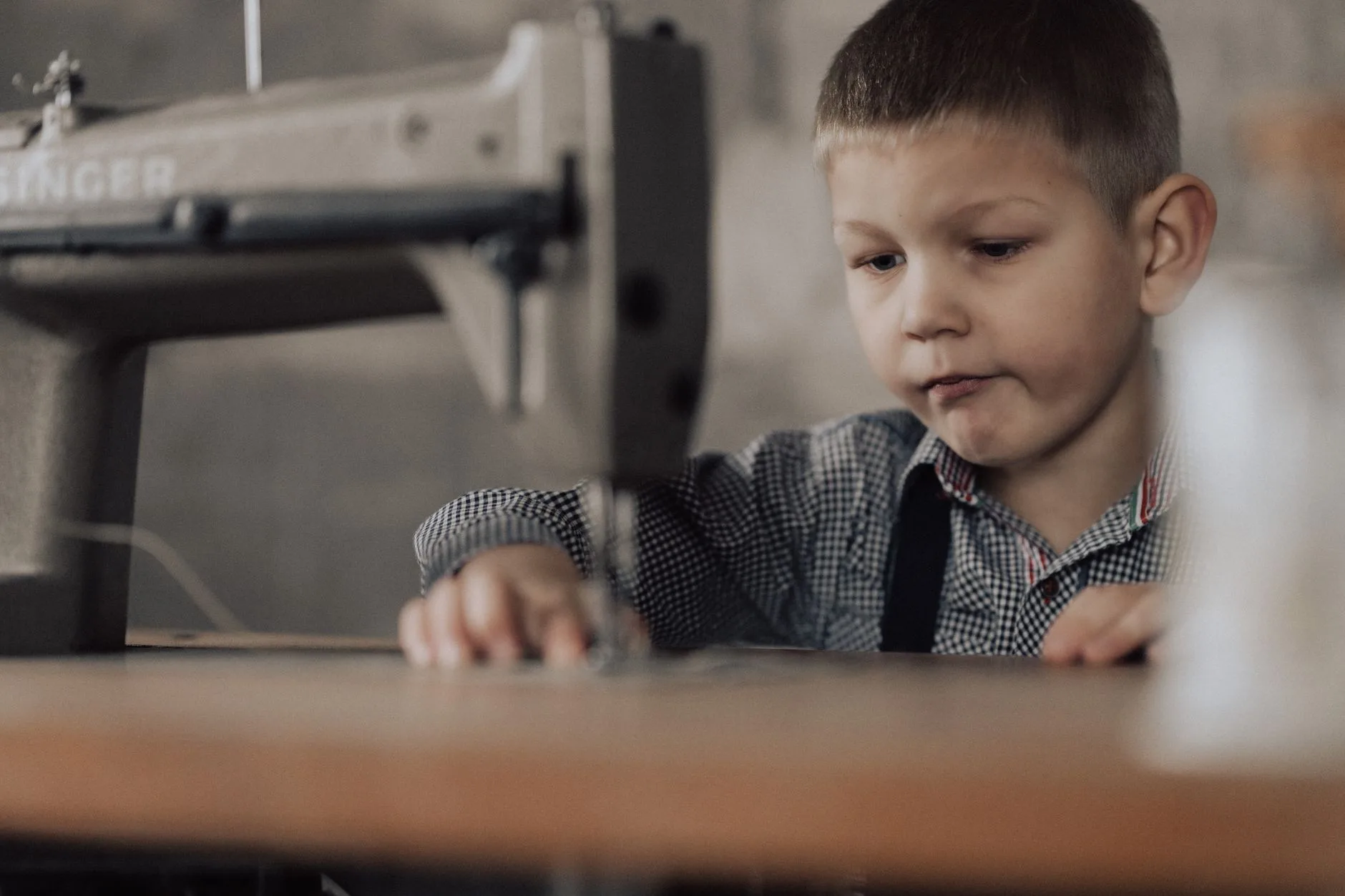
Parents usually start looking for Best Sewing Machines for Kids when a child shows real curiosity about making things, not just following a craft kit for an afternoon. The challenge is that most adult machines are too fussy, too heavy, or too easy to outgrow in frustration. A good kid-friendly machine needs to be simple enough to learn without becoming dangerous or overwhelming, but sturdy enough to produce actual projects instead of novelty stitches that barely hold together.
The biggest mistake buyers make is focusing on the smallest or cheapest option without thinking about supervision, threading ease, stitch quality, and whether the machine comes with enough supplies to get started. For kids, the right balance usually comes down to safety features, clear controls, and a format that encourages practice instead of perfection. Some families want a true beginner machine that can grow with a child. Others need a lighter, more toy-like setup for very young crafters. A few may prefer a more capable compact machine that can serve both a child and an adult helper.
The CraftBud Mini Sewing Machine stands out as the best all-around choice because it pairs approachable controls with one of the better starter kits in this group, which matters more than many shoppers realize. If you are short on time, the comparison table below gives a quick way to narrow the field before reading the full reviews.
Best Sewing Machines For Kids Quick Answer
If you want the shortest path to a decision, the CraftBud Mini Sewing Machine is the strongest overall pick for most families. It has the kind of bundled extras that help a beginner start sewing right away, and it feels better suited to real learning than many stripped-down mini machines. For the lowest-cost entry point, the Made By Me My Very Own Sewing Machine is the easiest place to begin. If you want a more capable compact machine that can serve beyond the first few projects, the Brother XM2701 is the most full-featured option here, though it makes more sense for older kids with adult help.
The comparison table below gives a fast overview of the nine best options. Click any product name to jump to its full review.
Best Sewing Machines For Kids Comparison Table
| Product | Best For | Main Strength | Key Features |
|---|---|---|---|
| CraftBud Mini Sewing Machine | Best Overall | Large starter bundle and balanced beginner features | Dual speed, light, foot pedal, extension table, 122-piece kit |
| KPCB Tech Sewing Machine | Best Budget Starter Set | Safety-first setup with fabric bundles | Finger guard, slow and standard speed, double thread, tutorial videos |
| Beginner Sewing Machine With 12 Built-In Stitches | Best For Kids Ages 8 To 12 | More stitch variety than basic mini models | 12 stitches, dual power, auto rewind, thread cutter, light |
| Made By Me My Very Own Sewing Machine | Best For Young Beginners | Kid-sized and easy to use right out of the box | Battery powered, two speeds, safety light, picture instructions |
| Brother XM2701 | Best Premium | Full-size sewing machine with long-term potential | 27 stitches, automatic needle threader, 6 feet, drop-in bobbin |
| Mini Portable Sewing Machine With 12 Built-In Stitch Patterns | Best For Growing Skills | Compact but more flexible than toy-like machines | 12 stitches, 2-speed control, reverse function, QR tutorial guide |
| Eco-Friendly Mini Sewing Machine | Best For Small Spaces | Lightweight design with extension table | Dual speed, light, thread cutter, travel-friendly body |
| Portable Tabletop Beginner Mini Sewing Machine | Best For Home Repairs | Stable frame and more advanced control options | 12 stitches, 9-level tension, bobbin winding, pedal or button control |
| TUZT Mini Sewing Machine Toy Kit | Best For Ages 4 To 12 | Playful kit that makes first sewing approachable | Light, finger guard, USB and battery power, craft accessories |
If you want a closer look at the differences, the reviews below explain which machine suits which kind of young sewer best.
1. Best Overall: CraftBud Mini Sewing Machine

The CraftBud Mini Sewing Machine earns the top spot because it looks like a thoughtful starter package rather than a bare machine dressed up with a few extras. The 122-piece set gives beginners a lot to work with, which matters when the goal is to build confidence and keep momentum going after the first afternoon. The included fabric squares, bobbins, threads, clips, and guide book make it easier for a parent or older sibling to help a child start learning without rushing to buy additional supplies. That makes a practical difference in real use, especially for families who want one purchase that can carry the first several projects.
The machine itself is aimed at beginners, but it does not feel overly toy-like. The built-in light, foot pedal, adjustable speed, and dual power option give it enough flexibility for learning at a steady pace. The extension table is especially useful for small sewing projects, because kids often struggle most when fabric has nowhere to rest. It is still a mini machine, so it is best suited to simple seams, practice pieces, and light craft projects rather than heavy fabrics or advanced garment work. Even so, the combination of safety-minded design and an unusually rich accessory kit makes it a strong all-around pick for families who want a real introduction to sewing instead of a novelty gadget.
Pros
- Large 122-piece bundle reduces the need for extra starter purchases.
- Dual speed and foot pedal help beginners learn control gradually.
- Built-in light improves visibility for small hands and detailed work.
- Extension table adds stability for practice projects and beginner seams.
- Good balance of kid-friendly size and practical sewing features.
Cons
- Mini format is still limited for thicker or more ambitious projects.
- Beginners may need a little adult help with setup and threading.
- Not the best choice if you want a machine a child can eventually use for advanced sewing.
This is the one to choose if you want the best blend of value, usability, and starter support. It is especially appealing for households where a child is genuinely interested in learning and will benefit from having thread, fabric, and tools ready on day one. Families who want something simpler, cheaper, or more novelty-oriented can look lower in the list. But for most shoppers, this is the most complete and least compromised option among the kid-friendly machines here.
To buy this product, click here.
2. Best Budget Starter Set: KPCB Tech Sewing Machine
![KPCB Tech Sewing Machine for Beginners [Full Set] with Finger](https://m.media-amazon.com/images/I/41icPFMKgCL._SL500_.jpg)
The KPCB Tech Sewing Machine is a strong entry-level option for families that want the basics handled without stretching the budget. Its appeal starts with the safety-minded finger guard and continues through the bundled fabric squares and tool kit. For kids, the value here is less about the machine feeling sophisticated and more about reducing friction. There is enough included to start practicing patchwork, school projects, and small crafts without needing to assemble a separate beginner toolkit from scratch. That is a meaningful advantage for parents who want a straightforward first purchase.
One of the smartest parts of this model is the inclusion of tutorial videos. That kind of support can matter more than extra stitches for a first-time user, because children usually need visual guidance rather than a thick manual. The dual speed setup also gives it a more forgiving learning curve than machines that jump straight from off to fast. It uses double thread, which should help with more secure seams and makes it feel more like a real sewing machine than a pure toy. The tradeoff is that this model still sits firmly in beginner territory. It is not the machine to buy if you expect a child to tackle heavier fabrics or grow into more advanced sewing quickly. But for affordable practice and first projects, it is one of the more sensible picks.
Pros
- Budget-friendly starter package with useful tools included.
- Finger guard adds reassurance for younger beginners.
- Slow and standard speed settings help match confidence level.
- Fabric bundle makes it easy to begin practicing right away.
- Tutorial videos are helpful for visual learners and parents helping from the side.
Cons
- More limited in ambition than fuller-featured compact machines.
- Best for practice and simple projects, not serious sewing progress.
- Some families may outgrow it quickly if the child becomes highly interested.
Choose this if your main goal is to get a child started safely and affordably. It makes the most sense for younger beginners, school craft use, or households that want a machine with included supplies and clear support material. If you want a machine that can serve as a long-term hobby platform, spend more. If you want the cheapest honest way into sewing, this is a strong place to begin.
To buy this product, click here.
3. Best For Kids Ages 8 To 12: Beginner Sewing Machine With 12 Built-In Stitches
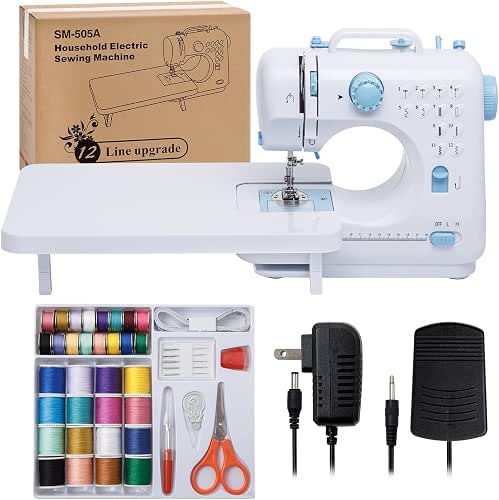
This machine stands out because it offers more sewing variety than the ultra-basic mini options without jumping straight to a full-size household machine. The 12 built-in stitches give children more room to experiment, which can be motivating once they have mastered the absolute basics. For ages 8 to 12, that extra flexibility matters. Kids in that range often want a machine that feels a little more capable, and this one has enough features to keep them interested longer. The automatic rewind, tension dial, thread cutter, and sewing light all help it feel more purposeful than a toy-like beginner setup.
The dual power options are another useful touch. Being able to use either a foot pedal or button switch gives beginners two paths into sewing, depending on whether they want hands-on control or simpler operation. The included accessories also help reduce the hidden costs that often come with a first sewing machine. Still, this is best understood as a compact learning machine rather than a serious long-term studio tool. It is relatively portable and manageable, but it is not designed for heavy, frequent sewing. The other limitation is that the setup benefits from watching the instructional video first, which means it may not feel instant in the way some toy machines do. For a child ready to move beyond the very first stage, though, it offers a strong middle ground.
Pros
- 12 stitch options give kids more room to learn and experiment.
- Thread cutter, light, and tension dial improve everyday usability.
- Dual power and control methods offer flexibility for beginners.
- Good accessory bundle reduces the need for immediate add-ons.
- Well suited to children who are past the very first craft toy stage.
Cons
- Setup is better with the video guide, which adds a learning step.
- Not as compact or playful as a simple toy-style kids’ machine.
- Less appealing if you want a machine for very young children.
This is a smart choice for families with older kids who are ready for real sewing concepts but still need a forgiving beginner setup. It is a particularly good fit for children who like trying different stitches and want a little more creative range. If you need something simpler for a younger child, choose one of the easier entry models. If you want more than a basic starter but not yet a full adult machine, this is one of the better options.
To buy this product, click here.
4. Best For Young Beginners: Made By Me My Very Own Sewing Machine
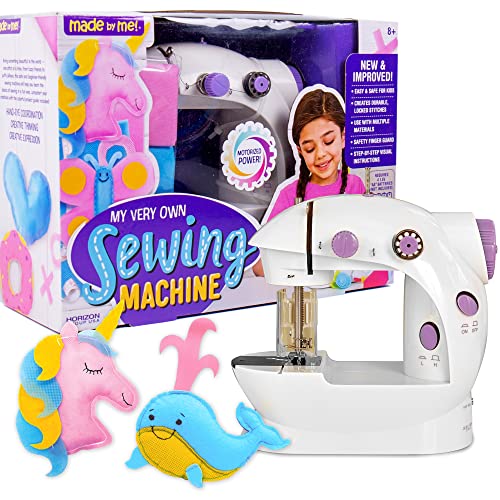
The Made By Me machine is one of the simplest and most approachable ways to introduce a child to sewing. It is battery powered, compact, and clearly designed with younger beginners in mind. That makes it especially appealing for kids who are excited by the idea of sewing but are not ready for a more serious machine with more complex threading and controls. The size helps keep it feeling manageable, and the pre-threaded bobbins plus picture-based instructions lower the intimidation factor. In a category where setup can become the main obstacle, that simplicity is a real advantage.
Its two-speed design, finger guards, and safety light make it more sensible than a plain toy, while the included project booklet gives children a guided way to practice. The limitation is also obvious. This is not a machine for ambitious projects or long sewing sessions. Battery power keeps it portable, but it also means parents will want to think about ongoing battery use, and it may not feel as steady as plug-in models. Still, for a first experience, that tradeoff makes sense. It is the kind of machine that can help a child decide whether sewing is a passing curiosity or a hobby worth pursuing more seriously later.
Pros
- Kid-sized and easy to approach for first-time users.
- Battery power adds portability and keeps the setup simple.
- Picture-based instructions are especially useful for children.
- Safety light and finger guards support beginner confidence.
- Good option for small projects and early skill-building.
Cons
- Battery operation may be less convenient over time.
- Not ideal for larger or more demanding projects.
- Limited features compared with more capable mini machines.
Buy this if the main goal is to create a gentle, low-pressure introduction to sewing. It is well suited to younger kids, supervised learning, and craft-focused households that value ease of use over technical range. If a child is already showing a deeper interest in sewing, they may outgrow it sooner than a more feature-rich model. But for an early first machine, it is one of the least intimidating choices available.
To buy this product, click here.
5. Best Premium: Brother XM2701

The Brother XM2701 is the most capable sewing machine in this roundup, but it is also the least specialized for children. That is not necessarily a weakness. For older kids, especially those with real interest and adult supervision, it offers the kind of headroom that smaller beginner machines simply cannot match. The 27 built-in stitches, automatic needle threader, and drop-in top bobbin give it a more mature sewing experience. It is the model here that is most likely to remain useful after the first few projects are finished, which is often the hidden cost of buying too small.
What makes it premium is not only the feature count but the overall usability. Brother’s support structure is another plus for families who want something reliable and familiar rather than a novelty kid machine. The included feet and accessories make it ready for a wider range of projects, and the free arm is practical for sleeves, hems, and other everyday tasks. The tradeoff is obvious enough. It is more machine than many younger children need, and some families will want a more compact or forgiving setup first. It also makes the most sense when an adult is available to help with setup, threading, and early lessons. But if you want a machine that can grow with a child or serve the whole household, it is the strongest long-term investment in this group.
Pros
- Much more versatile than mini beginner machines.
- 27 stitches give room for skill growth over time.
- Automatic needle threader simplifies setup.
- Strong choice for older kids with adult support.
- Likely to remain useful after the beginner stage.
Cons
- More machine than many younger children really need.
- Less portable and less kid-specific than compact models.
- Requires a higher comfort level with sewing basics.
This is the pick for families who want a genuine sewing machine rather than a first-step learning toy. It is best for older children, teens, or households that expect the machine to be used by adults too. If your child is very young or just testing the waters, one of the simpler machines below will be easier to handle. If you want the best mix of quality and longevity, this is the standout premium choice.
To buy this product, click here.
6. Best For Growing Skills: Mini Portable Sewing Machine With 12 Built-In Stitch Patterns

This compact machine is a strong middle-ground option for families who want a beginner machine that does more than the most basic kid models. The 12 stitch patterns give a child more creative room, and the printed threading guides directly on the machine are a useful touch that can reduce frustration during setup. The QR code linked tutorial is another practical help, especially for parents who would rather show a child a video than decode a dense instruction sheet. These details matter because beginner sewing is often less about power and more about keeping the learning curve manageable.
The machine’s small size and 2.3-kilogram weight make it easy to move, store, and bring out for practice sessions. Dual power and two control modes also make it more flexible than many toy-style starters. For families who want a compact machine that can support actual learning over multiple sessions, it has real appeal. The drawback is that the brand clearly expects users to follow the instructions carefully. That is fair, but it means this is not the most carefree option for very young kids who just want a fast start. It is also a machine that rewards patience. If someone expects ultra-smooth operation with no learning curve, they may be disappointed. But for a child or parent ready to build real sewing habits, it offers a sensible balance of size, features, and usability.
Pros
- 12 stitch patterns provide useful room to grow.
- Printed guides and QR video support help beginners learn faster.
- Compact and light enough to move or store easily.
- Dual power and two control modes add flexibility.
- Good fit for children transitioning from toy-level sewing to real practice.
Cons
- Needs careful setup and attention to instructions.
- May feel a little more serious than some younger kids want.
- Still not a substitute for a full-size sewing machine.
Choose this if you want a compact starter that can support real progress instead of just a few novelty projects. It is a good fit for children who are ready to learn and for parents who want a practical learning machine with a bit more flexibility. If you want the easiest possible first step, the Made By Me model may be friendlier. If you want more capability without jumping to a full-size machine, this is a smart compromise.
To buy this product, click here.
7. Best For Small Spaces: Eco-Friendly Mini Sewing Machine

The appeal of this mini sewing machine is straightforward. It is small, light, and designed to be easy to set up in tight spaces. That makes it a practical choice for families who do not want sewing supplies taking over a kitchen table or bedroom desk. The extension table is a notable bonus because mini machines can feel unstable without some added support when fabric gets a little larger. The built-in light and thread cutter are also useful in everyday use, especially for children who may need more visual clarity and cleaner finishing steps while they learn.
This machine seems aimed at the broad beginner market, but its strengths line up particularly well for children and casual users. The environmentally friendly material claim suggests more durability than the cheapest toy-like models, though buyers should still think of it as a compact beginner machine rather than a serious workhorse. It is good for simple stitches, practice pieces, and small projects, and its cute packaging may make it especially appealing as a gift. The limitations are the usual ones for this category. It is not built for advanced sewing, and it may not satisfy a child once they begin to want more stitch variety or more substantial fabric handling. For a small-space setup, though, it is a thoughtful and convenient pick.
Pros
- Compact footprint is ideal for apartments, desks, and craft corners.
- Extension table improves stability for beginner projects.
- Built-in light and thread cutter add everyday convenience.
- Dual speed makes it easier to match a child’s confidence level.
- Friendly gift presentation adds appeal for birthdays or holidays.
Cons
- Still limited to beginner-level sewing tasks.
- Not the best option for children who want advanced features quickly.
- Small machines can feel less substantial than full-size models.
This model makes the most sense for families with limited space or for children who will be using the machine on and off rather than every day. If storage is a major concern, or if you want a portable sewing machine to move between rooms or classes, it is worth a close look. If you want something more capable for long-term sewing growth, a larger compact model may be better.
To buy this product, click here.
8. Best For Home Repairs: Portable Tabletop Beginner Mini Sewing Machine
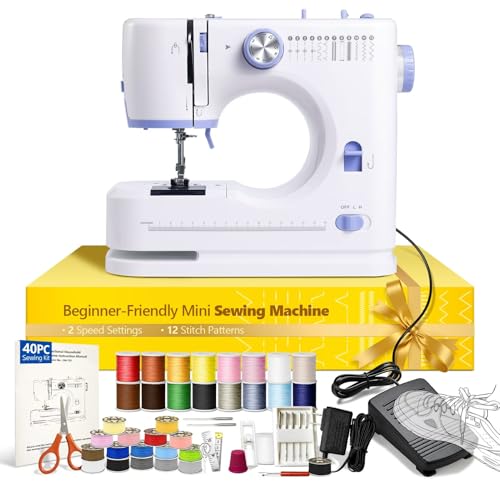
This portable tabletop machine feels a little more mature than the most toy-like options in the roundup. The 12 stitch options, 2-speed control, and 9-level tension system suggest a machine designed for users who want practical control rather than just novelty sewing. That makes it especially useful in homes where the machine may be used for quick repairs, small alterations, and DIY projects as much as for kids’ practice. The stable metal frame is an important advantage here because it should help the machine feel steadier than some lightweight mini models.
For a child, this machine can be a good next step after a simpler beginner model. The pedal or button operation gives a useful choice, and the automatic bobbin winding is the sort of convenience that can make sewing feel less like a chore. The tradeoff is price and complexity. It costs more than several simpler kid-focused options, and some families may not need all of its controls for a first sewing experience. But if you want a machine that can serve a child, a parent, and a few household repair tasks, it offers a more versatile profile than the basic starter kits. It is the kind of option that makes sense when sewing is expected to become part of the home, not just a holiday craft.
Pros
- More control features than basic kid machines.
- Stable metal frame should help with everyday fabrics.
- Good for simple repairs and small home alterations.
- Pedal or button control gives flexibility.
- Automatic bobbin winding adds convenience.
Cons
- More expensive than many beginner-focused alternatives.
- May be more machine than a very young child needs.
- Not as bundled with kid-friendly extras as top starter kits.
Buy this if you want a compact machine with a more practical, household-friendly feel. It is best for older kids, supervised beginners, or families that want one machine to handle both learning and everyday repairs. If your only goal is a child’s first craft machine, one of the less expensive models will be easier to justify. If you want more utility and a sturdier sewing experience, this is a compelling option.
To buy this product, click here.
9. Best For Ages 4 To 12: TUZT Mini Sewing Machine Toy Kit

The TUZT Mini Sewing Machine Toy Kit is the most playful entry in the roundup, and that is exactly why some families will like it. It is designed to feel approachable for younger children, with a finger guard, light, and visual instructions that reduce the fear factor. The included craft pieces and accessories make the experience feel more like a guided activity than a technical lesson, which is often the right tone for ages 4 to 12. If the child is starting from zero, that can be a good thing.
What separates this model from a pure toy is that it still gives children an actual hands-on experience with sewing basics. The USB and battery power options add flexibility, and the pre-assembled format means there is less waiting and fewer assembly headaches. The tradeoff is that it is still limited in scope. It is best for small crafts, keychains, and introductory projects, not for building real sewing independence. Some children will outgrow it quickly if they become serious about the hobby. But as a first exposure, or as a gift that makes sewing feel fun instead of intimidating, it does the job well enough. Parents who want a softer, more playful introduction will appreciate that this machine lowers the pressure.
Pros
- Very approachable for younger children and first-timers.
- Finger guard and light support safer learning habits.
- Includes craft materials for immediate use.
- USB and battery power add flexibility.
- Good gift choice for a child who likes hands-on activities.
Cons
- Limited as a long-term sewing machine.
- More toy-like than serious beginner models.
- May be outgrown quickly by older or highly motivated kids.
This is the right pick when the goal is to make sewing fun, simple, and inviting for a younger child. It is not the most serious learning tool in the group, but that is not necessarily the point. If you want a true stepping-stone machine that can grow with a child, a more capable mini model is better. If you want an easy first gift that encourages creativity, this is a reasonable choice.
To buy this product, click here.
How We Chose
The machines in this guide were selected with beginner usability as the main filter. For kids, that means a short learning curve, visible controls, and features that reduce frustration at the moment they first sit down to sew. We looked closely at safety-oriented elements such as finger guards, slower speed options, built-in lighting, and the way each product supports threading and basic setup. A child-friendly machine has to be understandable without becoming so simplistic that it is useless after the first project.
We also weighed the completeness of each kit. For many families, the best sewing machine for kids is not just a machine, it is a ready-to-go starter system with thread, fabric, needles, and tools already included. That is why bundled sets rank highly in this category. At the same time, we did not ignore long-term value. A good kid machine should be able to support real learning, not just a weekend novelty. That is why models with better stitch variety, more stable construction, or stronger brand support made the cut alongside the simpler beginner kits.
Buying Guide
Choosing a sewing machine for a child starts with the child’s age and patience level, not the spec sheet. A very young beginner usually does best with a simple, clearly labeled machine that is easy to thread and difficult to overwhelm. Older children, especially those who are already comfortable with crafts, may benefit more from extra stitch choices, a better foot pedal, and a machine that feels closer to the ones adults use. There is no single perfect format because different children learn at different speeds.
Safety features should come before stitch count for most families. A finger guard, lower speed setting, and bright work light help reduce clumsy mistakes. A machine that feels less intimidating can encourage a child to keep trying. Just as important is the way the machine handles setup. If a product includes a good guide, labeled threading paths, or a strong tutorial video, that usually matters more than decorative extras.
Starter kits are worth paying attention to as well. A sewing machine for kids often works best when it comes with fabric scraps, bobbins, needles, thread, and a few tools. Those pieces make it easier to start sewing immediately and keep the experience focused on learning instead of shopping for accessories. If a child is likely to sew only occasionally, a generous kit can be more practical than a machine with advanced features but little else included.
Think about growth. Some machines are clearly designed as a first introduction and will likely be outgrown. Others, like compact full-featured models, can stay useful longer if a child becomes seriously interested. If you want to avoid buying twice, consider whether the machine can still serve as the child improves. That said, there is nothing wrong with starting simple. Sometimes the best choice is the one that helps a child build confidence first and upgrade later.
Power and portability also matter more than shoppers expect. Battery power can be convenient for a child’s room or for travel, but plug-in options are often steadier and easier for longer sessions. Likewise, a mini sewing machine is easier to store and carry, but a slightly larger compact model may feel more stable on the table. Balance the practical realities of your home with the type of sewing your child is likely to do.
Best Sewing Machines For Kids FAQ
What Age Is Best For A Kid’s Sewing Machine?
Many kids can start with supervised sewing activities around ages 6 to 8, but the right machine depends more on attention span and coordination than age alone. Younger children usually do better with a very simple, safer, more guided setup. Older kids can handle a more capable beginner machine if they have adult help and patience for learning threading and tension basics.
Should I Buy A Toy Sewing Machine Or A Real Beginner Machine?
If the goal is real sewing practice, a beginner machine is usually the better investment. Toy-style models can be fun and less intimidating, but they often have limited stitching ability and weaker long-term value. A real beginner machine can still be kid-friendly if it includes safety features, a slower speed option, and a clear setup guide.
What Safety Features Matter Most For Kids?
Look for a finger guard, adjustable speed, built-in light, and a machine that is easy to keep stable on a table. Adult supervision matters too, especially for threading, changing needles, and helping a child avoid rushing. A machine that is easy to control is usually safer than one that simply looks small.
Is A Foot Pedal Better Than A Button Switch For Children?
Both can work well, but a button switch is often simpler for very young beginners. A foot pedal can feel more like a traditional sewing machine and may be better for kids who are ready for more realistic control. The best option depends on the child’s coordination and comfort level. Some of the strongest beginner machines offer both.
Do Kids Need Lots Of Stitch Options?
Not at the very beginning. A child learning to sew usually needs only a few basic stitches and clear control over speed. More stitch options become useful later, once the basics are comfortable. If a child is especially curious and likely to stick with sewing, a machine with 10 to 12 stitches can be a smart middle ground.
What Accessories Should Come In A Good Starter Kit?
At minimum, look for thread, bobbins, needles, a seam ripper, scissors, and some fabric to practice on. A measuring tape, threader, and guide book are also helpful. The best starter kits reduce the number of extra purchases and let the child begin learning right away.
How Much Should I Expect To Spend On A Good Kids’ Sewing Machine?
Most families will find useful beginner options in the lower and middle price ranges, while more capable compact machines cost more. You do not need to buy the most expensive model for a first sewing experience. What matters more is whether the machine is easy to use, safe enough for the child, and bundled with enough materials to support early projects.
Can A Kids’ Sewing Machine Be Used By Adults Too?
Yes, many of the better beginner machines can absolutely be used by adults for small crafts, simple repairs, and practice. That said, compact kid-focused machines are usually not ideal for advanced garment work or frequent heavy use. If the machine needs to serve the whole household, a more capable model with a stronger feature set is usually the smarter choice.
Final Verdict
The CraftBud Mini Sewing Machine is the best overall choice for most families because it combines a genuinely useful beginner machine with one of the most complete starter kits in the group. That matters more than it may first appear. A child who can start with fabric, thread, tools, and a clear guide is far more likely to stay engaged than one who gets a bare machine and little else. For families on a tighter budget, the KPCB Tech Sewing Machine is an appealing lower-cost alternative, especially if safety and guided practice matter most. If you want a more advanced machine that can last well beyond the beginner stage, the Brother XM2701 is the strongest premium pick, though it makes more sense for older kids and supervised learning.
The best sewing machines for kids are not necessarily the fanciest ones. They are the ones that make learning feel possible. That usually means a mix of clear controls, manageable speed, and enough included supplies to keep the first few projects moving. Match the machine to the child’s age, confidence, and how seriously they seem to want to pursue sewing. If they are just beginning, choose a model that lowers frustration. If they are already hooked, choose one that leaves room to grow. The right machine should feel like encouragement, not a test.
Leave a Reply