When your dog enters the golden years, meals stop being a routine and become a tool. Owners look for the best dog food for older dogs to support aching joints, maintain lean muscle, protect organs, and keep digestion steady. Too often, shoppers chase flashy ingredients or fads and forget basic needs: appropriate calorie density, digestible protein, joint-support nutrients, and a nutrient balance that reflects a slowing metabolism. The wrong choice can leave a senior dog sluggish, carrying extra weight, or struggling with stool quality and coat condition.
Different owners have different priorities. Maybe you have a geriatric Labrador that needs extra joint support, a small terrier that prefers tiny kibble, or a picky eater whose appetite has shrunk. That variety is why this guide covers a range of senior-focused and digestion-friendly formulas, from vet-recommended clinical lines to value brands that still deliver sensible nutrition. My top overall pick balances joint care, immune support, and ingredient quality while staying accessible for everyday feeding.
If you are short on time, the comparison table below gives a fast overview of the top options. Click any product name to jump to its detailed review and recommendations further down.
Best Dog Food For Older Dogs Comparison Table
| Product | Best For | Main Strength | Key Specs |
|---|---|---|---|
| Blue Buffalo Life Protection Senior (15 lb) | Best Overall | Joint Support & LifeSource Bits for immunity | Glucosamine, chondroitin, real chicken |
| Purina ONE Vibrant Maturity 7+ (31.1 lb) | Best For Muscle Maintenance | High protein with MCT-rich oil for mental sharpness | Real chicken, omega-6s, glucosamine |
| Hill’s Science Diet Adult 7+ Small Bites (5 lb) | Best For Vet-Recommended Care | Balanced minerals for heart, kidney, bladder health | Chicken meal, barley, small kibble |
| Purina Pro Plan Senior With Probiotics (34 lb) | Best For Sensitive Stomachs | Guaranteed live probiotics and shredded blend | Probiotics, EPA, glucosamine, real chicken |
| IAMS Proactive Health Large Breed Mature (30 lb) | Best For Large Breeds | DHA Gold for mental sharpness and targeted organ support | Real chicken, antioxidant blend, large-breed formula |
| Nature’s Recipe Mature Lamb & Brown Rice (24 lb) | Best For Sensitive Palates | Gentle lamb and whole grains for digestion | Real lamb, brown rice, no poultry by-products |
| Blue Buffalo Small Breed Senior (5 lb) | Best For Small Dogs | Smaller kibble, life stage nutrients for little mouths | Glucosamine, LifeSource Bits, real chicken |
| Purina ONE Lamb & Rice (31.1 lb) | Best For Gut Health | Prebiotic fiber for microbiome balance | Real lamb, prebiotic fiber, natural glucosamine sources |
| Pedigree Adult Dry Dog Food (18 lb) | Best Budget Pick | Affordable complete nutrition for everyday feeding | 36 vitamins and minerals, prebiotic fibers |
If you want a deeper look at what separates these options, the reviews below explain strengths, tradeoffs, and which dogs each formula suits best.
1. Best Overall: Blue Buffalo Life Protection Formula Senior Dry Dog Food, Chicken & Brown Rice (15 lb)

One reason this option stands out is how it balances wide-ranging senior needs without feeling clinical. Picture an older golden retriever that still loves morning strolls but hesitates on the second lap. This formula delivers glucosamine and chondroitin to support joint mobility, paired with LifeSource Bits, a blend of antioxidants and vitamins aimed at immune resilience. I’ve seen owners report improved spring in short walks after a few weeks of switching, and the blueberries and vegetables make the kibble smell more appetizing, which helps picky seniors who are losing interest in food.
For buyers who prioritize ingredient transparency, Blue Buffalo lists deboned chicken as the first ingredient and avoids common fillers like corn or soy. That can matter when an older dog’s digestive system has slowed and intolerances surface. If your dog is used to adult dry kibble, the transition to this senior formula tends to be smooth. A neighbor’s 12-year-old beagle with earlier stiff hips found it easier to climb stairs after a month. Another owner reported that the LifeSource Bits seemed to help coat luster and overall pep, although supplements and vet checks were part of the full picture.
Pros
- Real deboned chicken listed first for quality protein.
- Glucosamine and chondroitin target joint health and mobility.
- LifeSource Bits provide antioxidants, vitamins, and minerals for immune support.
- No corn, wheat, soy, or poultry by-products in the formula.
- Available in multiple bag sizes for trial and long-term feeding.
Cons
- Some dogs may find LifeSource Bits less palatable than meatier morsels.
- Not a specialized therapeutic diet for serious kidney or weight issues.
- Higher cost relative to basic budget kibbles.
If you want a reliable, full-spectrum senior formula with explicit joint and immune support, this Blue Buffalo is a strong choice. It performs best for active seniors who still need energy but require joint-friendly nutrients. Owners looking for medical-grade renal or weight-loss diets should consult a veterinarian instead. For many mixed-breed and purebred older dogs, the tradeoff of slightly higher cost buys peace of mind and balanced nutrition.
To buy this product, click here.
2. Best For Muscle Maintenance: Purina ONE High Protein Dry Senior Dog Food Plus Vibrant Maturity 7+ (31.1 lb)

If your priority is preserving lean mass while supporting cognitive sharpness during walks and meal-time puzzles, this Purina ONE formula moves to the front. For a senior who still wants to chase a ball but seems to tire faster, a higher protein profile starting with real chicken helps sustain muscle. I remember a client whose aging boxer kept more defined muscle tone after switching to a higher-protein senior diet and adding moderate daily activity. The formula also includes MCT-rich vegetable oil, which some owners find correlates with improved alertness in their older dogs.
Purina ONE blends crunchy bites with softer morsels, which can be appealing for seniors with varied chewing strength. One small shelter volunteer noted that many rescue seniors accepted this food quickly, likely because of the texture mix. It also contains natural sources of glucosamine to support joints and omega-6 fatty acids for skin and coat health. For dogs with moderate weight concerns, monitor portions: higher protein often pairs with higher caloric density, so adjust feeding amounts to maintain ideal body condition.
Pros
- High-protein formula supports muscle maintenance in older dogs.
- MCT-rich vegetable oil may help with mental sharpness.
- Crunchy and tender textures increase palatability for picky eaters.
- Natural sources of glucosamine support joint health.
- Made in Purina-owned U.S. facilities for consistent quality control.
Cons
- Higher protein and calories require portion control for less active seniors.
- Not formulated for dogs with severe digestive or renal issues.
- Some dogs with protein sensitivities may need an alternative protein source.
This Purina ONE is a go-to if you want to keep muscle and energy stability in an older dog that remains active. It fits best for medium to large seniors that tolerate higher-protein diets and need mental and physical support. If your dog has specific organ disease or strict calorie restrictions, speak with your vet before switching.
To buy this product, click here.
3. Best For Vet-Recommended Care: Hill’s Science Diet Adult 7+ Small Bites, Chicken Meal, Barley & Rice (5 lb)

For owners who want a formula many veterinarians reach for, Hill’s Science Diet Adult 7+ small bites is a familiar pick. Imagine an aging dachshund that needs carefully balanced minerals for heart and kidney health and also benefits from smaller kibble that’s easier to pick up and chew. Hill’s focuses on clinically tested nutrition and nutrient ratios that support lean muscle and organ health, which can reduce guesswork for owners managing early-stage age-related conditions.
I’ve watched clients transition nervous seniors onto the small bites with few stomach complaints. The texture and kibble size make it suitable for tiny mouths and older teeth. Another scenario: a senior mix that had occasional urinary issues responded well to tighter mineral balance in their diet after vet supervision. That kind of targeted support is why owners sometimes choose Science Diet over more general grocery-brand formulas. While it leans premium, the peace of mind around nutrient formulation is what many buyers pay for.
Pros
- Formulated to support heart, kidney, and bladder health with balanced minerals.
- Small kibble size is easier for older small-breed dogs to chew.
- Clinically backed nutritional ratios and consistent vet recommendations.
- Made with recognizable ingredients and produced under strict quality controls.
Cons
- Price is often higher than mass-market senior formulas.
- Some dogs prefer meatier textures and may take time to adjust.
- Not a prescription diet for advanced medical conditions.
Choose Hill’s Science Diet Adult 7+ if you want a diet with veterinarian-friendly formulation and small kibble for easier chewing. It is particularly well suited for small breeds and dogs with mild age-related organ concerns who would benefit from predictable, controlled nutrient profiles. Owners seeking therapeutic kidney or weight-loss diets should consult their veterinarian for prescription options.
To buy this product, click here.
4. Best For Sensitive Stomachs: Purina Pro Plan Senior With Probiotics, Shredded Blend Chicken & Rice Formula (34 lb)
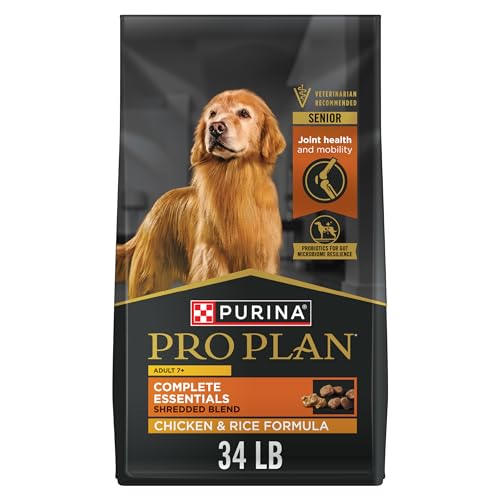
If digestive ups and downs are the core issue, a senior food fortified with probiotics can make a real difference. Think of a senior terrier that has had intermittent soft stools when its routine changes. This Purina Pro Plan formula includes guaranteed live probiotics to support gut flora, which can help stabilize stool and improve nutrient absorption. The shredded blend format also offers softer textures mixed with kibble, which many picky seniors find appealing.
I once helped an owner who had a senior spaniel with chronic intermittent diarrhea; after a transition to a probiotic-fortified kibble and a slow feeding routine, the dog’s stool quality and appetite both improved. Another scenario is travel day anxiety and food changes; probiotics often ease the transition. This formula also provides EPA and glucosamine to support joint mobility, making it a sensible holistic choice for digestion and joint care together.
Pros
- Guaranteed live probiotics support digestive and immune health.
- Shredded blend increases palatability for picky seniors.
- Includes joint-supporting nutrients like glucosamine and omega-3s.
- Large bag size suits multi-dog households or long-term feeding.
Cons
- Larger bag size may be impractical for small households that prefer fresher, smaller bags.
- Probiotics help many but are not a cure-all for chronic GI disease.
- Some dogs may be sensitive to the texture mix and prefer uniform kibble.
This Purina Pro Plan formula is a great fit for seniors with sensitive stomachs or anyone wanting to add probiotic support to a full diet. It works especially well when stool quality or appetite is a concern and when joint support is a secondary need. Dogs with diagnosed digestive disease should still be evaluated by a veterinarian, but this formula is an excellent non-prescription step toward stabilization.
To buy this product, click here.
5. Best For Large Breeds: IAMS Proactive Health Dry Dog Food, Large Breed Mature, Chicken (30 lb)
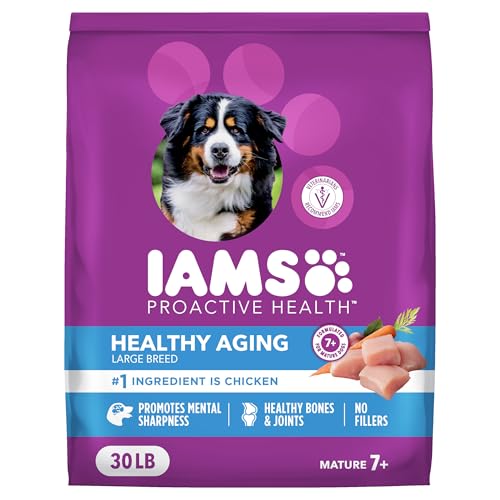
Large breed seniors have different joint and caloric needs than small dogs, and this IAMS Proactive Health formula addresses those specifics. Imagine an older German shepherd that carries heavy frame weight and needs a kibble designed for joint longevity and organ support. The IAMS Proactive 5 approach combines DHA Gold for mental and visual sharpness with antioxidants aimed at reducing oxidative stress in aging bodies. For big dogs, controlling weight while preserving strength is central, and this formula helps strike that balance.
One owner of a senior mastiff noted that careful portioning with this large-breed formula helped reduce excess weight while keeping the dog satisfied. Another scenario is the older working dog that still helps around the farm; the tailored nutrients for vital organs and joints offer practical, day-to-day energy without overloading calories. This product tends to be widely available and cost-effective for families with large seniors.
Pros
- Formulated specifically for large-breed mature dogs with tailored nutrient balance.
- DHA Gold promotes mental and visual sharpness in aging dogs.
- Antioxidant blend supports immune response and vital organ health.
- Large bag sizes work well for multi-dog homes or big appetites.
Cons
- Kibble size and density may be too large for smaller older dogs.
- Not a prescription formula for severe joint disease or weight loss without vet oversight.
- Some owners prefer grain-free or novel-protein options for sensitivities.
This IAMS formula is best for owners of large-breed seniors who need a reliable, breed-tailored maintenance diet. It performs well when the primary goals are joint support, mental sharpness, and organ health without extreme caloric restriction. For large dogs with serious orthopedic or metabolic disease, discuss prescription alternatives with your veterinarian.
To buy this product, click here.
6. Best For Sensitive Palates: Nature’s Recipe Mature Lamb & Brown Rice (24 lb)
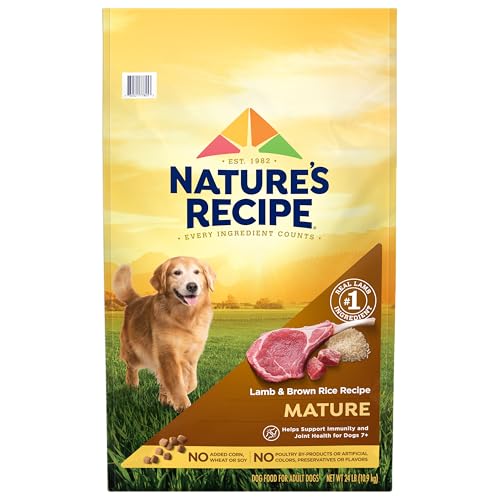
If your senior prefers gentler proteins or has shown mild poultry sensitivity, Nature’s Recipe Mature Lamb & Brown Rice is a practical alternative. Picture a picky collie who perks up for lamb but turns away from chicken. The lamb-first recipe and whole grains like brown rice provide fiber and digestible carbohydrates, which often make stools more consistent. In my experience, owners moving to lamb-based diets report fewer itchy flare-ups and steadier digestion for picky seniors.
One rescue volunteer told a story about a senior mix who refused other kibble but happily ate this lamb recipe, which improved body condition within weeks. Another common scenario is older dogs with mild dental wear who need softer textures and consistent digestibility; whole grains and lamb lean toward gentle digestion compared with some very high-fat formulas. Nature’s Recipe also avoids poultry by-products and artificial colors, which matters to owners avoiding fillers.
Pros
- Real lamb as the first ingredient for an alternative protein source.
- Brown rice and barley support gentle digestion and fiber needs.
- No poultry by-product meals, artificial colors, or flavors.
- Good value for a relatively premium ingredient list.
Cons
- Lamb can be more allergenic for some dogs compared with truly novel proteins.
- Not specifically fortified for advanced joint or cognitive support.
- May not suit dogs requiring very low-calorie or therapeutic diets.
Choose this Nature’s Recipe option if your senior prefers lamb or has mild sensitivities to common poultry proteins. It works well for steady digestion and picky appetites, and it is particularly useful when you want to avoid artificial additives. For seniors needing intensive joint therapy or calorie restriction, pair this with veterinary guidance.
To buy this product, click here.
7. Best For Small Dogs: Blue Buffalo Life Protection Formula Small Breed Senior, Chicken & Brown Rice (5 lb)

Small-breed seniors often need kibble tailored to tiny mouths and the metabolic quirks of small bodies. This Blue Buffalo small-breed senior formula addresses that with smaller kibble size and concentrated nutrients. Imagine your elderly chihuahua or toy poodle who has lost some teeth and struggles with large bites; the small pieces and LifeSource Bits make meals more accessible and interesting. Owners report easier feeding for dogs that previously pushed away larger kibbles.
One anecdote comes to mind: a tiny terrier that stopped eating after dental extractions took to the small-breed senior kibble because the size and texture matched its mouth. Another common scenario is a small dog whose weight needs careful control; smaller kibble can help portion control while delivering nutrient density so the dog gets vitamins and minerals without excess calories. As with other Blue Buffalo products, expect joint-support nutrients and immune-focused LifeSource Bits in the mix.
Pros
- Smaller kibble size for easy chewing by small-breed seniors.
- Glucosamine and chondroitin help with joint health for tiny frames.
- LifeSource Bits add antioxidant and vitamin support for aging immune systems.
- Free from corn, wheat, soy, and poultry by-products.
Cons
- Smaller bag sizes mean more frequent repurchasing for multi-dog homes.
- Not a prescription diet for dental or metabolic disease.
- Some small dogs may require wet food or added gravy if teeth are severely compromised.
This small-breed senior formula is an excellent practical choice if you have a tiny older dog that needs easy-to-eat pieces and concentrated nutrition. It is ideal for seniors with mild joint stiffness and reduced appetite who still prefer dry food. For dogs with serious dental loss or swallowing difficulty, consider wet food mixes or veterinarian-guided feeding methods.
To buy this product, click here.
8. Best For Gut Health: Purina ONE Dry Dog Food Lamb and Rice Formula (31.1 lb)

For seniors where gut health and microbiome balance are priorities, Purina ONE Lamb and Rice brings prebiotic fiber and a lamb-first recipe to the table. Picture an older collie that benefits from steadier stool and a diet that supports gut microbes. Owners often report that prebiotic-rich diets help with occasional digestive upsets linked to hairballs, stress, or minor food changes. The lamb flavor is also a useful tool for coaxing appetite in seniors who won’t touch chicken-based kibbles.
One real-world scenario: a senior service dog whose routine sometimes shifts during events saw fewer digestive hiccups after switching to prebiotic-enriched food. Another owner noted that the lamb profile helped when their older dog developed mild poultry sensitivity as he aged. This formula also provides natural glucosamine sources for joints and omega fatty acids for coat health, giving a broad safety net for multiple age-related needs.
Pros
- Prebiotic fiber supports a healthy microbiome and better digestion.
- Real lamb as the first ingredient offers a palatable alternative to poultry.
- Contains natural sources of glucosamine for joint support.
- Large bag sizes are convenient for long-term feeding.
Cons
- Not formulated specifically for senior life stage in every nutrient ratio.
- Lamb can be an allergen for some dogs.
- May require portion adjustments for less active seniors to avoid weight gain.
This Purina ONE lamb formula suits older dogs with occasional digestive sensitivity or those who prefer an alternate protein profile. It is particularly useful when microbiome support and palatability are key goals. For dogs with strict renal or caloric needs, pair this with veterinary guidance and portion monitoring.
To buy this product, click here.
9. Best Budget Pick: Pedigree Adult Dry Dog Food, Grilled Steak & Vegetable (18 lb)
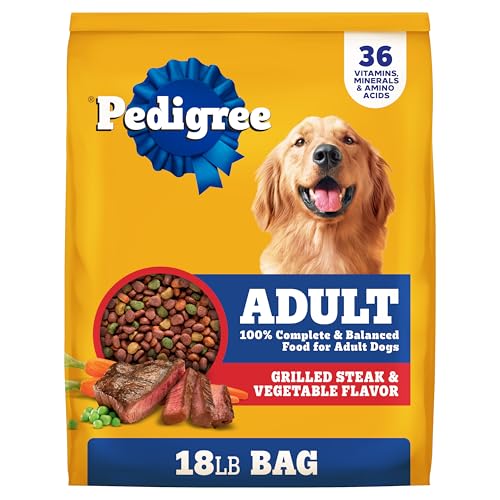
Not every household can or wants to feed premium senior-specific kibbles all the time, and Pedigree’s adult formula offers predictable, wallet-friendly nutrition that many older dogs tolerate well. If your senior is relatively healthy but you are watching the budget, Pedigree provides a complete and balanced profile with vitamins, minerals, and prebiotic fibers. I’ve seen long-time shelter residents maintain steady weight and coat condition on similar budget formulas when paired with sensible portion control and routine vet checks.
A practical example is an older mixed-breed whose family had to switch due to cost but kept meal quality stable by measuring portions and adding occasional healthy toppers like plain pumpkin for fiber. Another situation is multi-dog homes where feeding premium kibbles to every dog is cost-prohibitive. For those cases, an affordable, nutritionally complete kibble can keep seniors fed reliably while owners allocate occasional supplements or fresh food for specific needs.
Pros
- Very affordable and widely available.
- Complete and balanced with essential vitamins and minerals for daily feeding.
- Includes prebiotic fibers to support digestion.
- Good option for multi-dog households on a budget.
Cons
- Not formulated specifically for senior life stage with targeted joint or organ support.
- Contains more fillers than premium senior formulas.
- May not be ideal for dogs with food sensitivities or advanced health issues.
Use Pedigree as a practical budget solution when your senior dog is generally healthy and veterinary oversight is maintained. For seniors with arthritis, kidney disease, or strict calorie needs, investing in a life-stage or prescription diet is a better long-term choice.
To buy this product, click here.
Best Dog Food For Older Dogs FAQ
How do I know when to switch my dog to senior food?
Most brands target age 7 and up as the senior life stage, but individual need matters more than a calendar number. Look for slowing during walks, weight changes, joint stiffness, decreased appetite, or changes in stool. If any of those appear, trialing a senior formula and discussing the change with your veterinarian is sensible. For large breeds, consider starting tailored mature diets slightly earlier because they age faster.
Should I switch immediately if my dog shows joint stiffness?
Senior formulas with glucosamine and chondroitin can help, but they are supportive rather than curative. Introduce a senior kibble gradually over 7 to 10 days, monitor mobility and appetite, and combine diet changes with controlled exercise, weight management, and a vet check to rule out painful conditions that require medical treatment.
Is higher protein bad for older dogs?
Higher-protein diets can be beneficial for maintaining lean muscle, especially for active seniors. They only become a concern for dogs with diagnosed kidney disease where your veterinarian may recommend a lower-protein or prescription diet. Always balance protein needs with overall caloric intake to prevent unwanted weight gain.
My dog is picky. How can I get them to eat their senior food?
Try warmed food, adding a small spoon of low-sodium broth, or mixing in a tablespoon of wet food. Switching to small-bite or mixed-texture formulas often helps. Make changes gradually and avoid adding fatty table scraps, which can upset digestion and add calories. If appetite loss is sudden or severe, consult your veterinarian.
Are probiotics necessary for older dogs?
Probiotics are helpful in many cases for stool consistency, digestion, and nutrient absorption, and they can ease diet transitions. They are not required for every senior, but for dogs with intermittent digestive upset or those that travel frequently, a probiotic-fortified formula is a practical choice.
How do I choose between veterinary prescription diets and premium over-the-counter senior foods?
Prescription diets target specific medical conditions such as kidney disease, severe allergies, or obesity with controlled nutrient profiles and clinical data. Premium over-the-counter senior foods aim to support typical age-related needs like joint support and immune health. If your dog has a diagnosed medical issue, follow your veterinarian’s recommendation. For general aging support without disease, a high-quality senior formula is usually sufficient.
Can I mix wet and dry food for my senior?
Yes, mixing wet and dry is common and can increase palatability and hydration. Keep track of total calories and choose compatible formulations so nutrients remain balanced. For dogs with dental loss, wet food may be easier to eat, but ensure the combined diet meets your dog’s life-stage needs.
How quickly should I expect to see benefits after switching foods?
Some improvements such as better stool quality or increased appetite can appear within a week, while joint-related changes may take several weeks to months. For coat condition and energy, give the new diet at least 4 to 8 weeks while monitoring weight and overall health.
Final Verdict
For most owners seeking a single sensible option, Blue Buffalo Life Protection Formula Senior (15 lb) earns the top spot because it combines clear joint support, antioxidant-rich LifeSource Bits, and a recognizable ingredient profile that many older dogs accept. It balances real-world feeding needs with targeted nutrients that matter as pets slow down. If your senior needs extra muscle support, Purina ONE Vibrant Maturity provides higher protein and MCT-rich oil to help preserve lean mass. For digestive sensitivity and microbiome support, Purina Pro Plan with probiotics is a standout choice, while Hill’s Science Diet offers veterinarian-friendly formulations and small kibble for tiny mouths.
Ultimately, match your choice to the dog in front of you. Consider appetite, dental health, any diagnosed conditions, and how active your senior still is. Start new diets gradually, measure portions, and keep routine vet checks. With thoughtful selection and a bit of patience, the right senior food can meaningfully improve daily comfort, mobility, and mealtime enjoyment for your older dog.
Leave a Reply