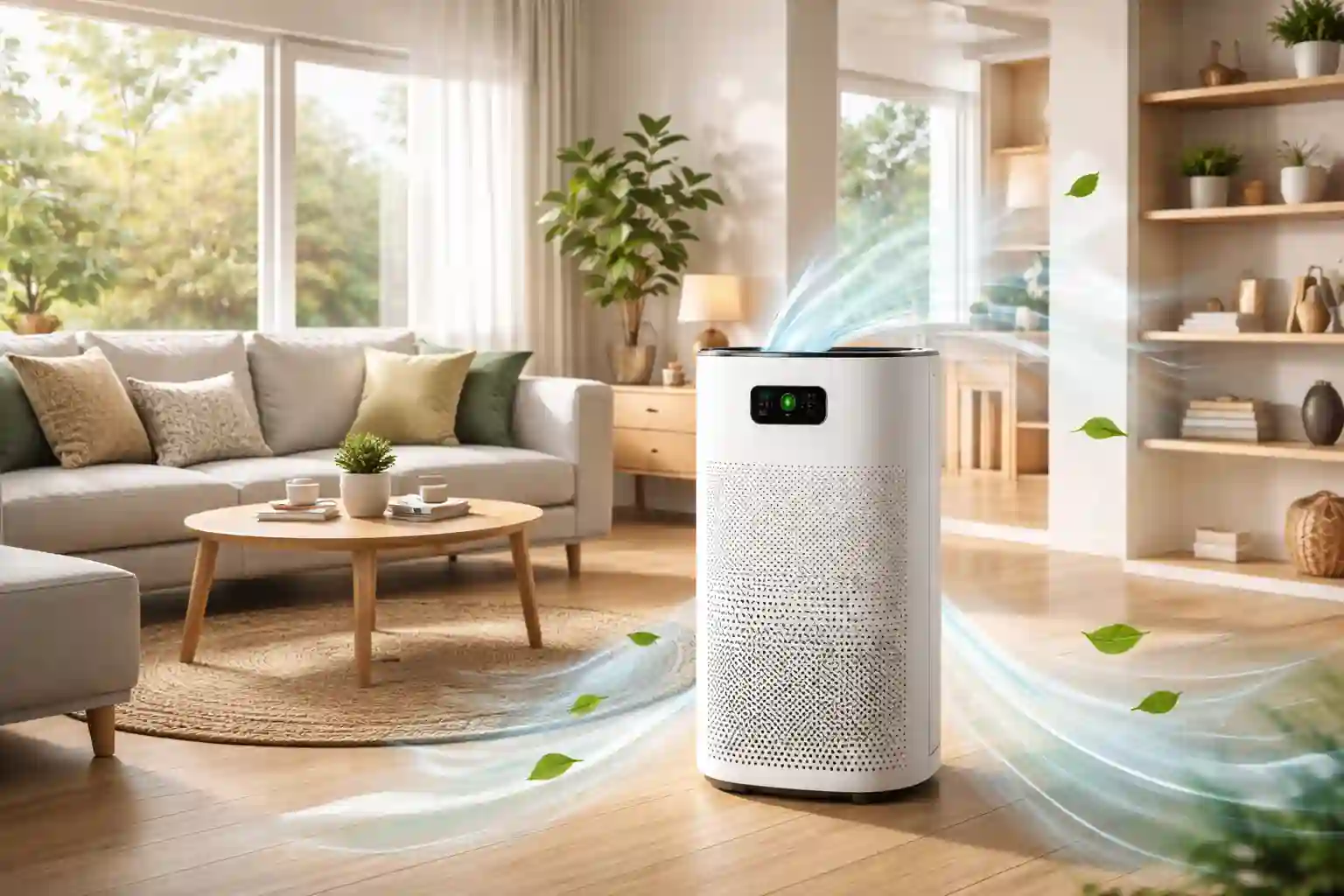
Indoor air quality has quietly become one of the most important aspects of modern home health. From seasonal allergies and wildfire smoke to pet dander and urban pollution, the air inside our homes often contains more contaminants than we realize. For many households, an air purifier is no longer a luxury item—it’s a practical appliance that supports better breathing, sleep quality, and overall comfort.
But choosing the right air purifier can feel surprisingly complicated. Terms like HEPA, CADR, activated carbon, ionization, and room coverage are thrown around constantly, yet few buyers fully understand what they actually mean in real-world performance. If you’ve been browsing popular models and feeling overwhelmed, you’re not alone—options range from compact bedroom units like the LEVOIT Core 300 Air Purifier to larger smart models such as the Coway Airmega 250 Smart Air Purifier, and the right choice depends heavily on your room and priorities.
In this complete 2026 air purifier buying guide, we’ll break down:
-
How air purifiers work
-
The different filtration technologies
-
How to match a purifier to your room size
-
Ongoing filter replacement costs
-
Common buying mistakes
-
And how to compare popular models effectively
Whether you’re shopping for a bedroom, living room, apartment, or large open space, this guide will help you make a confident decision.
How Do Air Purifiers Work?
At a basic level, an air purifier continuously pulls air from the surrounding environment, passes it through one or more filtration layers, and then releases the cleaned air back into the room. This circulation process repeats multiple times per hour, gradually reducing the concentration of airborne particles. The effectiveness of this process depends not just on the fan strength, but on the design of the filtration system, the seal of the unit, and the airflow efficiency. A well-designed purifier ensures that air does not bypass the filters, which is just as important as the filter material itself.
It’s important to understand that air purifiers do not “add” clean air; they improve the air that is already inside the room. They work best in enclosed spaces where doors and windows are reasonably sealed. In open environments, performance may drop because new airborne particles constantly enter the space. For this reason, proper room sizing and placement matter just as much as filter quality when evaluating how well a unit will perform in real-world conditions.
Most modern air purifiers rely on a multi-stage filtration system. Each stage serves a specific function, targeting different types of airborne contaminants. Rather than relying on a single filter to solve all air quality concerns, these layered systems divide the work between capturing large debris, trapping microscopic particles, and absorbing odors or gases.
Pre-Filter: The First Line of Defense
The pre-filter acts as the outermost barrier and handles the largest visible particles floating in the air. This typically includes dust, pet hair, lint, and larger pollen fragments. By capturing these heavier particles early, the pre-filter protects the inner filters from becoming clogged too quickly. This not only improves overall efficiency but also extends the lifespan of more expensive HEPA and carbon filters deeper inside the system.
In many models, the pre-filter is washable or vacuum-friendly. This makes maintenance straightforward and cost-effective. Regular cleaning of the pre-filter is one of the simplest ways to maintain strong airflow and consistent performance. When neglected, even a high-end purifier can lose effectiveness simply because airflow becomes restricted by accumulated debris.
True HEPA Filter: Capturing Microscopic Particles
The True HEPA filter is often considered the core component of a modern air purifier. Designed to capture 99.97% of particles as small as 0.3 microns, it targets the fine contaminants that are invisible to the eye but can significantly affect respiratory health. These include dust mites, mold spores, fine particulate pollution (PM2.5), airborne allergens, and certain bacteria.
What makes HEPA filtration so effective is its dense fiber structure. Rather than acting like a simple screen, HEPA filters trap particles through a combination of interception, impaction, and diffusion. Smaller particles collide with filter fibers and become trapped within the layers. This mechanical process does not rely on chemicals or ozone production, which is why True HEPA filtration is widely regarded as a safe and reliable solution for improving indoor air quality.
For allergy sufferers, pet owners, and households in areas with seasonal pollution or wildfire smoke, HEPA filtration is often the most important feature to prioritize. Models such as the SHARP Smart Air Purifier + Humidifier demonstrate how HEPA systems can be integrated into multi-function designs for larger rooms. Without it, many of the smallest irritants would simply pass through the unit and remain in circulation. If HEPA performance is your main goal, it helps to compare how different brands implement it in real life—for example, our reviews of the LEVOIT Core 400S Air Purifier and the BLUEAIR Air Purifier 411a Max highlight the trade-offs between airflow, noise, and everyday usability.
Activated Carbon Filter: Addressing Odors and Gases
While HEPA filters are highly effective at capturing particles, they do not remove odors or gases. That is where activated carbon becomes essential. Carbon filters are designed to absorb smoke, cooking smells, chemical fumes, and volatile organic compounds (VOCs). These compounds often come from cleaning products, paint, furniture finishes, and other household materials.
Activated carbon works through a process called adsorption, where gas molecules bind to the surface of the carbon material. The more carbon used in the filter, the greater its capacity to neutralize odors and airborne chemicals. Replacement sets like the Coway Airmega 400/400S filter kit highlight how carbon thickness can directly influence odor control over time. Thin carbon sheets may provide mild odor reduction, but thicker carbon beds generally perform better in environments where smoke or strong smells are common.
For homes with pets, smokers, or open kitchens, carbon filtration can make a noticeable difference in daily comfort. It complements HEPA filtration by addressing pollutants that are not particulate in nature.
Optional Technologies: Added Features and Smart Controls
Beyond the core filtration layers, some air purifiers include additional technologies designed to enhance convenience or performance. Ionizers, for example, release charged particles intended to bind with airborne contaminants, causing them to settle more quickly. UV light is sometimes used to target bacteria or mold at a microbial level. While these features can add value in certain situations, they are not substitutes for strong mechanical filtration.
Some models lean heavily on these add-ons, such as the OION Technologies B-1000 Ionic Air Purifier Pro, which makes it easier to understand what these technologies feel like in daily use compared with standard HEPA-focused designs.
Smart air quality sensors have become increasingly common in recent years. These sensors detect changes in indoor air quality and automatically adjust fan speed in response. When pollution levels rise—such as during cooking or when outdoor air worsens—the purifier increases airflow. When the air stabilizes, it reduces speed to conserve energy and lower noise. This Auto mode functionality helps maintain consistent air quality without constant manual adjustment.
Ultimately, while advanced features can improve convenience, the foundation of effective air purification remains a well-sealed design, strong airflow, and a reliable combination of HEPA and activated carbon filtration. Without these core elements, additional technologies provide only marginal benefit.
Understanding CADR and Room Size
One of the most misunderstood specifications is CADR (Clean Air Delivery Rate).
CADR measures how quickly a purifier can remove smoke, dust, and pollen from the air. The higher the CADR rating, the faster the air is cleaned.
But here’s the key: CADR must match your room size.
Many buyers assume one air purifier can handle an entire apartment with doors open. In reality, performance is best when the purifier is properly sized for a specific enclosed room.
General Room Size Guidelines
-
Small bedrooms (up to 200 sq ft)
-
Medium rooms (200–400 sq ft)
-
Large living rooms (400–700 sq ft)
-
Open-plan spaces (700+ sq ft)
Always check the manufacturer’s recommended coverage and compare it with your actual room dimensions.
If a unit is rated for 361 sq ft, for example, it performs optimally in rooms close to that size—not significantly larger open areas.
Types of Air Purifiers
Not all air purifiers are built around the same priorities. While many models may look similar on the outside, their internal configurations and intended use cases can differ significantly. Understanding these categories helps you move beyond marketing language and evaluate which design actually fits your household environment. Instead of focusing only on price or appearance, it’s more useful to consider what specific air quality problems you’re trying to solve.
Broadly speaking, most air purifiers fall into four practical categories: particle-focused HEPA units, combination HEPA and carbon systems, smart sensor-equipped models, and multi-function purifier-humidifier hybrids. Each serves a slightly different purpose, and the right choice depends on your room conditions, lifestyle, and expectations.
HEPA-Only Purifiers: Focused Particle Control
HEPA-only purifiers are designed primarily to remove airborne particles. Their core function is mechanical filtration, targeting allergens such as dust, pollen, pet dander, mold spores, and fine particulate matter. For individuals who suffer from seasonal allergies or live in environments where airborne particles are the main concern, these units can provide noticeable relief.
However, HEPA-only systems do not address odors or chemical gases effectively. Because HEPA filters are designed to capture solid particles rather than absorb gases, smells from cooking, smoke, or cleaning products may linger even while particulate levels decrease. In homes without strong odor issues, this limitation may not matter. But in apartments, pet households, or areas exposed to smoke, relying solely on HEPA filtration may feel incomplete. These models are best suited for environments where dust and allergens are the primary focus, rather than odor control.
HEPA + Carbon Combination Units: Balanced Everyday Performance
Combination units that integrate both True HEPA and activated carbon filters represent the most versatile and widely recommended category for general household use. By pairing particle filtration with gas absorption, these systems address a broader range of indoor air concerns. HEPA handles microscopic allergens and pollution particles, while carbon reduces smoke, cooking smells, and volatile organic compounds released from furniture and household products.
For most households, this dual-layer approach offers a more balanced solution. It reduces visible and invisible particles while also improving overall freshness. This is particularly valuable in shared living spaces, homes with pets, or environments where open kitchens and living rooms allow odors to circulate freely. Many mid-range and premium air purifiers use this configuration because it strikes a practical balance between effectiveness and affordability. Filter replacements like the BISSELL air320 HEPA filter illustrate how combination systems rely on both mechanical particle capture and carbon absorption working together.
When comparing models in this category, it’s important to look beyond simply whether carbon is included. The thickness and quality of the carbon layer significantly influence performance. Thin carbon sheets provide light odor control, while thicker carbon beds offer stronger and longer-lasting absorption.
Smart Air Purifiers: Adaptive and Sensor-Driven Operation
Smart air purifiers build upon traditional filtration systems by integrating air quality sensors and automated controls. These units monitor indoor air conditions in real time and adjust fan speeds accordingly. When pollution levels rise—such as during cooking or when outdoor air quality deteriorates—the purifier increases airflow. When air quality stabilizes, it slows down to conserve energy and reduce noise.
This adaptive behavior offers practical convenience. Rather than manually adjusting settings throughout the day, the unit responds dynamically to environmental changes. Many smart models also include filter replacement indicators and smartphone connectivity, allowing users to track air quality metrics and manage settings remotely.
That said, smart features enhance usability but do not replace the importance of strong core filtration. A smart purifier with weak filtration will not outperform a non-smart unit with robust HEPA and carbon layers. The technology is most valuable when paired with solid mechanical performance. For busy households or those who prefer automated operation, smart functionality can simplify daily use while maintaining consistent air quality.
Air Purifier + Humidifier Combos: Multi-Function Climate Control
Some air purifiers combine filtration with humidity control in a single appliance. These hybrid systems are designed for regions where dry indoor air contributes to discomfort, particularly during winter months or in arid climates. By adding moisture while filtering particles, these units aim to address both air purity and air balance simultaneously.
However, combining two functions into one device introduces additional complexity. Maintenance requirements often increase, as humidification components require regular cleaning to prevent mineral buildup or bacterial growth. Additionally, performance in each function may not match that of dedicated standalone devices. While the purifier component may be effective, the humidifier output may be modest compared to a full-capacity humidifier, and vice versa.
For smaller spaces or users who prefer a compact solution, these combination units can offer convenience. But for larger homes or individuals with specific humidity control needs, separate dedicated appliances may provide stronger individual performance. Evaluating room size, maintenance willingness, and climate conditions is essential before choosing a multi-function model.
Filter Replacement Costs: The Hidden Long-Term Expense
One of the most overlooked factors when buying an air purifier is ongoing maintenance cost.
Most HEPA and carbon filters require replacement every 6 to 12 months, depending on:
-
Air quality levels
-
Daily usage
-
Presence of pets
-
Smoke exposure
Before purchasing, always check:
-
Replacement filter price
-
Availability
-
Whether third-party alternatives exist
-
Estimated yearly cost
Sometimes a lower-priced purifier ends up costing more over time if filter replacements are expensive or difficult to find.
Washable pre-filters help reduce costs but do not replace the need for HEPA replacement.
Noise Levels and Daily Use
Air purifiers typically operate between:
-
20–30 dB on low settings (very quiet)
-
40–55 dB on higher speeds
In bedrooms, low noise operation is critical.
Many users keep their purifier on Auto mode during the day and reduce speed at night.
Higher fan speeds clean air faster but can become noticeable in quiet environments.
Energy Efficiency
Most modern air purifiers are energy-efficient and safe to run continuously.
Energy consumption typically ranges from:
-
20–100 watts depending on fan speed
Auto mode helps reduce unnecessary power usage when air quality is already good.
Look for energy-efficient certifications if long-term electricity cost is a concern.
Common Air Purifier Buying Mistakes
1. Buying for the Wrong Room Size
A purifier rated for 300 sq ft will struggle in a 700 sq ft living room.
Oversizing is safer than undersizing.
2. Ignoring Filter Costs
The upfront price is only part of the equation.
Annual filter replacement can significantly impact long-term value.
3. Expecting Whole-Home Coverage from One Unit
Air purifiers are room-based appliances.
If you want full apartment coverage, you may need multiple units.
4. Running Only on Low Speed
Low speed is quieter, but it cleans air more slowly.
During high pollution periods, higher speeds may be necessary.
Air Purifiers for Different Needs
Best for Allergies
Look for:
-
True HEPA
-
Strong CADR
-
Sealed filtration system
-
No ozone-producing features
Best for Pet Owners
Key features:
-
Pre-filter for fur
-
HEPA for dander
-
Carbon for odor control
Best for Smoke and Odors
Prioritize:
-
Thick activated carbon filters
-
High airflow
-
Continuous operation capability
Best for Bedrooms
Focus on:
-
Low noise
-
Sleep mode
-
Soft display lights
-
Compact design
Smart Features: Are They Worth It?
Smart functionality offers convenience, but it’s not mandatory for good performance.
Auto mode and filter alerts are genuinely useful.
App connectivity is helpful for remote control but not essential.
The core of performance still comes down to filtration quality and airflow capacity.
How to Compare Air Purifiers Effectively
When comparing models, focus on:
-
Room size rating
-
CADR rating
-
Filter structure
-
Replacement filter cost
-
Noise levels
-
Auto mode availability
-
Energy efficiency
Avoid being distracted by purely cosmetic features.
Maintenance Tips for Long-Term Performance
To keep your air purifier running efficiently:
-
Clean or vacuum pre-filter monthly
-
Replace HEPA and carbon filters on schedule
-
Keep the unit away from walls to allow airflow
-
Close doors and windows while running
Consistent maintenance ensures the purifier performs at its rated efficiency.
Do Air Purifiers Really Work?
When properly sized and maintained, yes.
Air purifiers are effective at reducing:
-
Dust
-
Allergens
-
Pet dander
-
Smoke particles
-
Airborne particulates
However, they are not substitutes for:
-
Ventilation
-
Regular cleaning
-
Source control
They are one part of a broader indoor air quality strategy.
Final Buying Advice for 2026
If you’re planning to purchase an air purifier this year, the most important mindset shift is this: stop thinking in terms of “best model” and start thinking in terms of “best match.” Air purifiers are not universal solutions. Their effectiveness depends heavily on how well they align with your room size, air quality concerns, and daily usage patterns. A highly rated unit can underperform simply because it was chosen without considering the environment it’s placed in.
The first step in making a smart decision is understanding the dimensions of your space. Room size is not just a number on a product label—it directly affects airflow requirements and cleaning efficiency. A purifier rated for 300 square feet may perform exceptionally well in a compact bedroom, but it will struggle in an open living area twice that size. Choosing a unit slightly above your room’s actual square footage provides a buffer, allowing it to operate more efficiently at lower speeds while still maintaining strong air turnover.
Filtration quality should be the next priority. In 2026, True HEPA filtration remains the standard for reliable particle removal. Marketing language may vary, but not all filters are created equal. Verifying that a unit includes genuine HEPA filtration ensures it can effectively capture fine particulate matter rather than only larger visible dust. If odors, smoke, or chemical fumes are concerns in your household, a substantial activated carbon layer becomes equally important. Without it, particle filtration alone may leave lingering smells untouched.
Another factor that deserves serious consideration is long-term maintenance cost. Air purifiers are ongoing systems, not one-time purchases. Replacement filters, especially HEPA and carbon layers, typically require changing every six to twelve months depending on usage and air quality conditions. Before committing to a model, it’s wise to calculate estimated yearly filter expenses and confirm availability. A lower upfront price can sometimes conceal higher long-term maintenance costs.
Automation features, such as Auto mode and air quality sensors, can improve daily convenience. When properly implemented, these features allow the purifier to respond dynamically to changes in indoor conditions. This not only maintains consistent air quality but can also reduce unnecessary noise and energy consumption. However, smart functionality should complement strong core filtration—not compensate for weak performance.
Finally, it’s important to maintain realistic expectations. Air purifiers are highly effective tools for improving indoor air quality within enclosed spaces, but they are not whole-home HVAC replacements. They perform best when doors and windows are reasonably sealed and when used consistently. In larger homes or multi-room apartments, multiple units may be necessary to achieve comprehensive coverage.
When matched carefully to the space and maintained properly, a well-chosen air purifier can provide steady, measurable improvements in comfort and air clarity. In 2026, the smartest purchase isn’t the most feature-packed device—it’s the one thoughtfully selected to suit your specific environment and long-term needs.
Conclusion
Indoor air quality has gradually shifted from being an invisible afterthought to a practical daily concern. Modern homes are more insulated than ever, which improves energy efficiency but also reduces natural ventilation. At the same time, seasonal allergens, urban pollution, wildfire smoke, and household chemicals continue to affect indoor environments in subtle but meaningful ways. As a result, maintaining clean air is no longer simply about comfort—it increasingly intersects with sleep quality, respiratory health, and overall well-being.
Air purifiers offer a targeted solution within this broader context. They are not miracle devices, nor are they substitutes for proper cleaning and ventilation. Instead, they function as controlled systems designed to reduce airborne contaminants within defined spaces. When properly sized, thoughtfully positioned, and maintained consistently, they can create measurable improvements in indoor air clarity and everyday comfort.
The most important takeaway is that choosing an air purifier should be a deliberate decision rather than an impulsive purchase. The most expensive model is not automatically the best option, and advanced features do not compensate for mismatched room size or inadequate filtration. A reliable HEPA system, appropriate coverage capacity, and manageable long-term filter costs remain the foundations of long-term satisfaction.
By understanding how filtration works, how CADR and room size interact, and how maintenance affects performance over time, you move from being influenced by marketing claims to making informed comparisons. This perspective allows you to evaluate models based on real-world usability rather than surface-level specifications.
If you are narrowing down specific units, reviewing detailed product analyses can help clarify practical trade-offs such as noise levels, build quality, sensor accuracy, and filter availability. Individual model reviews provide deeper insight into everyday operation, which complements the broader principles outlined in this guide.
Clean air is ultimately about consistency. When matched carefully to your space and expectations, a well-chosen air purifier becomes less of a gadget and more of a dependable part of your home environment—quietly working in the background, supporting healthier indoor living year after year.