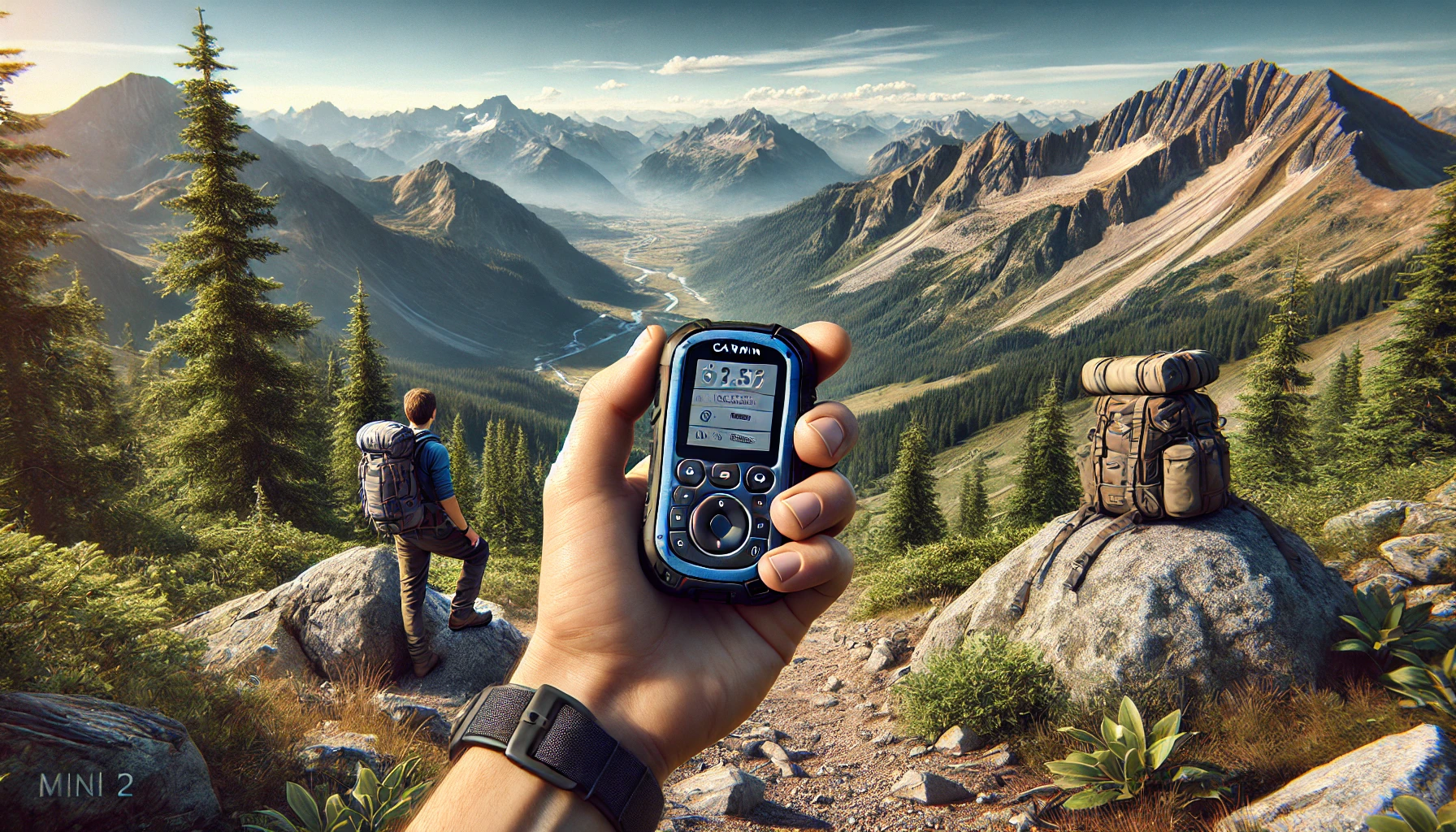
The Garmin inReach Mini 2 is a compact and lightweight satellite communicator designed for adventurers, hikers, and remote travelers. Offering global two-way messaging and interactive SOS alerts, this device ensures you stay connected even in the most remote locations (with an active satellite subscription). Equipped with a water-resistant and durable build, it’s a perfect companion for extreme outdoor conditions. The TracBack routing feature helps users retrace their steps, ensuring they never get lost.
Beyond communication, the inReach Mini 2 enhances navigation with its built-in digital compass, offering accurate heading information even when standing still. Location-sharing capabilities allow users to update loved ones via MapShare or embedded coordinates in messages. For enhanced trip planning, the device syncs seamlessly with the Garmin Explore app and website, where users can create waypoints, routes, and activities.
Designed for versatility, the inReach Mini 2 pairs with Garmin wearables and handheld devices, allowing users to send messages or trigger an SOS directly from a connected device. With an impressive 14-day battery life in 10-minute tracking mode, it ensures reliable performance during extended adventures. Whether for safety, navigation, or peace of mind, the Garmin inReach Mini 2 is an essential tool for those venturing off the grid.
Pros of the Garmin inReach Mini 2
1. Compact and Ultra-Lightweight for Any Adventure
One of the defining strengths of the Garmin inReach Mini 2 is its extremely compact and lightweight design. Weighing only around 3.5 ounces (100 grams), it is significantly lighter than most GPS handhelds and satellite communicators on the market. This minimal weight makes it easy to carry without adding noticeable burden, even on long-distance or multi-day expeditions where every gram matters.
In practice, its small footprint allows for flexible carrying options. It fits comfortably in the palm of your hand, slips easily into a backpack pocket, or clips securely to a belt or shoulder strap. For ultralight hikers, bikepackers, mountaineers, and minimalist adventurers, the inReach Mini 2 offers essential safety and communication features without compromising mobility or packing efficiency.
2. Two-Way Satellite Messaging for Reliable Communication
Unlike basic GPS trackers or one-way satellite beacons, the inReach Mini 2 supports full two-way satellite messaging. This allows users not only to send updates but also to receive responses, creating a real line of communication even in the most remote locations.
By connecting to Garmin’s Iridium satellite network, the device offers truly global coverage without relying on cellular signals. Users can message family and friends, coordinate logistics, or communicate during emergencies from places where smartphones are completely unusable. This two-way capability adds a layer of reassurance that one-way communicators simply cannot match, especially for solo travelers and long expeditions.
3. SOS Emergency Button for Instant Rescue
The SOS feature is one of the most critical aspects of the inReach Mini 2, particularly for those venturing into remote or high-risk environments. With a single press, the device contacts GEOS, a 24/7 emergency response coordination center, transmitting your location and initiating rescue protocols.
What sets this system apart is the ability to communicate directly with emergency responders. Users can describe injuries, weather conditions, or other critical details and receive instructions while help is on the way. Many real-world accounts credit this feature with saving lives during backcountry hikes, remote climbs, offshore sailing trips, and winter expeditions where traditional communication options were unavailable.
4. TracBack Navigation: Reliable Route Guidance
For adventurers exploring unfamiliar terrain, the TracBack feature provides an important safety net. It guides users back along the same path they took, reducing the risk of getting lost when conditions change or visibility deteriorates.
This feature proves especially valuable in environments such as dense forests, mountainous regions, deserts, or snowy landscapes where landmarks can be difficult to identify. For hikers, mountain bikers, hunters, and backcountry skiers, TracBack offers a simple but highly effective way to retrace steps and return to safety with confidence.
5. Accurate GPS Tracking for Real-Time Location Sharing
The Garmin inReach Mini 2 delivers accurate GPS tracking that supports both navigation and safety. Users can share their real-time location through Garmin MapShare, allowing friends or family to follow their journey remotely.
This feature provides peace of mind, particularly for solo adventurers or those on extended trips. Loved ones can monitor progress, confirm safe movement, and stay informed without constant manual check-ins. When combined with mapping tools in the Garmin Explore app, the tracking system also helps users plan routes, review travel history, and navigate more effectively.
6. Works Worldwide with No Cell Signal Needed
One of the inReach Mini 2’s most significant advantages is its independence from cellular networks. Unlike smartphones or standard GPS units that lose functionality outside coverage zones, this device operates globally via satellite.
This makes it especially valuable for international travelers and explorers who move between remote regions without worrying about SIM cards, roaming fees, or signal availability. Whether used in remote deserts, jungles, open oceans, or high-altitude mountain ranges, the device consistently maintains communication and tracking capability where other technologies fail.
7. Long Battery Life for Extended Expeditions
Battery life is a common concern for satellite devices, but the inReach Mini 2 performs well in this area. In standard tracking modes, it can last up to two weeks on a single charge, making it suitable for multi-day or even multi-week trips.
Even with regular messaging and tracking enabled, users report reliable battery performance over several days without recharging. Compared to many competing satellite communicators, this endurance reduces the need for frequent charging and minimizes reliance on power banks or solar panels—an important advantage for extended backcountry travel.
8. Rugged, Waterproof, and Built for Extreme Conditions
Designed for harsh outdoor use, the inReach Mini 2 features a rugged and weather-resistant construction. Its IPX7 waterproof rating allows it to withstand heavy rain, snow, and brief water immersion without issue.
The device is also shock-resistant and capable of operating in a wide range of temperatures. Users report it continuing to function after drops, exposure to extreme cold or heat, and rough handling in demanding environments. This durability makes it a dependable companion for adventures where equipment failure is not an option.
9. Syncs with Smartphones and Other Garmin Devices
While fully functional on its own, the inReach Mini 2 becomes even more versatile when paired with a smartphone or other Garmin devices. Through the Garmin Messenger and Explore apps, users can type messages more easily, access detailed maps, and manage routes with greater convenience.
Integration with Garmin smartwatches, cycling computers, and handheld GPS units further enhances usability, allowing data and controls to be shared across devices. Many users find that smartphone pairing significantly improves the overall experience, especially for longer messages or detailed navigation planning.
Cons of the Garmin inReach Mini 2
1. Requires a Subscription for Full Features
One of the most commonly mentioned drawbacks of the Garmin inReach Mini 2 is the required satellite subscription. To access core features such as two-way messaging, tracking, and SOS emergency services, users must maintain an active Garmin satellite plan. Depending on the plan level, monthly fees can add up over time, especially for users who only venture into remote areas occasionally.
That said, this subscription model is inherent to satellite-based communication and is not unique to Garmin. The ongoing cost supports access to the Iridium satellite network and 24/7 emergency response services. Many users ultimately view the subscription as a reasonable trade-off for global coverage and reliable safety support, but it is still an important consideration for budget-conscious or infrequent adventurers.
2. GPS Signal Can Be Slower in Dense Tree Cover
In certain environments—particularly dense forests, deep valleys, or steep terrain—some users report slower GPS signal acquisition. This can result in brief delays when establishing location tracking or sending messages, especially compared to open areas with a clear view of the sky.
It’s worth noting that this limitation affects virtually all satellite communicators, not just the inReach Mini 2. Satellite signals require unobstructed access to space, and heavy tree cover or terrain can interfere with reception. In most cases, moving to a slightly more open area quickly improves connectivity, making this more of an environmental limitation than a device flaw.
3. Small Screen Makes On-Device Messaging Less Convenient
The compact size of the inReach Mini 2 is a major advantage for portability, but it comes with a trade-off in usability. The small screen and button-based interface make typing messages directly on the device slow and less comfortable, particularly for longer or more detailed communication.
In practice, most users address this limitation by pairing the device with a smartphone. Using the Garmin Messenger or Explore app allows for full keyboard input, faster message composition, and easier navigation. Many users also pre-program preset messages before trips, minimizing the need for on-device typing altogether. While the screen size is a compromise, it aligns with the device’s ultralight design philosophy.
Frequently Asked Questions (FAQ)
Does the Garmin inReach Mini 2 work without a smartphone?
Yes, the Garmin inReach Mini 2 can operate independently for tracking, SOS alerts, and basic messaging. However, pairing it with a smartphone significantly improves usability. Typing messages, viewing maps, and managing routes are much faster and more intuitive through the Garmin Messenger or Explore app. While a phone is not required, most users find the experience far better when paired.
Is the Garmin inReach Mini 2 suitable for solo travelers?
Absolutely. The inReach Mini 2 is particularly well-suited for solo hikers, cyclists, sailors, and backcountry travelers. Its two-way satellite messaging and SOS functionality allow solo adventurers to stay connected and request help if needed, even far beyond cellular coverage. Real-time location sharing also provides reassurance for family and friends back home.
How reliable is the SOS feature in real emergencies?
The SOS system is highly reliable and backed by a 24/7 global emergency response center. When activated, your location is transmitted via the Iridium satellite network, and two-way communication allows rescuers to understand your situation in detail. While rescue outcomes always depend on location and conditions, the system itself is widely trusted and used in real-world emergencies.
Can I use the Garmin inReach Mini 2 internationally?
Yes. The inReach Mini 2 offers true global coverage through the Iridium satellite network, making it ideal for international travel. It works the same way whether you’re in North America, Europe, remote Asia, open ocean, or polar regions—no SIM cards, roaming plans, or local networks required.
Is the subscription worth it if I only travel occasionally?
That depends on how often you venture beyond cellular coverage. For frequent adventurers, the subscription cost is generally seen as justified given the safety and communication benefits. For occasional trips, some users activate a plan only during active travel periods. While it does add ongoing cost, many view it as insurance rather than a convenience fee.
How does the inReach Mini 2 compare to carrying a satellite phone?
The inReach Mini 2 is far smaller, lighter, and more energy-efficient than most satellite phones. While satellite phones offer voice calling, they are bulkier and more expensive. The inReach Mini 2 focuses on messaging, tracking, and SOS—features that cover the majority of emergency and coordination needs for outdoor travel, especially when weight and battery life matter.
Is the Garmin inReach Mini 2 overkill for short hikes?
For short, well-traveled hikes near cell service, it may be more than necessary. However, for unpredictable weather, remote trails, solo outings, or international travel, even short trips can carry risk. Many users choose the inReach Mini 2 not for everyday use, but for peace of mind when conditions or location increase uncertainty.
Who should not buy the Garmin inReach Mini 2?
Users who require voice calling, want a large touchscreen interface, or prefer devices with no subscription costs may find it less suitable. Likewise, travelers who stay entirely within reliable cellular coverage may not fully benefit from its satellite capabilities. The inReach Mini 2 is best viewed as a safety and communication tool, not a general-purpose GPS replacement.
Final Verdict: Is the Garmin inReach Mini 2 Worth It?
The Garmin inReach Mini 2 stands out as one of the most reliable and thoughtfully designed satellite communicators available today. Rather than trying to replace a smartphone or a full-featured GPS unit, it focuses on what matters most in remote environments: dependable global communication, accurate tracking, and fast access to emergency assistance.
In real-world use, its strengths are clear. The combination of two-way satellite messaging, SOS support, long battery life, and TracBack navigation makes it especially valuable for solo travelers, backcountry hikers, bikepackers, sailors, and anyone who regularly ventures beyond cellular coverage. Its compact size and lightweight design ensure that carrying it never feels like a burden—an important factor for long or demanding trips.
That said, the inReach Mini 2 is not designed for everyone. Users who stay within reliable cell service, dislike subscription-based devices, or require voice calling may find better-suited alternatives. However, for those who understand its purpose and will actually rely on its safety and communication features, the Garmin inReach Mini 2 represents one of the most sensible and trustworthy investments in outdoor safety available today.
